Trees
Eucalyptus, Genus, saligna, Species,
- Genus & species
Sydney blue gum
Coastal New South Wales and southern Queensland, Australia
Overview
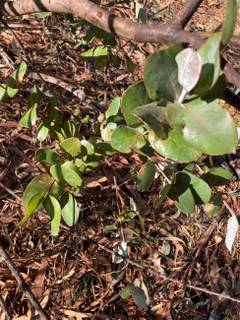
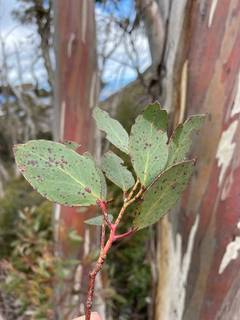
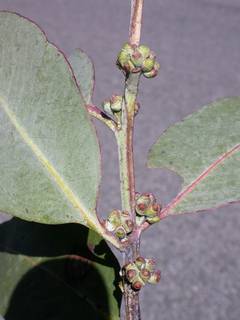
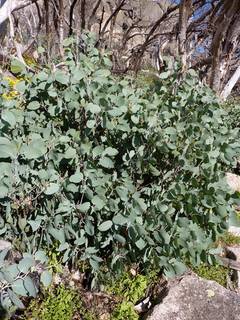
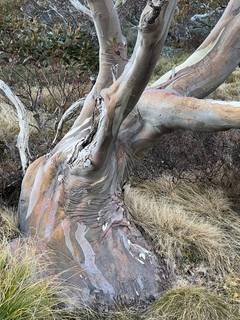
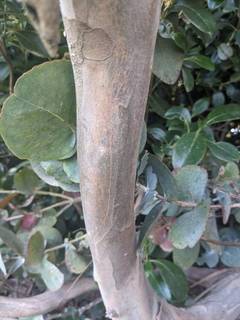
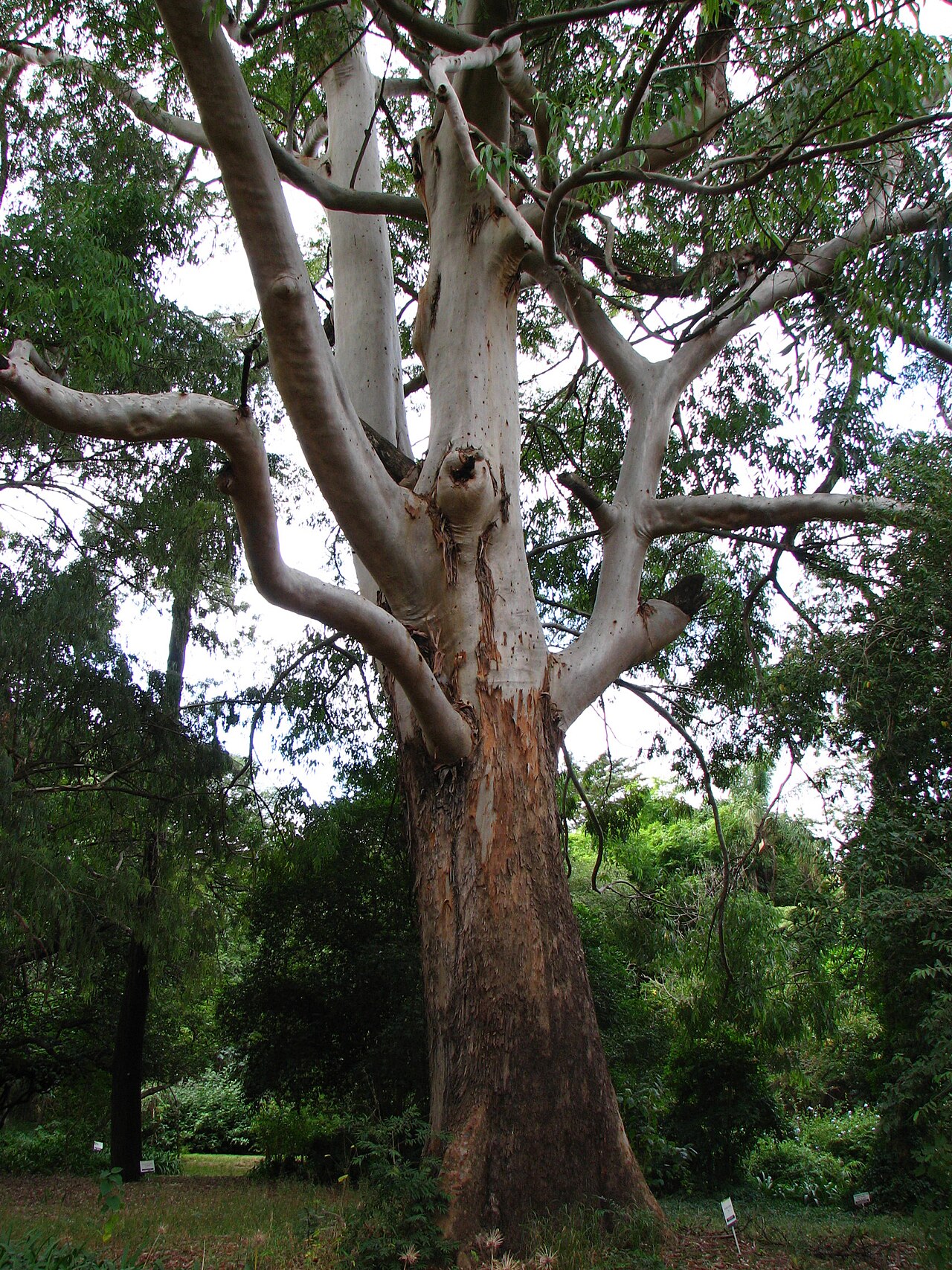
Eucalyptus saligna is a tall evergreen tree in the myrtle family (Myrtaceae), reaching 130–180 feet (40–55 m) in native forests and 60–100 feet (18–30 m) in many cultivated settings. The trunk is straight and mostly unbranched for the lower two-thirds of its height. Bark on the upper trunk and branches is smooth and pale grey to bluish-white and is shed in long strips, while a rough, fibrous, grey-brown stocking persists on the lower 10–20 feet (3–6 m). Adult leaves are alternate, lanceolate to sickle-shaped, 4–7 inches (10–18 cm) long and 0.8–1.2 inches (2–3 cm) wide, glossy dark green above and paler beneath, and aromatic when crushed because of embedded oil glands. Flowers are white, held in umbels of 7–15, each 0.5–0.8 inch (12–20 mm) across with a mass of stamens and no petals. Fruits are woody, pear-shaped to hemispherical capsules 0.2–0.3 inch (5–8 mm) long that release seed through three or four valves. Growth reaches 3–6 feet (0.9–1.8 m) per year in warm climates with adequate moisture. The root system is shallow and wide-spreading, extending well beyond the canopy, and limbs may drop in wind. Leaf and bark litter accumulates beneath the tree and contains compounds that reduce germination of some understory plants.
Native Range
Eucalyptus saligna is native to the coastal ranges and foothills of New South Wales and southern Queensland, Australia, at elevations from near sea level to about 3,300 feet (1,000 m). It grows in tall open forest on deep, fertile, well-watered soils. It is widely planted for timber in Hawaii, California, South Africa, Brazil, and East Africa.Suggested Uses
Planted as a windbreak and shelterbelt tree on large properties, spaced 10–15 feet (3–4.5 m) apart in rows. Grown commercially for timber, pulpwood, and honey production in Australia, South Africa, and Brazil. Mature canopies span 40–80 feet (12–24 m), which limits use to parks, farms, and lots larger than 1 acre (0.4 ha).How to Identify
Appearance
Size & Dimensions
Height60' - 180'
Width/Spread40' - 80'
Bloom Information
Flowering occurs in summer, roughly December–February in its native range. Flowers are white, in umbels of 7–15, with numerous stamens. Nectar and pollen are collected by bees and other insects and by nectar-feeding birds.
Detailed Descriptions
Foliage Description
Glossy dark green above, paler beneathGrowing Conditions
Sun Requirements
Requires 8-12 hours of direct sunlight daily
• Full Sun: 6+ hours of direct sunlight
• Partial Shade: 3-6 hours of direct sunlight
• Full Shade: Less than 3 hours of direct sunlight
Care & Maintenance
Care Guide
Grows in full sun, 8–12 hours daily, on deep, moist, well-drained loam; clay and sandy soils slow growth, and soil pH of 5.5–7.0 is typical. Young trees receive 10–15 gallons (38–57 L) weekly during the first two summers, then deep soakings every 2–4 weeks in dry periods once established. Hardiness is USDA zones 9–11, and foliage is damaged by temperatures below roughly 25°F (−4°C). Fertilizer is seldom needed on fertile soil. Roots of trees within 50 feet (15 m) of buildings, sewer lines, or pavement can lift or crack them. Mature trees shed limbs, bark strips, and leaves year-round, and the oil-rich litter burns readily in wildfire.Pruning
Young trees are trained to a single leader by removing competing stems during the first 2–3 years. Lower branches are removed gradually up to 10–15 feet (3–4.5 m) to clear the trunk. Pruning is done in late winter, and cuts on branches larger than 2 inches (5 cm) are made outside the branch collar. Topping stimulates dense epicormic shoots with weak attachment.Pruning Schedule
Prune: February–March
winter