Eucalyptus, Genus, caesia, Species,
- Genus & species
Silver princess
Wheatbelt granite outcrops of southwestern Western Australia
Overview
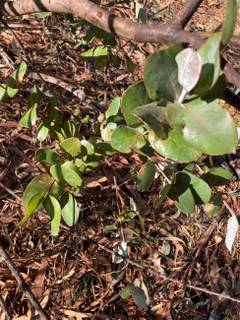
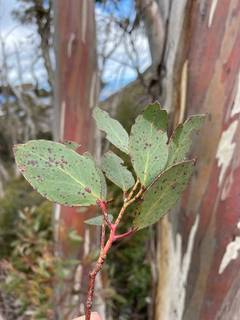
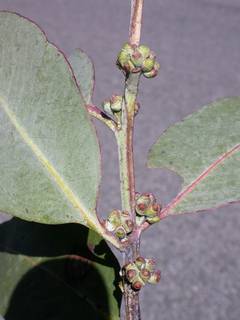
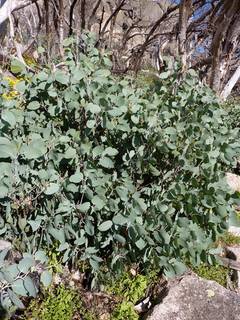
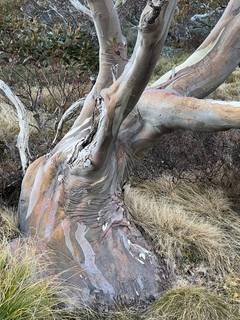
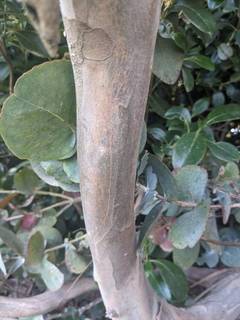
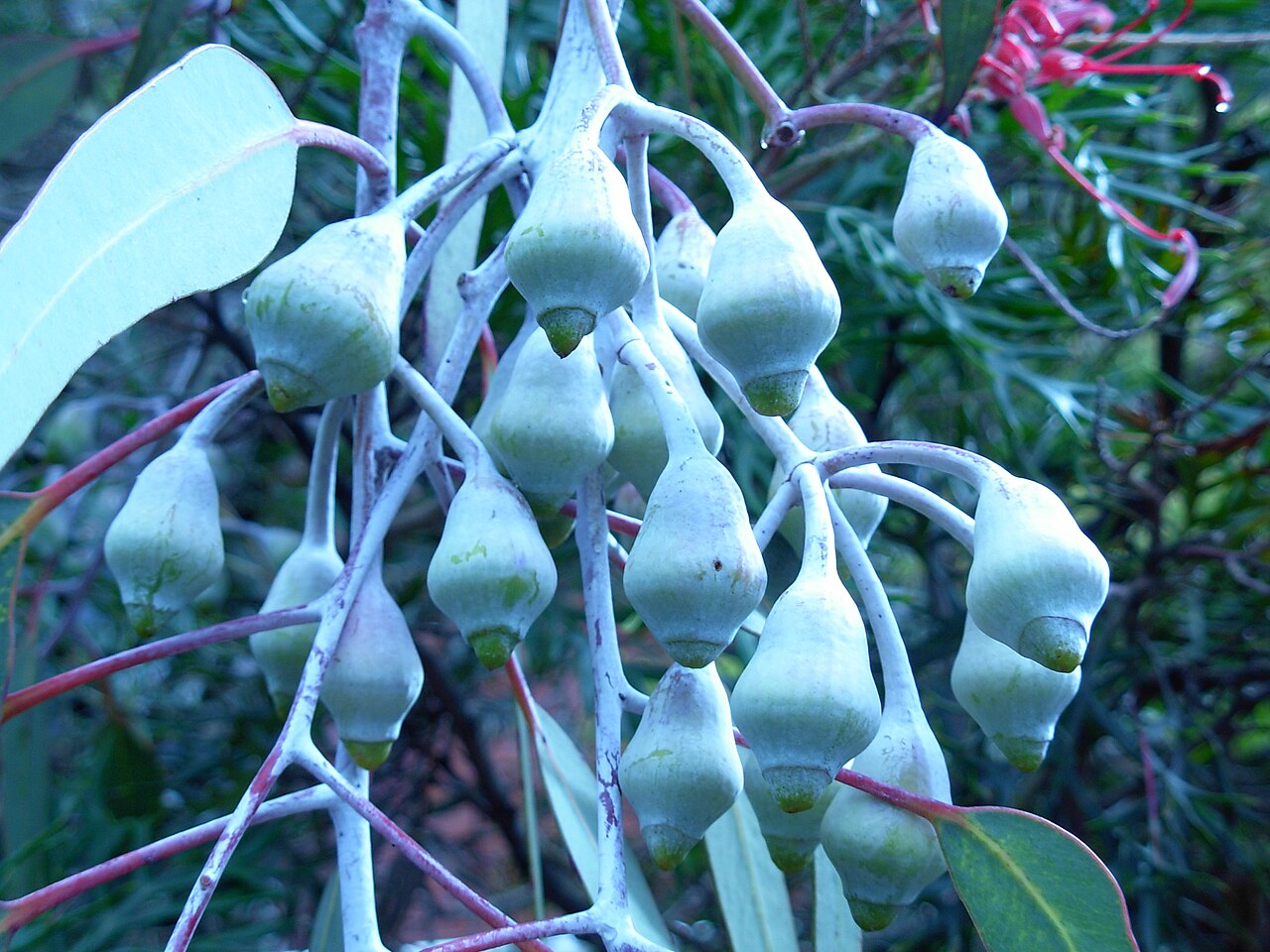
Eucalyptus caesia is an evergreen mallee or small tree 15-30 feet (4.5-9 m) tall and 10-20 feet (3-6 m) wide, with slender branches that hang almost vertically from an open framework. Trunk and larger branches carry minni ritchi bark: thin reddish-brown strips that curl back at both edges and stay attached, exposing green to coppery bark beneath. Young stems, buds, and fruit are coated in a white waxy bloom that rubs off on contact. Adult leaves are lanceolate, 3-5 inches (8-13 cm) long, dull grey-green, and hang from the drooping branchlets. Pendulous flowers 1.5-2 inches (4-5 cm) across open from urn-shaped waxy buds between winter and spring, with pink to red filaments and yellow anthers. Woody bell-shaped capsules 0.8-1.2 inches (2-3 cm) long follow and hold on the tree, heavily coated in white wax. The wood is brittle, branches break under their own weight and in wind, and plants need staking for the first three years. The species grows poorly in humid summer-rainfall climates, where fungal leaf disease shortens its life. Trees live 20-30 years. Hardy in USDA zones 9-11.
Native Range
Eucalyptus caesia is endemic to southwestern Western Australia, confined to around 25 granite outcrops scattered through the Wheatbelt inland from Perth. Plants root in shallow pockets of gravelly soil in rock crevices and around the base of granite domes, in a climate of hot dry summers and cool wet winters. Wild populations are small and separated by cleared farmland, and the species carries conservation-significant status in Western Australia while being widely planted in gardens.Suggested Uses
Grown as a specimen tree in dry-climate gardens, in gravel and native plantings, and in courtyards where the weeping crown is seen against a wall, spaced 15-20 feet (4.5-6 m) from buildings and paths. Cut branches carrying waxy buds and capsules hold two to three weeks in arrangements. Branch drop from the brittle wood is recorded over paved areas, seating, and parked vehicles set beneath the crown.How to Identify
Appearance
Size & Dimensions
Height15' - 30'
Width/Spread10' - 20'
Colors
Bloom Information
Flowering runs eight to ten weeks, between July and October in the southern hemisphere and between January and April in northern hemisphere plantings, falling in the cool season at both ends. Buds take nine to twelve months to develop before opening, so a tree carries buds, open flowers, and mature capsules at the same time. Each flower lasts about a week and the pink filaments fade before dropping. Honeyeaters feed at the pendulous flowers in Australia, and honeybees work them where the tree is grown elsewhere.
Detailed Descriptions
Flower Description
Pink to red filaments with yellow anthersFoliage Description
Dull grey-green, lanceolate, hanging from drooping branchletsGrowing Conditions
Sun Requirements
Requires 7-12 hours of direct sunlight daily
• Full Sun: 6+ hours of direct sunlight
• Partial Shade: 3-6 hours of direct sunlight
• Full Shade: Less than 3 hours of direct sunlight
Care & Maintenance
Care Guide
Seven or more hours of direct sun with open exposure is what the species takes; in shade or crowded planting the thin branches stretch and break. Soil needs to be sharply drained and gravelly or sandy at pH 6.0-8.0, matching the shallow granite pockets of its habitat, and the tree fails where water sits in winter. Established trees need no irrigation in a Mediterranean climate, and summer watering raises the rate of branch failure and root disease. Dry summer air suits the species, while humid summer-rainfall regions bring fungal leaf disease and a shortened life. Phosphorus-rich fertilisers damage the roots, so feeding is limited to native-plant formulations or left out entirely. Staking through the first three years, with ties loosened each season as the trunk thickens, carries the top-heavy weeping crown while the trunk strengthens.Pruning
Formative cutting in the first three years removes competing leaders and leaves a single trunk, which lowers the rate of later splitting at narrow forks. Cutting is done in late spring after flowering, taking no more than 10 percent of the crown in one season. Broken and hanging branches are removed back to the branch collar at any time of year. Mature trees respond to hard reduction with dense epicormic regrowth that is weakly attached and liable to fail.Pruning Schedule
Prune: May–June
late spring