Erigeron, Genus, glaucus, Species,
- Genus & species
seaside fleabane
Pacific coast from southern Oregon to northern Baja California
Overview
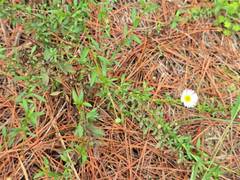
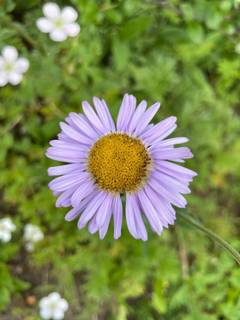
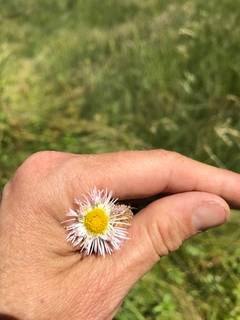
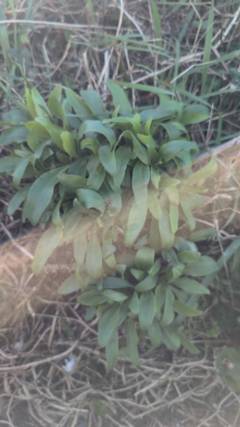
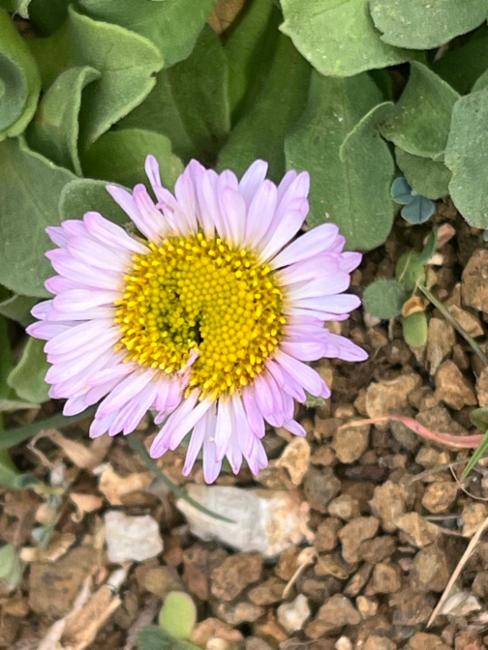
A clump-forming evergreen perennial reaching 6-12 inches (15-30 cm) tall and 18-24 inches (45-60 cm) wide, growing from a stout fleshy taproot and branching basal crown. Foliage forms a mound of spatulate leaves 1-4 inches (2.5-10 cm) long, thick, glaucous blue-green, with rounded tips and slightly toothed upper margins. Stems leafy, ascending; each stem carries 1-3 daisy-like flower heads 1-1.5 inches (2.5-4 cm) across with 60-150 narrow ray florets surrounding a yellow disc. Ray colors range from pale lavender-blue to deep pink-purple depending on the form. Flowers appear April through August along the coast, with sporadic blooms continuing into October in mild years. Plants tolerate salt spray, sandy substrates, and exposed sites; foliage may bronze in hard frosts but recovers fully in spring. Root rot develops on heavy clay soils that stay saturated through winter, and inland heat above 95°F (35°C) for sustained periods causes leaf scorch.
Native Range
Native to a narrow band of the Pacific coast from southern Oregon south through the California coast to northern Baja California. Found on coastal bluffs, headlands, dunes, and rocky shorelines within 1-2 miles (1.5-3 km) of the ocean, where summer fog moderates temperatures.Suggested Uses
Planted in coastal rock gardens, exposed bluff plantings, and dry borders within zones 8-10, at 18-24 inch (45-60 cm) spacing. Used as a low groundcover on retaining walls and slopes within 3 miles (5 km) of the coast. Grows in containers of at least 2 gallons (8 L) with a coarse mineral mix and full sun.How to Identify
Appearance
Size & Dimensions
Height6" - 1'
Width/Spread1'6" - 2'
Bloom Information
April through August along coastal California and southern Oregon, with peak flowering May through July. Sporadic flowers continue into October in mild coastal climates. Individual heads last 7-10 days; total bloom per stand 14-20 weeks. Cool summers extend bloom; hot inland summers compress it.
Detailed Descriptions
Flower Description
Lavender-blue to pink-purple with yellow discFoliage Description
Glaucous blue-greenGrowing Conditions
Sun Requirements
Requires 6-10 hours of direct sunlight daily
• Full Sun: 6+ hours of direct sunlight
• Partial Shade: 3-6 hours of direct sunlight
• Full Shade: Less than 3 hours of direct sunlight
Care & Maintenance
Care Guide
Plants benefit from supplemental water during the first growing season after planting; established plants tolerate 3-4 weeks of drought. Crown rot develops on heavy clay or in pots without sharp drainage. Powdery mildew occurs in inland gardens with poor air circulation; cosmetic only. Aphids cluster on flower buds in spring and are managed by hosing or by predator activity within 1-2 weeks. Foliage bronzes during hard freezes below 25°F (-4°C) but recovers in spring; outright dieback occurs below 10°F (-12°C). Plants persist 5-8 years in coastal gardens but typically decline within 3 years inland.Pruning
Spent flower heads can be sheared lightly with hedge shears in late summer to encourage a secondary bloom flush. A complete shear of stems and old foliage to 2 inches (5 cm) above the crown in late winter or early spring stimulates dense regrowth and even bloom. Tattered winter foliage is removed in March.Pruning Schedule
Prune: February–March
winterearly spring
Container Growing
Suitable for container growing
Minimum container size: 2 gallons