Image 1 of 10
1 / 10
Plant Reference
Erigeron, Genus, karvinskianus, Species, spp., Multiple species,
- Genus & species
- Multiple species
Mexican fleabane
Overview
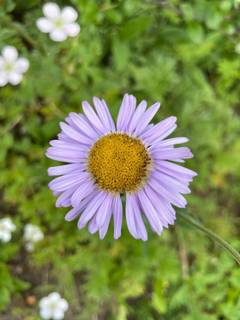
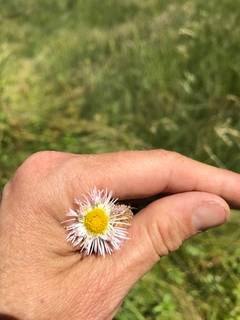
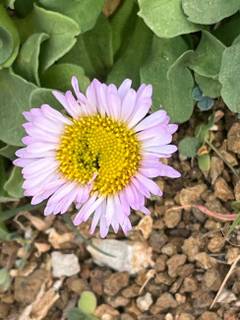
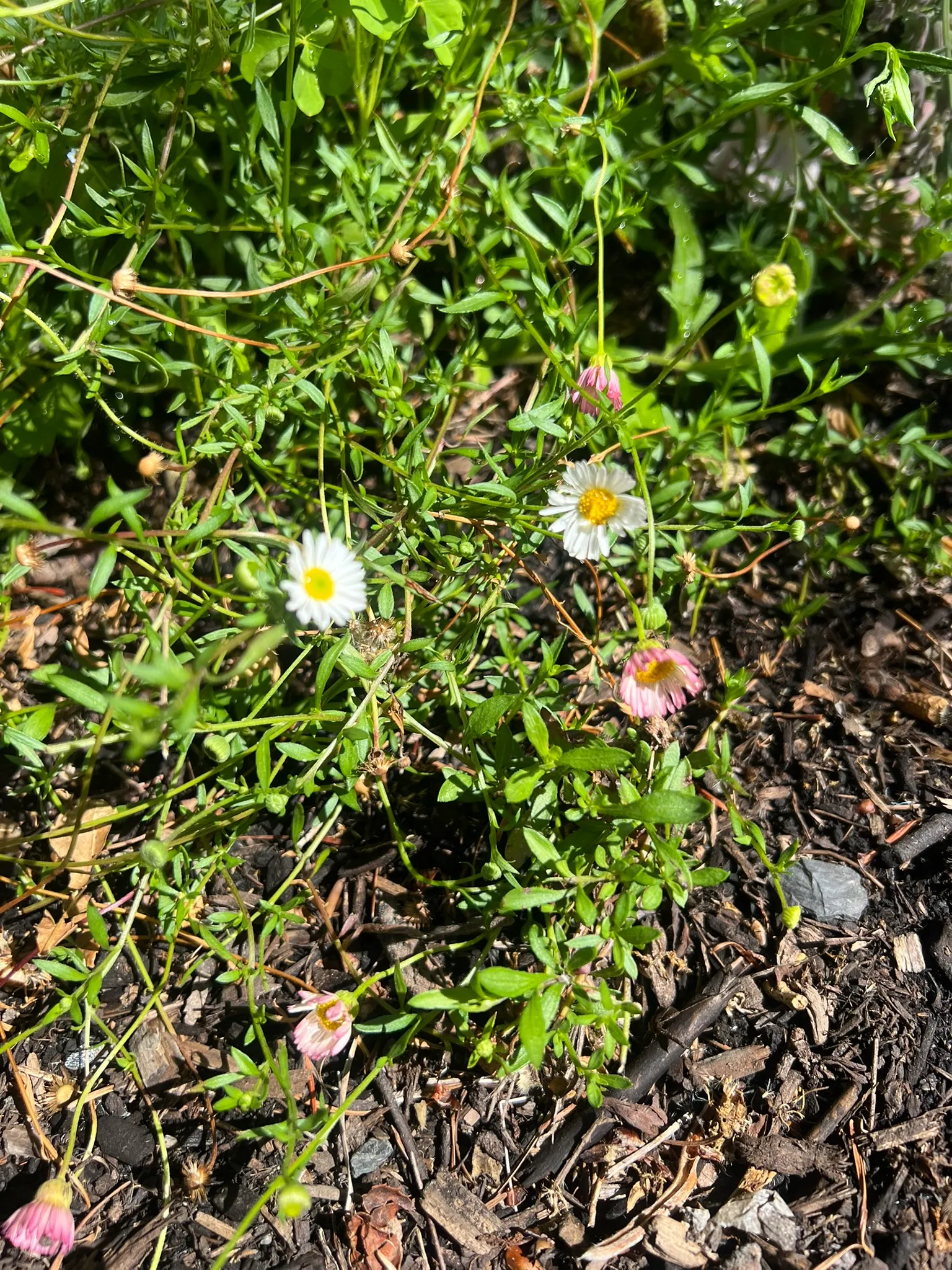
Erigeron karvinskianus is a spreading, semi-evergreen perennial in the family Asteraceae, native to Mexico, Guatemala, and Venezuela. Plants form loose mounds 6–12 inches (15–30 cm) tall and 18–36 inches (45–90 cm) wide of slender branching stems carrying small lance-shaped to spoon-shaped leaves 0.5–1.5 inches (1.3–4 cm) long. From late spring through first frost, plants carry an almost uninterrupted succession of small daisy-like flower heads 0.5–0.75 inch (1.3–2 cm) across. Each flower head opens white with a yellow disc and ages through pink to purple-pink over 3–5 days, so plants carry flowers in all three color stages simultaneously—a tricolor aging pattern rare in the daisy family. Self-seeding runs heavily in suitable conditions—between paving stones, in wall crevices, and on gravel—creating naturalized colonies that require minimal management. Cold hardiness reaches 23°F (−5°C) reliably, and the crown is root-hardy to zone 5 in sheltered positions with good drainage. In zones 9–11, flowering continues nearly year-round in mild years. The species has naturalized widely outside its native range and appears on invasive-plant watch lists in parts of the British Isles, New Zealand, and Australia, where mild coastal climates allow uncontrolled spread on walls, roadsides, and rocky coasts.
Native Range
Erigeron karvinskianus is native to Mexico, Guatemala, and Venezuela, growing on rocky slopes, cliff faces, disturbed ground, and mountain meadows at elevations of 1,000–8,000 feet (300–2,400 m). The species has naturalized widely in Mediterranean Europe, the British Isles, Macaronesia, New Zealand, and parts of Australia, where it colonizes walls, pavements, and rocky ground in mild coastal climates. The specific epithet honors Baron Wilhelm Friedrich von Karwinski (1780–1855), a Bavarian naturalist who collected the species in Mexico in the early 19th century.Suggested Uses
Planted to cascade over walls, spill from raised beds, and naturalize in gravel and between paving stones. Planting at 18–24 inch (45–60 cm) spacing in borders or allowing free self-seeding in informal settings are both workable approaches—the self-seeded populations tend to settle into the rockiest, sharpest-drained positions over time, which matches the species' native ecology. The continuous delicate bloom suits cottage gardens, Mediterranean-style plantings, and courtyard corners where the low-maintenance flowering fills edges without demanding work. Container-grown plants in 2-gallon (8 L) or larger pots carry the flower display at eye level in pots and window boxes. In regions where the species is naturalized as an invasive escape (coastal British Isles, New Zealand, parts of Australia), responsible use calls for preventing seed dispersal to wild areas or choosing non-naturalizing alternatives.How to Identify
Appearance
Size & Dimensions
Height6" - 1'
Width/Spread1'6" - 3'
Bloom Information
Small daisy-like flower heads 0.5–0.75 inch (1.3–2 cm) across bloom May through October in zones 6–9, with peak bloom June–September. In zones 9–11, bloom may continue through winter in mild years. Individual flower heads open white and age over 3–5 days through pink to purple-pink, giving a perpetual multicolored effect on the plant. Shearing plants after the first main flush in midsummer stimulates fresh growth and extends continuous flowering into fall.
Detailed Descriptions
Flower Description
White aging to pink and purple-pink, with yellow disc centersFoliage Description
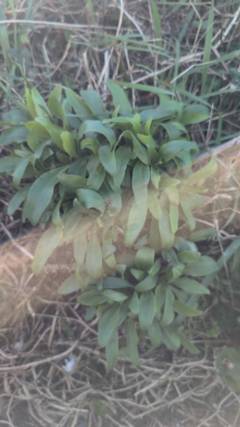
Medium green, lance-shaped to spoon-shaped, 0.5-1.5 inches (1.3-4 cm)Growing Conditions
Sun Requirements
Requires 4-8 hours of direct sunlight daily
• Full Sun: 6+ hours of direct sunlight
• Partial Shade: 3-6 hours of direct sunlight
• Full Shade: Less than 3 hours of direct sunlight
Care & Maintenance
Care Guide
Plant in full sun to partial shade in any well-drained soil, including poor, dry, sandy, and rocky substrates. Waterlogged soils are not tolerated. Once established after 1 growing season, plants need little supplemental water and carry through extended drought reliably. Cutting back by two-thirds in midsummer when plants become leggy stimulates fresh growth and a second flower flush. In zones 6–7 at the cold margin of the hardiness range, a light fall mulch over the root zone improves winter survival. Self-seeding maintains a colony in walls, crevices, and gravel—seedlings transplant poorly once established, so germination in situ is the practical approach. No serious pest or disease problems.Pruning
Shearing or cutting back by one-half to two-thirds is done in midsummer if stems become leggy and bloom diminishes; plants recover within 3–4 weeks and resume flowering. A harder cutback to 3–4 inches (8–10 cm) is done in early spring before new growth begins. Plants in mild climates can be cut back in fall as well. Division is not typically needed; aging plants are replaced from self-sown seedlings that populate the surrounding area.Pruning Schedule
Prune: March & July
early springsummer
Container Growing
Suitable for container growing
Minimum container size: 2 gallons