Overview
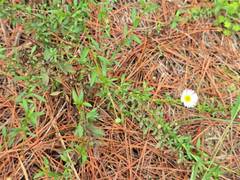
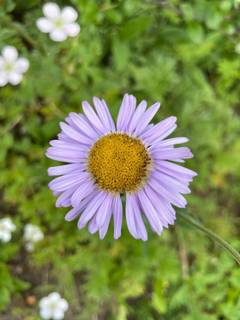
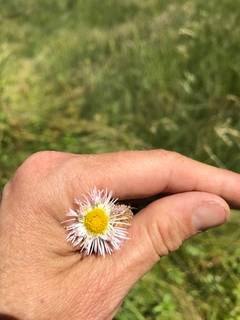
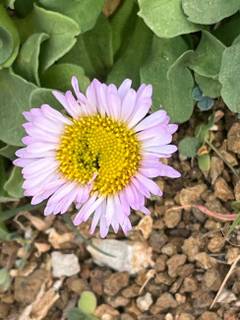
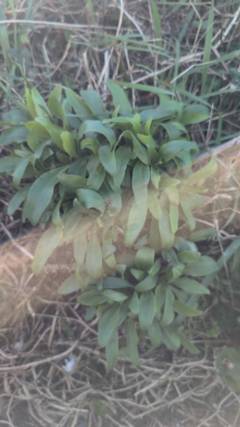
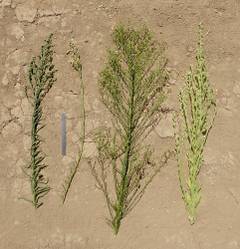
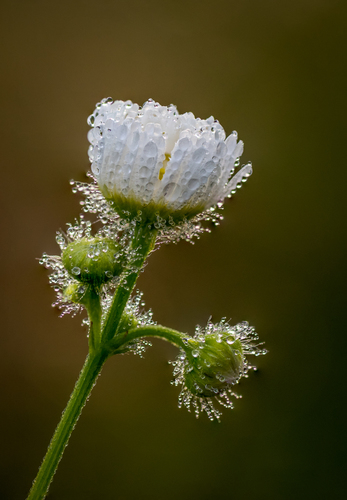
Erigeron strigosus is an annual or short-lived biennial in the aster family, growing 12-30 inches (30-75 cm) tall on slender, sparsely branched stems covered in flattened, appressed hairs. Basal leaves are lance-shaped to spatulate and stalked, 1-4 inches (2.5-10 cm) long, and mostly withered by flowering, while the stem leaves are narrow, entire, and stalkless. Flower heads are daisy-like, 0.4-0.6 inch (10-15 mm) across, with 50 to 100 narrow white, occasionally pale pink, ray florets surrounding a yellow disc. Heads are carried in open, branched clusters at the stem tips. The plant flowers over a long season and self-sows readily, appearing in disturbed ground, old fields, roadsides, and prairie remnants. It is shallow-rooted and short-lived, completing its cycle in one or two years before dying. In rich, moist soil it grows taller and lankier and may flop without support from surrounding vegetation. The wind-dispersed seed germinates in open ground, so colonies shift position from year to year rather than holding a fixed clump.
Native Range
Native to North America, widespread across much of the United States and southern Canada from the Atlantic coast to the Great Plains, with scattered populations farther west. It grows in open, disturbed habitats including old fields, prairies, pastures, and roadsides.Suggested Uses
Used in meadow plantings, prairie restorations, and naturalized borders where its long bloom and self-seeding fill gaps. It draws small bees, flies, and other pollinators to the open flower heads. Because it spreads by seed, it suits informal settings rather than tidy formal beds.How to Identify
Appearance
Size & Dimensions
Height1' - 2'6"
Width/Spread8" - 1'2"
Bloom Information
Detailed Descriptions
Flower Description
White with yellow centerFoliage Description
GreenGrowing Conditions
Sun Requirements
Requires 6-12 hours of direct sunlight daily
• Full Sun: 6+ hours of direct sunlight
• Partial Shade: 3-6 hours of direct sunlight
• Full Shade: Less than 3 hours of direct sunlight
Water & Climate
Water Needs
Drought Tolerance
Drought tolerant when established
Care & Maintenance
Care Guide
Grows in full sun and average to dry soil of low to moderate fertility. It tolerates a wide pH range and poor, compacted, or gravelly ground where taller plants falter. Water is rarely needed once seedlings establish, as the species is adapted to dry, open sites. Overly rich or moist soil produces weak, floppy stems. A portion of self-sown seedlings returns the following year without replanting. No fertilizer is required.Pruning
Spent flowering stems can be sheared back in midsummer to limit self-seeding and prompt a fresh flush of bloom. Whole plants may be pulled after seed set, as they are shallow-rooted and lift easily. No structural pruning is needed.Toxicity
Non-toxicPlanting Guide
Planting Methods & Timing
Planting Method
direct sow