Equisetum, Genus, telmateia, Species,
- Genus & species
great horsetail
Europe, North Africa, western Asia, western North America
Overview
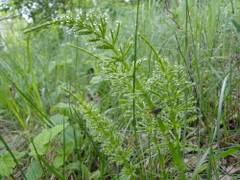
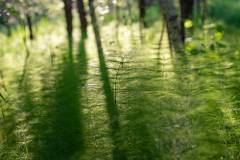
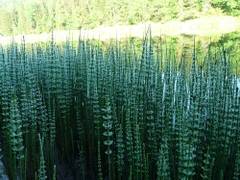
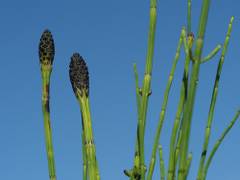
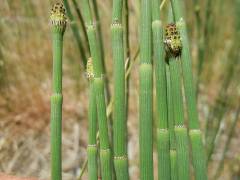
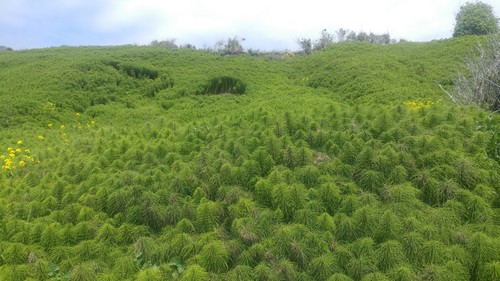
Equisetum telmateia is a spore-bearing perennial in the horsetail family, spreading by deep, dark rhizomes to form large colonies. It produces two kinds of stems. In early spring, unbranched fertile stems 8-18 inches (20-45 cm) tall emerge pale brown and lack chlorophyll, each tipped with a cone-like strobilus that releases green spores. These wither as the sterile summer stems appear, which are ivory-white, 3-7 feet (1-2 m) tall, hollow, and ringed with whorls of slender green branches at each joint, giving a bottlebrush outline. The stems are ridged and feel rough from silica deposits in the tissue. The plant has no flowers, leaves, or seeds, reproducing instead by spores and by spreading rhizomes that reach several feet deep. It grows in wet ground, ditches, seeps, and shaded streambanks on clay or marl soils. Once established the rhizomes are hard to remove and the colony can spread widely, so it behaves as a persistent weed in damp gardens. Stands die back to the rhizome each winter.
Native Range
Equisetum telmateia is native to Europe, North Africa, western Asia, and western North America. It grows in damp woodland, ditches, seepage slopes, and streambanks, usually on heavy or calcareous soils.Suggested Uses
Grown in bog gardens, pond margins, and damp wild areas where its spreading habit is contained. The dried stems have a history of use for scouring and polishing because of their silica content. It also stabilizes wet, eroding banks.How to Identify
Appearance
Size & Dimensions
Height3' - 7'
Width/Spread2' - 10'
Bloom Information
This species does not flower. Pale fertile stems appear in early spring, from March to April, and release green spores from a terminal cone before withering. The green sterile stems then grow on through summer.
Detailed Descriptions
Foliage Description
greenGrowing Conditions
Sun Requirements
Requires 3-8 hours of direct sunlight daily
• Full Sun: 6+ hours of direct sunlight
• Partial Shade: 3-6 hours of direct sunlight
• Full Shade: Less than 3 hours of direct sunlight
Care & Maintenance
Care Guide
Plants grow in part shade to full sun in consistently moist or wet, often calcareous soil. They tolerate poor drainage and seasonal flooding that few other plants accept. Spread is by deep rhizomes, which regrow from fragments and make established colonies hard to dig out. The silica-rich stems are largely free of pests and disease. In garden settings the plant is usually confined by barriers or grown in containers to limit its spread. Top growth dies back in winter and regrows from the rhizome in spring.Pruning
No routine pruning is needed. Browned stems can be cut to the ground in late autumn or winter. Repeated removal of green stems through the season gradually weakens the rhizomes.Pruning Schedule
Prune: November–December
fallwinter
Container Growing
Suitable for container growing
Minimum container size: 5 gallons