Image 1 of 8
1 / 8
© Matt Lavin from Bozeman, Montana, USA, some rights reserved (CC-BY-SA) · Wikimedia Commons
Equisetum, Genus, laevigatum, Species,
- Genus & species
smooth horsetail
Overview
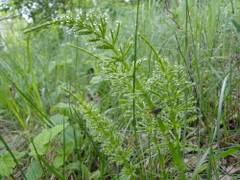
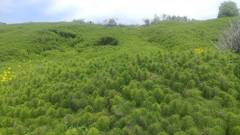
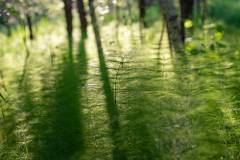
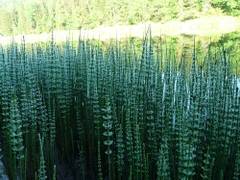
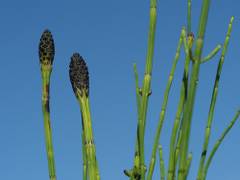
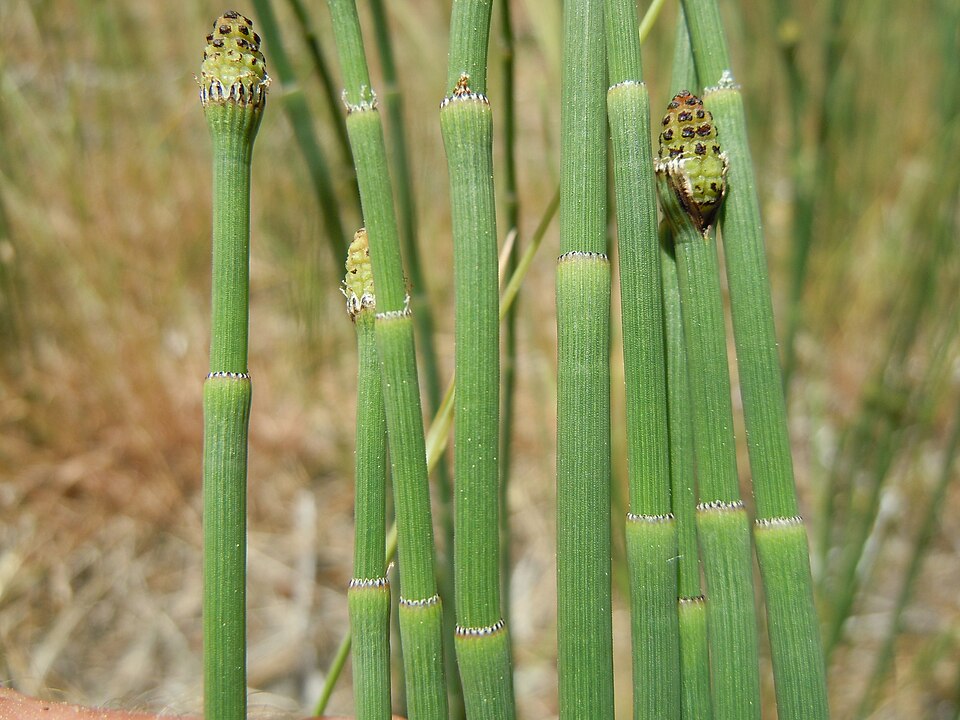
Equisetum laevigatum is a rhizomatous, non-flowering perennial in the horsetail family, spreading by deep underground rhizomes to form colonies of slender, jointed, hollow green stems 1-4 feet (30-120 cm) tall. The stems are smooth to the touch, gray-green to bright green, and ridged, with true leaves reduced to rings of small dark-tipped scales fused into a sheath at each joint; photosynthesis takes place in the green stems rather than in leaves. E. laevigatum reproduces by spores released from cone-like structures at the stem tips in spring and summer, and it spreads much more by its rhizomes. It grows in moist sandy soils along streams, ditches, lake shores, roadsides, and railway embankments across much of North America. It tolerates poor, disturbed, and seasonally wet ground and a wide pH range. The deep, brittle rhizomes break easily and resprout from fragments, so established stands are difficult to remove and the plant can spread aggressively into gardens and cropland. The stems contain silica and the enzyme thiaminase, which is poisonous to horses and other livestock that graze it in quantity. The plant is hardy across USDA zones 3-9.
Native Range
Equisetum laevigatum is native to North America, ranging widely from southern Canada across the United States into Mexico, with the densest occurrence in the central and western states. It grows in moist sandy ground along streams, ditches, floodplains, lake shores, roadsides, and railway embankments.Suggested Uses
Grown as an upright accent in contained bog gardens, pond margins, and modern or minimalist plantings where its vertical jointed stems are wanted. It is confined to pots, lined beds, or water-garden baskets to prevent spread. The stems are sometimes cut for arrangements and were historically used to scour pots because of their silica content.How to Identify
Appearance
Size & Dimensions
Height1' - 4'
Width/Spread1' - 3'
Bloom Information
The plant does not flower. Instead it produces spores in cone-like strobili at the tips of fertile stems in spring and early summer, after which the cones wither. Most spread, however, comes from the creeping underground rhizomes rather than from spores.
Detailed Descriptions
Foliage Description
greenGrowing Conditions
Sun Requirements
Requires 4-10 hours of direct sunlight daily
• Full Sun: 6+ hours of direct sunlight
• Partial Shade: 3-6 hours of direct sunlight
• Full Shade: Less than 3 hours of direct sunlight
Care & Maintenance
Care Guide
Equisetum laevigatum grows in full sun to partial shade with 4-10 hours of light and moist to wet sand, loam, silt, or clay across a soil pH from about 5.5 to 8.0. It tolerates poor, compacted, and seasonally flooded ground and needs steady moisture, though it withstands short dry spells once the rhizomes are deep. The plant is hardy in USDA zones 3-9. It spreads aggressively by deep rhizomes that resprout from fragments, so it is planted only in a contained bed, a bottomless buried planter, or a pond basket to keep it from overrunning an area. Tilling chops the rhizomes and multiplies the colony rather than controlling it.Pruning
No pruning is needed for health. Stems can be cut or mowed at any time to control height and appearance, and they regrow from the rhizomes. Repeated cutting over several seasons weakens a stand but rarely eliminates it, because the deep rhizomes persist.Pruning Schedule
Prune: June–July
summer
Container Growing
Suitable for container growing
Minimum container size: 2 gallons