Image 1 of 15
1 / 15
Plant Reference
Equisetum, Genus, arvense, Species,
- Genus & species
common horsetail (native)
Circumboreal — native across North America, Europe, and Asia; moist to wet soils along streambanks, ditches, roadsides, garden beds, poorly drained fields, and construction sites from sea level to approximately 8,500 feet (2,600 m).
Overview
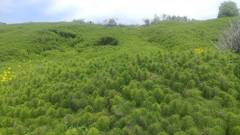
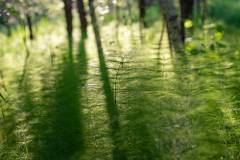
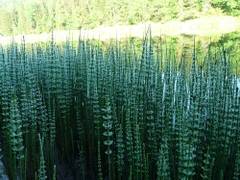
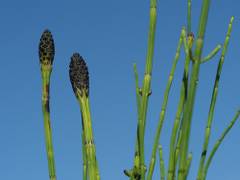
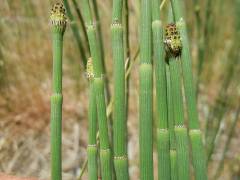
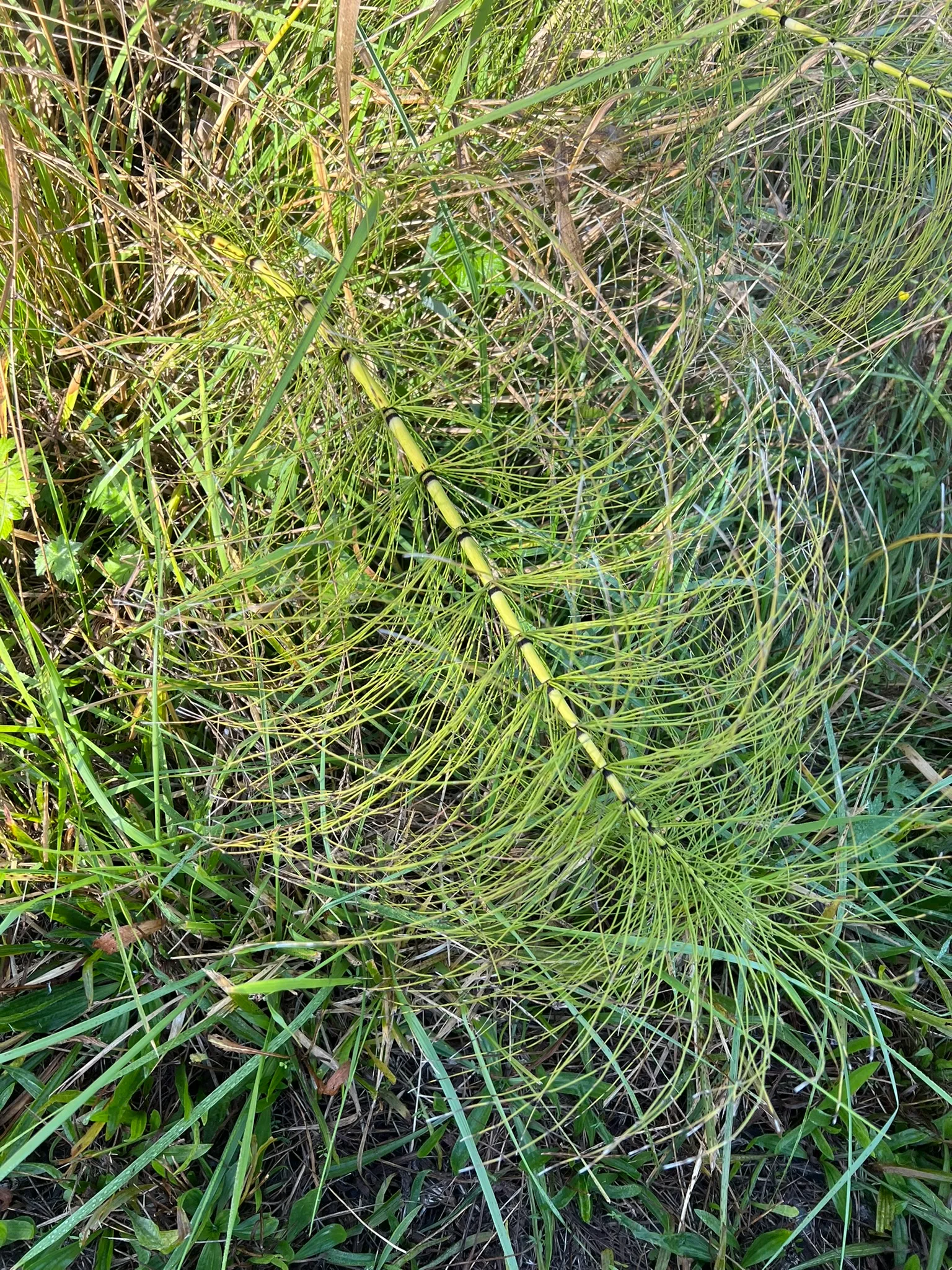
Equisetum arvense is a rhizomatous spore-bearing perennial reaching 6-24 inches (15-60 cm) tall and spreading indefinitely via deep branching rhizomes. The species is a non-flowering vascular plant classified with ferns and fern allies rather than flowering plants. Two types of aerial stems are produced during the year. Fertile stems emerge in early spring, pale tan to pinkish-brown, unbranched, jointed, 4-10 inches (10-25 cm) tall, topped by a cone-like strobilus that releases green spores; these fertile stems wither 2-3 weeks after spore release. Vegetative stems emerge shortly after, green, jointed, 6-24 inches (15-60 cm) tall, with whorls of slender green jointed branches at each node giving a bottle-brush or miniature-pine-tree appearance. True leaves are reduced to small fused toothed sheaths at each node and are not photosynthetic; photosynthesis occurs in the green jointed branches and the stem itself. Stem surfaces contain silica, giving a gritty texture that was historically used as a natural abrasive for polishing metal and wood (the source of one historical common name, scouring rush, although that name is more properly applied to E. hyemale). The rhizome network extends 3-6 feet (0.9-1.8 m) deep and spreads laterally 10-15 feet (3-4.5 m) from the parent plant, with tuber-like nodules that store energy reserves, and rhizome fragments as small as 0.5 inch (1 cm) regenerate. Hardy in USDA zones 2-9 (-50°F / -46°C). Foliage contains thiaminase, an enzyme that degrades vitamin B1 and causes toxicity in horses consuming contaminated hay.
Native Range
Equisetum arvense has a circumboreal distribution, native across North America, Europe, and Asia, from sea level to approximately 8,500 feet (2,600 m). Plants grow in moist to wet soils along streambanks, ditches, roadsides, garden beds, poorly drained fields, and construction sites. The species is present in all 50 U.S. states and all Canadian provinces. The genus Equisetum represents one of the oldest living plant lineages, with tree-sized fossil relatives dating to the Carboniferous period (approximately 350 million years ago).Suggested Uses
The species is used in botany courses as a living example of a fern ally (sphenophyte), demonstrating jointed stems, reduced leaves, spore reproduction, and silica deposition. The Carboniferous-era fossil relatives of Equisetum reached tree size, and modern species are used to teach plant evolution and paleobotany. The species is studied in weed biology as a model for deep-rhizome persistence. Stems have a long historical record of use as a natural abrasive for polishing metal and wood (scouring).How to Identify
Appearance
Size & Dimensions
Height6" - 2'
Width/Spread1' - 3'
Bloom Information
The species does not flower. Strobili (spore cones) are produced at the tips of pale unbranched fertile stems in March through April in the Pacific Northwest. Spores are green, ephemeral, and viable for only a few days after release. Strobili emerge before vegetative stems and wither within 2-3 weeks. Vegetative stems persist from April through the first hard frost in fall.
Detailed Descriptions
Foliage Description
Green; true leaves are reduced to small, fused, toothed sheaths at each stem node, not photosynthetic; vegetative stems carry whorls of slender green jointed branches at each node that perform photosynthesisGrowing Conditions
Sun Requirements
Requires 2-10 hours of direct sunlight daily
• Full Sun: 6+ hours of direct sunlight
• Partial Shade: 3-6 hours of direct sunlight
• Full Shade: Less than 3 hours of direct sunlight