Equisetum, Genus, palustre, Species,
- Genus & species
marsh horsetail
Temperate and boreal Northern Hemisphere
Overview
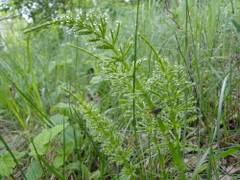
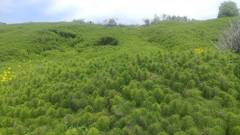
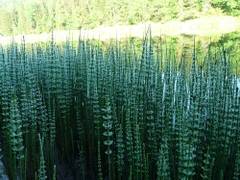
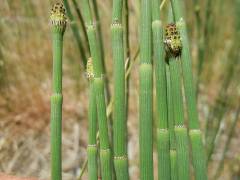
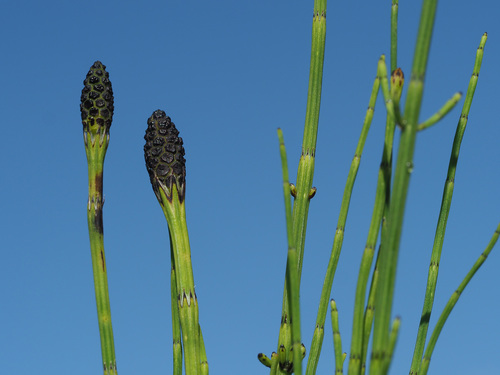
Equisetum palustre is a perennial, spore-bearing vascular plant in the horsetail family (Equisetaceae), spreading by deep, dark, creeping rhizomes and sending up jointed, hollow green stems 4–24 inches (10–60 cm) tall. The stems are ridged and bear whorls of slender, upward-angled green branches at each joint, giving a narrow, bottlebrush outline; the central hollow of the stem is large relative to the smaller branch cavities. Tiny scale-like leaves are fused into toothed sheaths at the joints. It reproduces by spores, not flowers, releasing them from a single blunt, dark cone 0.4–1.2 inches (1–3 cm) long at the tip of fertile stems from June to September. It grows in wet, poorly drained ground such as marshes, fens, wet meadows, ditches, and damp dune slacks, on soils from acid to base-rich. The plant contains the alkaloid palustrine and an enzyme that breaks down vitamin B1, making it poisonous to horses and other livestock when eaten in hay or quantity. Its deep rhizomes make it persistent and hard to remove from cultivated land.
Native Range
Native across the temperate and boreal Northern Hemisphere, including Europe, northern and central Asia, and northern North America. It is widespread on wet ground throughout this range.Suggested Uses
Equisetum palustre has no garden or crop use and is regarded as a poisonous weed of wet ground. Its abrasive, silica-rich stems have a minor history of use for scouring, though its toxicity rules out fodder or culinary use.How to Identify
Appearance
Size & Dimensions
Height4" - 2'
Bloom Information
Equisetum palustre does not flower. Spores are released from a single blunt, dark cone at the stem tip from June to September. New green shoots emerge in spring from the spreading rhizome, and the plant also spreads steadily underground through the season.
Detailed Descriptions
Foliage Description
greenGrowing Conditions
Sun Requirements
Requires 4-10 hours of direct sunlight daily
• Full Sun: 6+ hours of direct sunlight
• Partial Shade: 3-6 hours of direct sunlight
• Full Shade: Less than 3 hours of direct sunlight