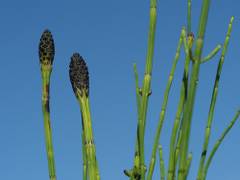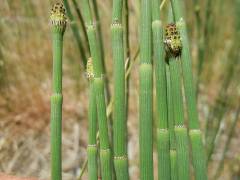
Equisetum, Genus, hyemale, Species,
- Genus & species
scouring rush
North America, Europe, and Asia; stream banks, pond margins, wet meadows, and roadside ditches
Overview
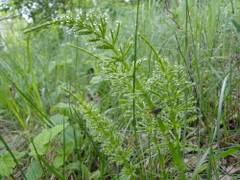
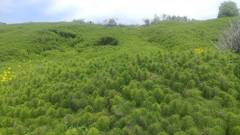
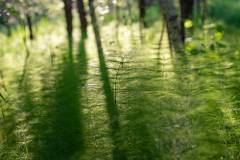
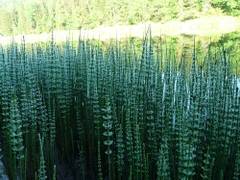
Equisetum hyemale is an evergreen, rhizomatous, primitive vascular plant in the family Equisetaceae. It is not a true fern but a member of the plant division Equisetophyta, a lineage that has persisted with similar morphology since the Carboniferous period, more than 300 million years ago. The species is native to stream banks, pond margins, wet meadows, and roadside ditches across North America, Europe, and Asia. Plants form dense colonies of erect, unbranched, jointed, hollow green stems 2–5 feet (60–150 cm) tall and 0.25–0.5 inch (6–12 mm) in diameter. True leaves are reduced to small scales fused into black-and-white banded sheaths at each node, with 7–10 ridges per sheath. The stems contain silica crystals embedded in the epidermis and feel rough to the touch; this property is the source of the common name scouring rush, as the stems were historically used to scour pots and polish woodwork. Strobili (cone-like spore-bearing structures) 0.5–1.5 inches (1.5–4 cm) appear at stem tips in spring. Spread is by deep, branching rhizomes that can extend several feet below the soil surface. All parts contain thiaminase, which destroys vitamin B1 and causes toxicosis in horses, cattle, and sheep through chronic ingestion. Limitation: rhizome spread is aggressive and difficult to eradicate once established; the species is not suited to small or formal gardens without containment.
Native Range
Native to stream banks, pond margins, wet meadows, and roadside ditches across North America, Europe, and Asia in moist to wet, sandy to clayey, acidic to alkaline soils.Suggested Uses
Used in large-scale wetland restoration, pond and stream margins, rain garden overflow zones, and contemporary garden designs where the vertical jointed stems supply year-round structure. Container plantings or raised beds with solid barriers contain spread in managed garden settings.How to Identify
Appearance
Size & Dimensions
Height2' - 5'
Width/Spread1' - 3'
Bloom Information
Does not flower; reproduces by spores. Strobili (cone-like spore-bearing structures) 0.5–1.5 inches (1.5–4 cm) long appear at stem tips in spring (April through May). The jointed, banded stems remain green and upright through all four seasons.
Detailed Descriptions
Foliage Description
dark green; erect, unbranched, jointed, hollow stems 0.25-0.5 inch (6-12 mm) in diameter with black-and-white banded sheaths at each node; true leaves reduced to small scales fused into the sheaths; stems rough to the touch from silica deposits in the epidermisGrowing Conditions
Sun Requirements
Tolerates up to 8 hours of direct sunlight daily
• Full Sun: 6+ hours of direct sunlight
• Partial Shade: 3-6 hours of direct sunlight
• Full Shade: Less than 3 hours of direct sunlight
Care & Maintenance
Care Guide
Site in full sun to full shade with 0–8 hours of direct sun per day in moist to wet, moderately fertile soil with a pH of 5.5–8.0. The species tolerates standing water, wet clay, sandy soil, and low fertility. Spread is rapid by deep creeping rhizomes that can extend several feet from the parent clump within a single season. Containment with deep root barriers extending 18–24 inches (45–60 cm) below the soil surface, or planting in containers sunk into the ground, limits lateral spread. Hardy in USDA zones 4–9. Fertilizer is not required.Pruning
Cut dead or damaged stems to ground level as needed; the stems are evergreen and require no seasonal pruning. Rhizomes can be severed at planting boundaries with a sharp spade in spring or fall and the cut sections lifted. Eradication once established is difficult and often requires multiple seasons of rhizome removal.Pruning Schedule
Prune: March
early spring
Container Growing
Suitable for container growing
Minimum container size: 5 gallons