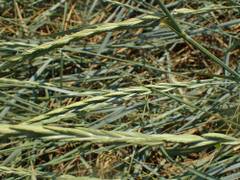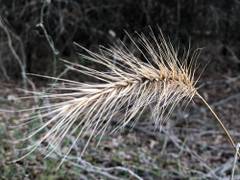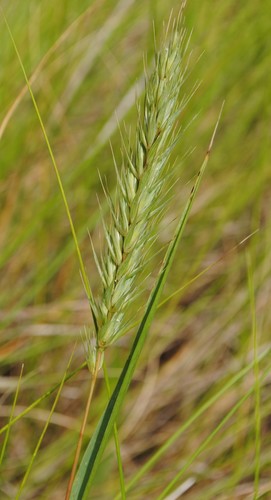
Elymus, Genus, virginicus, Species,
- Genus & species
Virginia wildrye
Overview
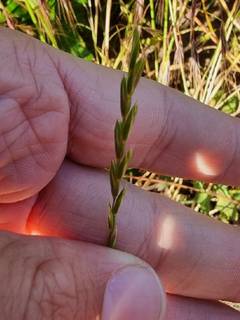
Elymus virginicus, Virginia wildrye, is a cool-season perennial bunchgrass 2-4 feet (0.6-1.2 m) tall, forming upright, loosely tufted clumps. The flat to slightly rolled leaf blades are green to blue-green, 0.2-0.6 inch (5-15 mm) wide, and rougher on the upper surface. From early to midsummer it produces stiff, erect seed spikes 2-6 inches (5-15 cm) long that resemble narrow heads of wheat, with long straight awns that give the spike a bristly look as the seed ripens and the head nods slightly. It is native across much of eastern and central North America, growing in moist woods, floodplains, streambanks, and shaded clearings. The grass tolerates partial shade, periodic flooding, and a wide range of soils, which sets it apart from many sun-demanding prairie grasses. It is comparatively short-lived, often persisting only a few years, but it self-seeds readily and establishes fast, making it useful for quick cover. Plants green up early in spring and can look ragged by late summer once the seed has shed. The awns can catch in clothing and animal coats, and dense stands may seed into nearby beds.
Native Range
Elymus virginicus is native to eastern and central North America, from southern Canada through the eastern United States west to the Rocky Mountains and south to Texas and Florida. It grows in moist woods, floodplains, streambanks, and shaded roadsides.Suggested Uses
Elymus virginicus is used in woodland edges, rain gardens, streambank stabilization, and native meadow mixes for fast cover. Its seeds feed birds and small mammals, and the foliage shelters ground-nesting wildlife.How to Identify
Appearance
Size & Dimensions
Height2' - 4'
Width/Spread1' - 2'
Colors
Bloom Information
Seed spikes form from June to August and ripen from green to straw-tan over several weeks. The awned heads persist into fall, gradually shattering to drop seed. There is no showy flower; the bristly spikes are the visible feature.
Detailed Descriptions
Flower Description
green to straw-tanFoliage Description
green to blue-greenGrowing Conditions
Sun Requirements
Requires 3-8 hours of direct sunlight daily
• Full Sun: 6+ hours of direct sunlight
• Partial Shade: 3-6 hours of direct sunlight
• Full Shade: Less than 3 hours of direct sunlight
Care & Maintenance
Care Guide
Grow Elymus virginicus in full sun to part shade in moist, fertile soil with a pH of about 5.5 to 7.5, though it adapts to drier and leaner ground. Unlike many native prairie grasses, it grows well in partial shade and tolerates seasonal flooding and clay. Sow seed in fall or early spring; it germinates quickly and often flowers the first year. Plants are short-lived but maintain a stand through self-seeding. Cutting back before the seed drops controls unwanted spread.Pruning
Cut clumps to a few inches above the ground in late fall or late winter. Removing the seed heads before they shatter limits self-seeding where it is not wanted. No other pruning is required.Pruning Schedule
Prune: February & November
fallwinter