Elymus, Genus, repens, Species,
- Genus & species
quackgrass
Europe, western and central Asia; naturalized across most of the United States and all Canadian provinces
Overview
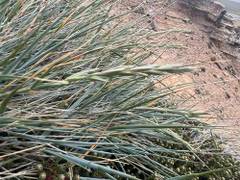
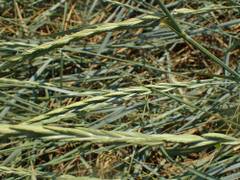
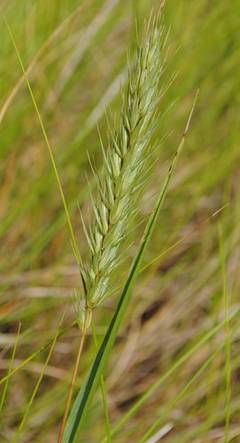
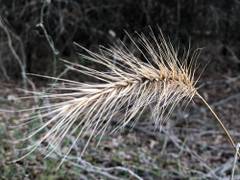
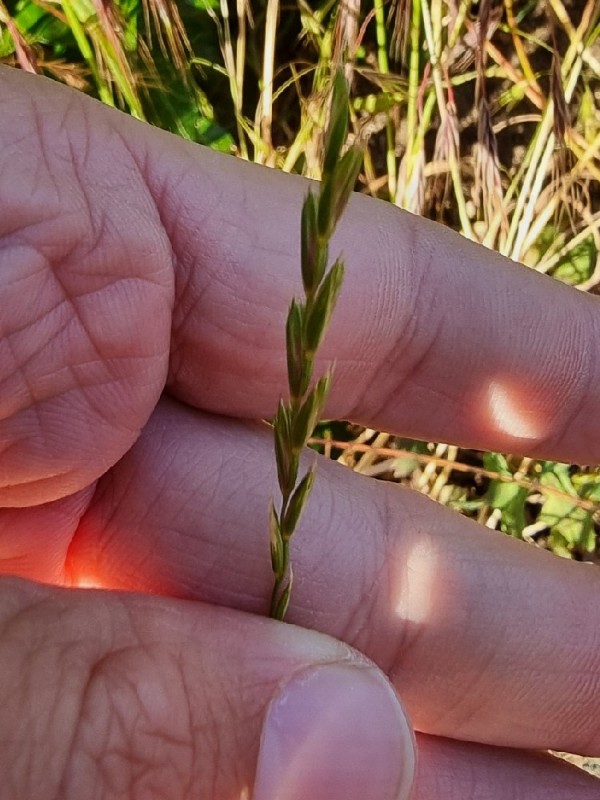
Elymus repens is a cool-season perennial grass in the family Poaceae with an extensive underground rhizome system that allows aggressive colony formation. Plants produce erect stems typically reaching 12–48 inches (30–120 cm) tall with flat linear leaves that are blue-green to gray-green in color and measure 4–10 inches (10–25 cm) long and 0.08–0.4 inch (2–10 mm) wide. The upper leaf blade surface is scabrous (rough to the touch from minute silica hairs) while the lower surface is smooth; prominent parallel veins run the length of the blade. The underground rhizome system extends horizontally 3–10 feet (0.9–3 m) per year at depths of 2–6 inches (5–15 cm), with adventitious shoots emerging every 2–6 inches (5–15 cm) along the rhizomes. Rhizomes are white, segmented, and sharply pointed at the growing tips — the pointed tips can pierce potato tubers and other soft root vegetables during rhizome spread. Rhizome fragments as small as 0.5 inch (1.25 cm) with a single node regenerate into new plants, making fragmentation by cultivation equipment the principal mechanism by which infestations spread within agricultural fields. Inflorescence is a terminal spike 2–8 inches (5–20 cm) long with spikelets arranged alternately along the rachis (edgewise on opposite sides of the stem). Each spikelet contains 3–7 florets and may have short awns or be awnless. Listed as a noxious weed in several U.S. states. Not known to be toxic to pets or humans — the species can be grazed by livestock, though coarse texture limits palatability.
Native Range
Elymus repens is native to Europe, western and central Asia, extending from the Mediterranean region through temperate areas of the continent. The species has been widely introduced to North America and is naturalized across most of the United States and all Canadian provinces. It occurs in cultivated fields, pastures, gardens, roadsides, and disturbed ground from sea level to moderate elevations.Suggested Uses
Used primarily for erosion control on disturbed slopes and road-cut embankments where the aggressive rhizome spread rate and deep root penetration stabilize bare soil within 1–2 growing seasons after sowing. The species is unsuitable for ornamental landscape plantings, lawn areas, vegetable gardens, and perennial borders because of the indefinite rhizome spread and the rhizome fragmentation hazard from cultivation. In pasture and hay production, the species is considered a contaminant rather than a desirable forage, with coarse texture reducing palatability and productivity compared with Dactylis glomerata or Lolium perenne. In wildlife habitat restoration in regions where the species is native (Europe, western Asia), the dense rhizomatous mat carries ground-cover habitat for small mammals and ground-nesting birds. Rhizomes have been used in traditional European herbal preparations.How to Identify
Appearance
Size & Dimensions
Height1' - 4'
Width/Spread3' - 10'
Bloom Information
Terminal spikes 2–8 inches (5–20 cm) long with edgewise-alternating spikelets appear from May through July. Wind-pollinated flowering occurs over 2–3 weeks per spike. Seeds mature 3–5 weeks after pollination in July–August. Seed dispersal is limited (0.5–2 feet / 15–60 cm from the parent plant) but rhizome spread is the principal mechanism of colony expansion rather than seed dispersal, with rhizomes extending 3–10 feet (0.9–3 m) per year under favorable conditions.
Detailed Descriptions
Flower Description
Green to pale yellow; terminal spike 2-8 inches long with edgewise-alternating spikelets; wind-pollinatedFoliage Description
Blue-green to gray-green; flat linear 4-10 inches long by 0.08-0.4 inch wide; scabrous (rough) upper surface, smooth lower surface, prominent parallel veinsGrowing Conditions
Sun Requirements
Requires 4-10 hours of direct sunlight daily
• Full Sun: 6+ hours of direct sunlight
• Partial Shade: 3-6 hours of direct sunlight
• Full Shade: Less than 3 hours of direct sunlight