Elymus, Genus, glaucus, Species,
- Genus & species
blue wildrye
Alaska and British Columbia south through Washington, Oregon, California to Baja California; east through the Rocky Mountains to the Great Plains; forest edges, open woodlands, and dry to mesic slopes from sea level to 10,000 feet (3,050 m)
Overview
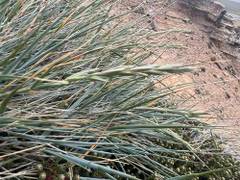
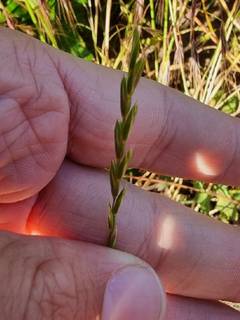
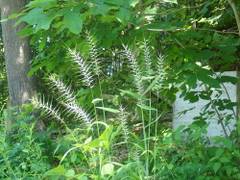
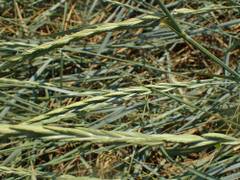
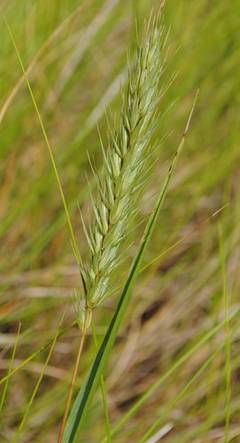
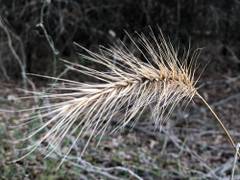
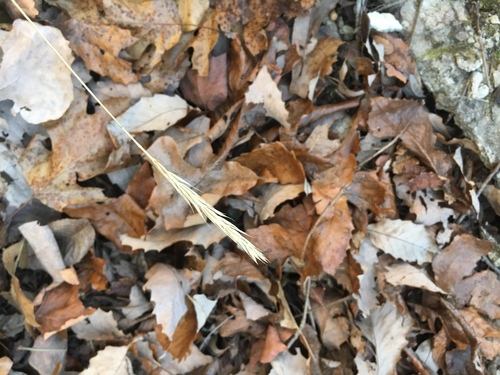
Elymus glaucus is a cool-season bunchgrass of the family Poaceae, forming dense upright clumps 20-48 inches (50-120 cm) tall and 12-18 inches (30-45 cm) wide. Foliage is flat, blue-green to gray-green, with leaf blades 0.16-0.4 inch (4-10 mm) wide that arch slightly outward from the base. Inflorescences are narrow erect spikes 3-8 inches (7.5-20 cm) long bearing paired green spikelets that ripen to straw-tan by July. Each spikelet has long stiff awns 0.4-1.2 inches (10-30 mm) extending past the lemma, giving the seed head a bristled appearance. The species is short-lived as a perennial, persisting 3-5 years in cultivation before clumps decline; it self-sows reliably in disturbed soil to maintain populations. Awns can lodge in the eyes, ears, and gums of dogs and livestock during summer; this restricts use in pet-active areas. Native populations occur in forest openings, open woodlands, dry montane slopes, and roadside cuts from sea level to subalpine elevations.
Native Range
Native across western North America from Alaska south through British Columbia, Washington, Oregon, and California to Baja California, and east through the Rocky Mountains to the Great Plains. In the Pacific Northwest, populations occur in Douglas-fir and oak woodland understories, forest edges, and open slopes from sea level to 10,000 feet (3,050 m).Suggested Uses
Used in dry meadow restoration, oak woodland understory plantings, slope stabilization on cuts and fills, and forest-edge groupings paired with Festuca rubra and Bromus carinatus. Spaced 12-18 inches (30-45 cm) apart in restoration installations. Awned seed heads restrict use in lawn-edge plantings and dog-active areas where the bristles can injure pets.How to Identify
Appearance
Size & Dimensions
Height1'8" - 4'
Width/Spread1' - 1'6"
Bloom Information
Spikes emerge in mid-May and mature through June into early July, with each clump in active flower for 6-8 weeks. By mid-July, spikelets ripen from green to straw-tan and shatter through August, releasing seed that germinates the following spring in disturbed soil.
Detailed Descriptions
Flower Description
green to straw-tan narrow erect spikesFoliage Description
blue-green to gray-green; flat blades 0.16-0.4 inch (4-10 mm) wideGrowing Conditions
Sun Requirements
Requires 4-10 hours of direct sunlight daily
• Full Sun: 6+ hours of direct sunlight
• Partial Shade: 3-6 hours of direct sunlight
• Full Shade: Less than 3 hours of direct sunlight
Care & Maintenance
Care Guide
Plant in well-drained loam, sandy loam, rocky, or clay soils in the pH range 5.5-7.5, in part shade to full sun. Soil moisture during the first growing season aids establishment, after which the species is summer-drought tolerant once roots reach 12-24 inches (30-60 cm) deep. No fertilizer is required. Clumps live 3-5 years and the species relies on self-sowing to maintain populations; thin volunteer seedlings in spring to maintain spacing of 12-18 inches (30-45 cm) between mature clumps. Awned seeds disperse on animal fur and can travel several feet from the parent plant.Pruning
Cut spent culms and dormant foliage to 4 inches (10 cm) from the crown in late winter (February-March) before new growth emerges. Removing seed heads in mid-July before they shatter limits self-sowing in cultivated beds. Replace declining clumps after 3-5 years and rely on volunteer seedlings.Pruning Schedule
Prune: February–March
late spring