Elymus, Genus, hystrix, Species,
- Genus & species
bottlebrush grass
Eastern North America (from Quebec south to Georgia and west to Minnesota); deciduous-forest understory, woodland margins, and shaded ravine-slope habitats.
Overview
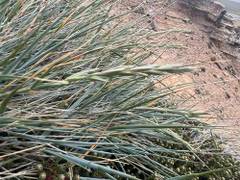
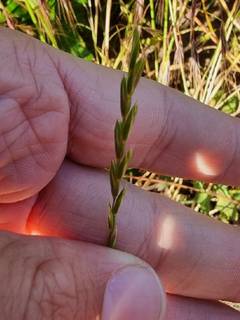
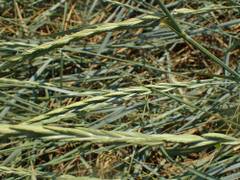
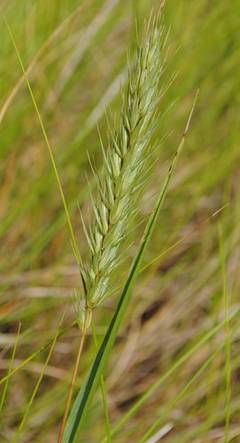
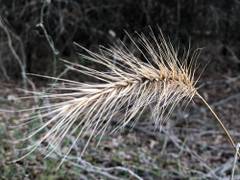
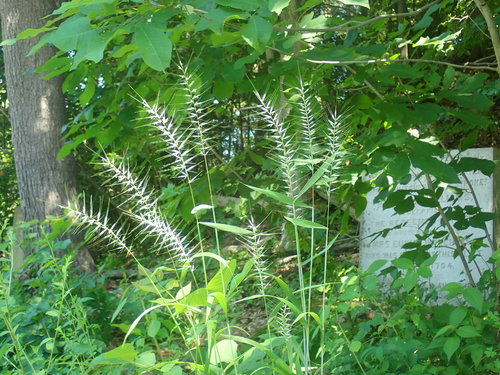
Elymus hystrix (synonym Hystrix patula) is bottlebrush grass (also called eastern bottlebrush grass), a native eastern North American shade-tolerant cool-season grass in the grass family (Poaceae) growing 24-48 inches (60-120 cm) tall and 12-18 inches (30-45 cm) wide as a clumping perennial. The species name 'hystrix' is Greek for 'porcupine' and references the long awns (bristle-like extensions of the seed-bearing structures) that project at right angles from the central spike axis to produce a bottlebrush- or porcupine-quill-shaped inflorescence — the spike architecture is the species' principal field-identification character, and no other commonly cultivated North American native grass produces the same right-angle-radiating-awn spike form. Green spikelets aging to tan appear on open terminal spikes 4-6 inches (10-15 cm) long from June through July across a 4-week active flowering window, with the spikes persisting on the standing stems past peak color into fall and supplying continuing dried-arrangement and structural value through the dormant season. The species is among the few native ornamental grasses that performs reliably in shade — most ornamental grasses are sun-loving prairie or meadow species that perform poorly in shade, while Elymus hystrix grows naturally on the floor of eastern deciduous forests and tolerates the deep shade and the dry-soil conditions that develop under the canopy of established trees. The species is among the more cultivation-reliable native grasses for dry-shade planting positions where most other native grasses fail. Cool-season growth habit means the species grows actively in spring and fall and goes summer-dormant during the heat of summer, with the principal flush of new foliage appearing in March-April and the bloom following in June-July before the summer-dormancy phase begins; this growth pattern is opposite to the warm-season grass group (Muhlenbergia, Panicum, Schizachyrium) that grows actively through the heat of summer and produces flower display in late summer or fall. The C3 photosynthetic pathway used by cool-season grasses is biochemically more efficient at moderate temperatures than the C4 pathway used by warm-season grasses, and the cool-season group dominates the temperate-climate native grass flora at higher latitudes and in shaded forest understory positions where temperatures stay cool enough for the C3 pathway to outcompete the C4 alternative. The species is a short-lived perennial (3-5 years) that maintains colony persistence by light self-sowing in suitable understory substrate; the self-sowing is generally welcome in naturalized woodland plantings where the species fills its native ecological role, but gardeners who want a strictly contained planting can deadhead the spikes before seed shed to prevent the self-sowing. Wide arching bamboo-like medium green leaves on the basal rosette and along the upright flowering stems give the species an architectural foliage texture distinct from the narrow-bladed foliage of most native grasses. Hardy to zone 3, drought-tolerant once established, and deer-resistant. The bottlebrush-shaped seed spikes are widely used in dried floral arrangements where the radiating-awn spike form holds for months without fading. The species is non-toxic to humans and pets.
Native Range
Elymus hystrix is native to eastern North America with a continuous native range from southern Quebec and Ontario south through New York, Pennsylvania, and the Appalachian foothills to Georgia and west through the Great Lakes region to Minnesota and Iowa. The species occurs in deciduous-forest understory, woodland-margin habitats, shaded ravine slopes, and oak-hickory savanna positions across the eastern North American native range, with the species' physiological adaptation to deep shade, dry-to-moist soil, and cool-season growth timing reflecting the eastern deciduous forest understory native habitat. The species is one of the principal native shade-grass cultivation choices for woodland gardens, native-plant gardens, and forest-restoration plantings across the eastern and central United States.Suggested Uses
Used in shade gardens, woodland gardens, dry-shade planting positions, native-plant gardens, forest-restoration plantings, and dried-flower arrangements. The species is among the few native ornamental grasses that performs reliably in shaded planting positions and is the principal native-grass cultivation choice for dry-shade gardens where most ornamental grasses fail. The bottlebrush-shaped seed spikes are widely used in dried floral arrangements where the radiating-awn spike form holds for months without fading. The species pairs with companion native shade-garden perennials including Carex plantaginea, Polygonatum, Asarum, Tiarella, and small Hosta cultivars for a multi-species woodland-garden composition where the Elymus bottlebrush spikes supply a vertical accent above the lower-growing companion plants.How to Identify
Appearance
Size & Dimensions
Height2' - 4'
Width/Spread1' - 1'6"
Colors
Bloom Information
Green spikelets open on open terminal spikes 4-6 inches (10-15 cm) long with long awns projecting at right angles from June through July across a 4-week active flowering window. The spikelets age to tan as the season progresses and the spikes persist on standing stems through the dormant season, supplying continuing dried-arrangement and structural value past the active flowering window. Pollination is by wind in the typical grass-family pattern, with the spikes producing wind-dispersed seed that supports light self-sowing for colony persistence in suitable understory substrate.
Detailed Descriptions
Flower Description
Green spikelets aging to tan, carried in open terminal spikes 4-6 inches (10-15 cm) long with long awns (bristle-like extensions of the seed-bearing structures) projecting at right angles from the central spike axis to produce a bottlebrush- or porcupine-quill-shaped inflorescence; the species name 'hystrix' is derived from the Greek word for porcupine and references the radiating-bristle appearance of the seed-bearing spikeFoliage Description
Medium green; wide arching bamboo-like leaf blades arranged in a clumping basal rosette and along the upright flowering stems, with the wide leaf form being broader than the narrow blades of most native grasses and giving the species a bamboo-like foliage texture in shaded planting positionsGrowing Conditions
Sun Requirements
Requires 3-8 hours of direct sunlight daily
• Full Sun: 6+ hours of direct sunlight
• Partial Shade: 3-6 hours of direct sunlight
• Full Shade: Less than 3 hours of direct sunlight
Care & Maintenance
Care Guide
Plant in partial shade to full shade with 3-8 hours of direct light or filtered all-day shade. Average to dry well-drained soil at pH 5.5-7.5 supports the species; the species tolerates lean soil and dry-shade conditions consistent with its eastern deciduous forest understory native habitat, and the species is among the more cultivation-reliable native grasses for dry-shade planting positions where most other ornamental grasses fail. Watering is during establishment and through extended summer drought, though the species is moderately drought-tolerant once the basal-clump root system develops. Fertilization is generally not needed because the species is adapted to forest-floor leaf-litter recycling and over-fertilization produces leggy weak growth. The species is short-lived (3-5 years) and maintains colony persistence by light self-sowing; in naturalized woodland plantings the self-sowing is generally welcome and replenishes the colony as individual plants age out, while gardeners who want strictly contained plantings can deadhead the spikes before seed shed to prevent self-sowing. All stems are cut to ground level in late February through early March before new spring growth emerges from the basal rosette.Pruning
Cut all stems to ground level in late February through early March before new spring growth emerges. Leave the bottlebrush spikes standing through fall and winter for continuing dried-arrangement and structural value past the active flowering window. Allow light self-sowing in naturalized plantings to replenish the short-lived colony, or deadhead the spikes before seed shed in strictly contained plantings.Pruning Schedule
Prune: February–March
early spring