Elymus, Genus, magellanicus, Species,
- Genus & species
magellan wheatgrass
Southern South America (Patagonia, Tierra del Fuego, Falkland Islands)
Overview
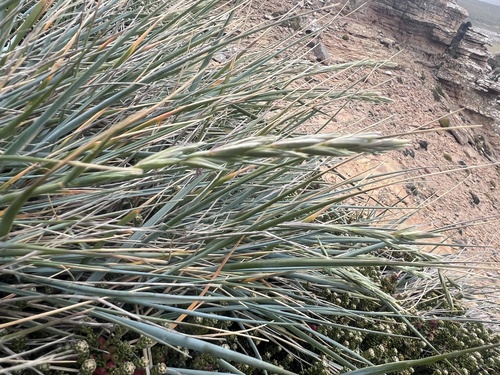
Elymus magellanicus is a cool-season, evergreen, clumping ornamental grass reaching 12–18 inches (30–45 cm) tall and wide. The species carries intensely steel-blue to silver-blue arching foliage matched for color saturation by few other ornamental grasses in commerce—the blue reads as a true saturated blue at 6–10 feet viewing distance rather than shifting toward gray as most blue-leaved grasses do at viewing distance. The leaves are broad for an ornamental grass at 0.25–0.5 inch (6–12 mm) wide—wider than Festuca glauca (0.08–0.12 inch / 2–3 mm) and with a stiffer texture that holds an upright arc rather than collapsing into a soft tuft. Green flower stems 18–24 inches (45–60 cm) above the foliage mature to golden-tan in July–August. The foliage develops purple-bronze tints in cool autumn and winter weather. A cool-season grass, the species grows actively in spring and fall and becomes semi-dormant through summer heat. The species is short-lived at 3–5 years per plant and declines in hot humid summer climates (zones 8–9 with high humidity), where crown rot and foliar fungal problems develop during summer dormancy. Self-sown seedlings appear on well-drained soil at modest rates and replace aging parent clumps in suitable conditions. Native to Patagonia, Tierra del Fuego, and the Falkland Islands—the cold, windy, exposed grasslands at the southern tip of South America shape the species' tolerance of severe winter weather and its intolerance of warm humid summers.
Native Range
Elymus magellanicus is native to southern South America—Patagonia (southern Argentina and southern Chile), Tierra del Fuego, and the Falkland Islands, growing in exposed grasslands and rocky slopes at the southern tip of the continent where winter temperatures drop to −10°F (−23°C) and summer maxima rarely exceed 65°F (18°C). The species epithet 'magellanicus' refers to the Strait of Magellan region where the species was originally collected.Suggested Uses
Planted in gravel gardens, rock gardens, steppe-style plantings, and containers at 12–18 inch (30–45 cm) spacing. The intense blue foliage carries strong color contrast against green and silver companions and reads from 6–10 feet away as a definite blue rather than gray-blue. Paired with Sedum 'Autumn Joy', Perovskia atriplicifolia, and lean-soil perennials such as Eryngium species, the grass combines well in dry-garden compositions. Container-grown specimens in 3-gallon (11 L) or larger pots show the foliage color at close range where subtleties of the blue-silver gradient register. Lean dry soil and full sun conditions are needed for the color display; rich moist soils, shade, and hot humid summer climates are poor fits because the color dulls, the plant flops, and summer fungal problems develop respectively.How to Identify
Appearance
Size & Dimensions
Height1' - 1'6"
Width/Spread1' - 1'6"
Bloom Information
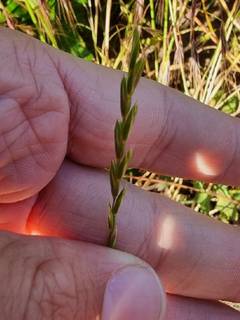
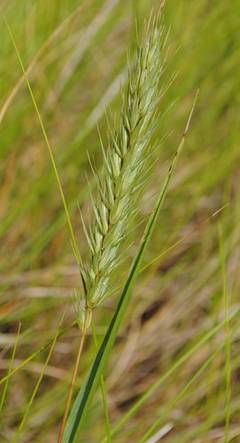
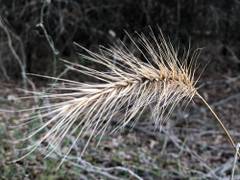
Green flower stems 18–24 inches (45–60 cm) above the foliage open in July–August and mature to golden-tan over 3 weeks. The foliage is the year-round ornamental feature; the flowers are a secondary seasonal element. Purple-bronze tints develop in the foliage through cool autumn and winter weather and persist until spring regrowth.
Detailed Descriptions
Flower Description
Green, maturing to golden-tan; on stems 18-24 inches (45-60 cm) above the foliage in summerFoliage Description
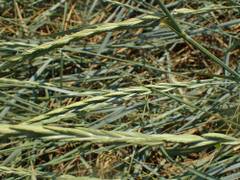
Intense steel-blue to silver-blue, broad 0.25-0.5 inch (6-12 mm), arching; purple-bronze tints in cool weatherGrowing Conditions
Sun Requirements
Requires 6-10 hours of direct sunlight daily
• Full Sun: 6+ hours of direct sunlight
• Partial Shade: 3-6 hours of direct sunlight
• Full Shade: Less than 3 hours of direct sunlight
Care & Maintenance
Care Guide
Plant in full sun in lean, dry, well-drained soil. The saturated blue color develops on lean substrates with limited moisture—shade and rich, moist soil shift the color toward gray-green and reduce the ornamental impact. A cool-season grass: active growth occurs in spring (March–May) and fall (September–November), with semi-dormancy through the hottest summer weeks. The species is short-lived at 3–5 years per plant and declines faster in hot humid summer climates (zones 8–9 with regular summer rainfall) where crown rot develops during summer dormancy. Evergreen in the sense that foliage persists year-round; dead individual leaf blades are combed out in early spring rather than the clump being cut back to ground level (hard cutback weakens or kills the plant). Hardy to zone 6 (−10°F / −23°C). No serious pest or disease problems on matched sites.Pruning
Dead and brown individual leaf blades are combed out in early spring (March) with gloved hands. Hard cutback to ground level damages or kills the species and is not used. Spent flower stems are removed after seed set if a tidy mound is wanted, or left through winter for structural interest and mild self-sowing.Pruning Schedule
Prune: March
early spring
Container Growing
Suitable for container growing
Minimum container size: 3 gallons