Echinacea, Genus, 'Kim's Knee High', Cultivar,
- Genus
- Cultivar
Kim's knee high coneflower
Cultivar of garden origin; parent species E. purpurea native to eastern and central North America (prairies, open woodlands, meadows)
Overview
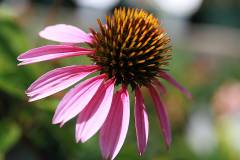
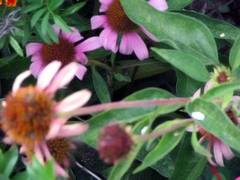
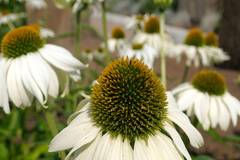
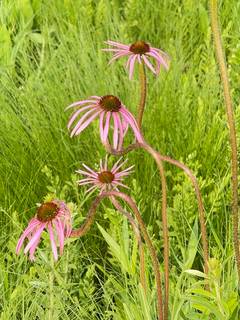
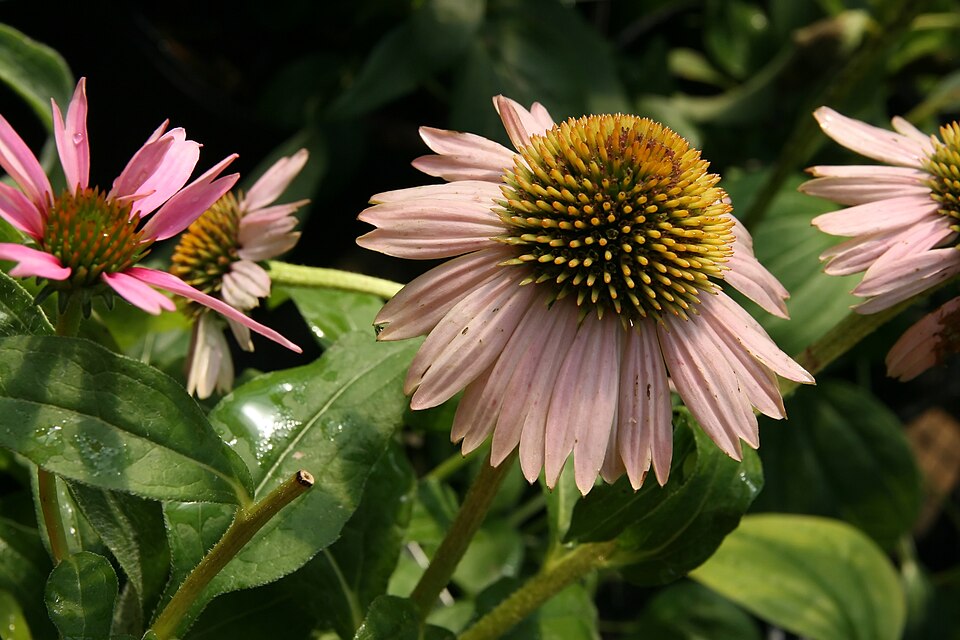
Echinacea 'Kim's Knee High' is a compact mounding herbaceous perennial in the aster family (Asteraceae) reaching 18–24 inches (45–60 cm) tall with a spread of 18–24 inches (45–60 cm) — approximately half the height of standard E. purpurea cultivars that reach 36–48 inches (90–120 cm). This cultivar carries single daisy-like flower heads 3–4 inches (8–10 cm) across with slightly drooping rosy-pink to mauve-pink ray florets surrounding a prominent dark copper-orange central cone. Flower heads open on sturdy branching stems from July through September. Basal foliage is dark green, coarsely textured, and lance-shaped, forming a dense mound beneath the flowering stems. Growth rate is moderate. The compact 18–24 inch mature height reduces the flopping and staking problems common with taller Echinacea cultivars, which positions this selection for front-of-border use where standard coneflowers would overwhelm the composition. Named for plantsman Kim Hawks of Niche Gardens in North Carolina. Hardy to zone 4.
Native Range
Echinacea 'Kim's Knee High' is a selection of garden origin, likely derived from E. purpurea and possibly carrying E. tennesseensis parentage. The parent species E. purpurea is native to eastern and central North America, where it occurs in prairies, open woodlands, and meadows.Suggested Uses
Grown in borders, prairie gardens, and cottage gardens at 18–24 inch (45–60 cm) spacing. The compact 18–24 inch mature size eliminates the need for staking and suits smaller gardens and front-of-border positions where standard E. purpurea cultivars at 36–48 inches would dominate the bed. Container culture works in 3 gallon (11 L) or larger pots. Dark cones carry goldfinches and other seed-eating birds into winter when spent flower heads are left standing. Pairing with ornamental grasses, Rudbeckia, and Perovskia builds a prairie-style summer composition on matching sun and drainage requirements. Full-shade positions and waterlogged soils are not suitable given the full-sun and well-drained requirements.How to Identify
Appearance
Size & Dimensions
Height1'6" - 2'
Width/Spread1'6" - 2'
Bloom Information
Single daisy-like flower heads 3–4 inches (8–10 cm) across with rosy-pink to mauve-pink drooping ray florets and dark copper-orange central cones open in July–September. Bloom duration is 8–10 weeks. Deadheading extends the bloom window; leaving the spent cones standing into fall carries winter seed for goldfinches and other seed-eating birds into the cold-season garden.
Detailed Descriptions
Flower Description
Rosy-pink to mauve-pink drooping ray florets surrounding dark copper-orange spiny central cone; 3-4 inches acrossFoliage Description
Dark green, coarsely textured, lance-shaped in basal moundGrowing Conditions
Sun Requirements
Requires 6-10 hours of direct sunlight daily
• Full Sun: 6+ hours of direct sunlight
• Partial Shade: 3-6 hours of direct sunlight
• Full Shade: Less than 3 hours of direct sunlight
Care & Maintenance
Care Guide
Grows in full sun in well-drained soil at pH 6.0–7.5, tolerating loam, clay, and sand. Hardy to zone 4. Tolerates heat, drought, humidity, and poor soils once established, which positions this cultivar for lean-soil borders and prairie-style plantings where richer soils produce weak flop-prone stems. Full-sun positions produce the sturdiest growth and the most compact mounding form. Dividing the clump every 3–4 years maintains vigor; older undivided plants decline in flower count and stem sturdiness. No serious pest or disease problems. Japanese beetles can feed on flower heads in heavy-pressure summers, and aster yellows disease can occasionally distort flower structure in wet springs.Pruning
Deadheading spent flowers extends the bloom window, or the dark cones are left standing through winter for bird seed and architectural interest. All stems are cut back to the ground in late winter (February) before new growth begins.Pruning Schedule
Prune: February
winter
Container Growing
Suitable for container growing
Minimum container size: 3 gallons