Digitalis, Genus, purpurea, Species, 'Excelsior', Cultivar,
- Genus & species
- Cultivar
excelsior foxglove
Garden strain; species {Digitalis purpurea} is native to western and southwestern Europe
Overview
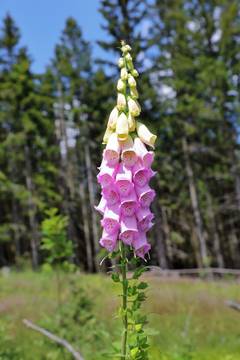
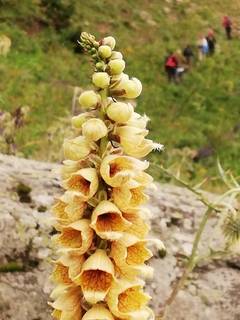
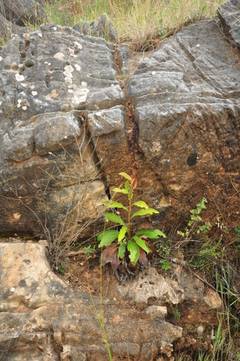
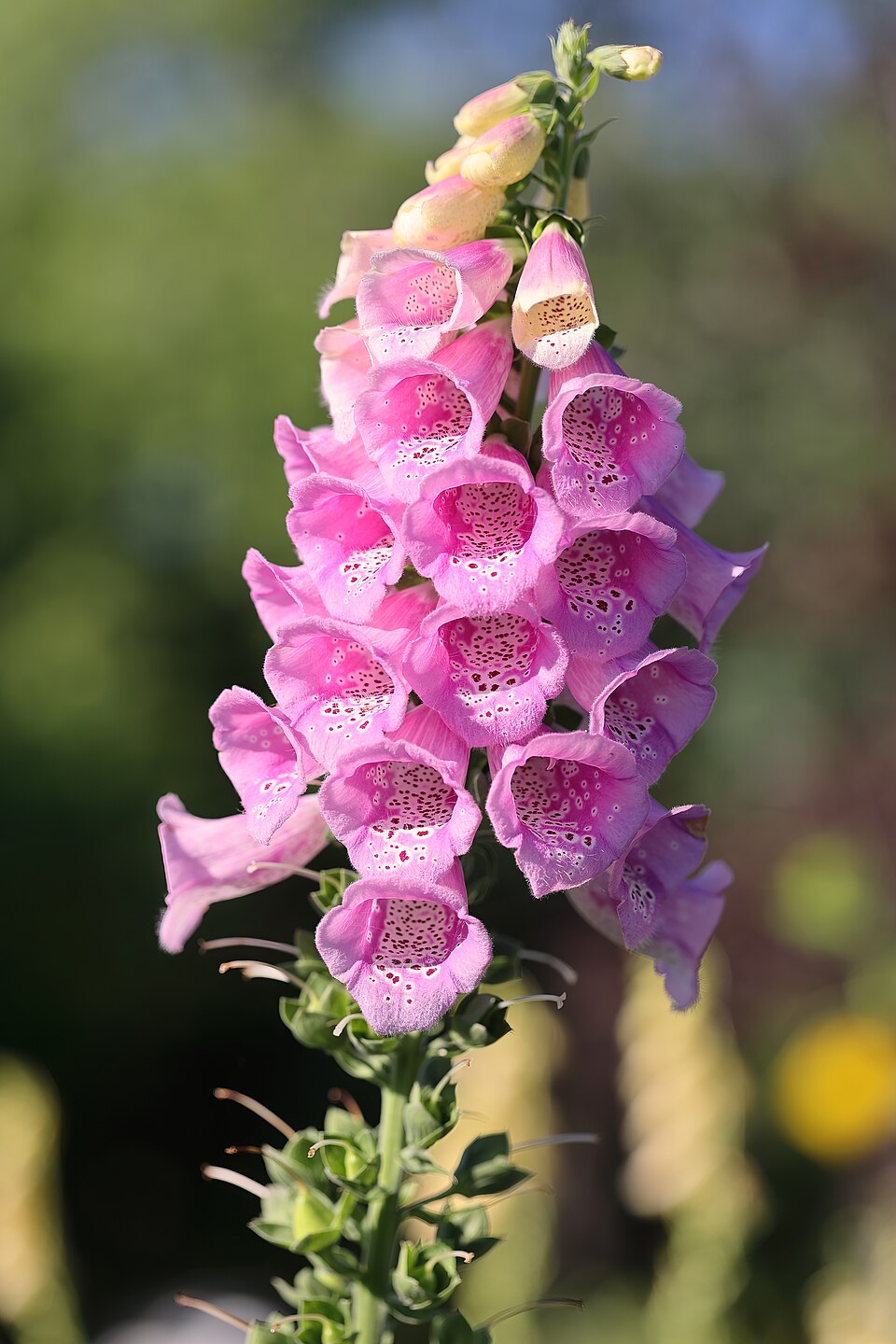
Digitalis purpurea 'Excelsior' is a biennial foxglove strain that grows 48–60 inches (120–150 cm) tall, taller than many available foxglove selections. The key feature of the Excelsior strain is the flower arrangement: individual bells are held horizontally outward from the stem on all sides, rather than nodding downward on one side as in the standard species. This horizontal orientation exposes the heavily spotted throats to the viewer, making the interior markings visible without lifting the flowers. Flowers appear in a mixed-color range — pink, purple, white, cream, and rose — with heavily marked maroon-spotted throats. Each plant from seed produces a single color, so a planting from the Excelsior strain will display the full color range across multiple plants. The biennial habit requires two seasons: a large basal rosette in year one and the flowering spike in year two, followed by death after seed set. The tall stature may need staking in exposed or windy sites. Self-sowing maintains the population if some spikes are allowed to set seed. All parts contain cardiac glycosides and are toxic if ingested. Deer avoid the foliage. Bumblebees are the primary pollinators.
Native Range
The species Digitalis purpurea is native to western and southwestern Europe. 'Excelsior' is a garden strain selected for tall habit, horizontal flower orientation, and a mixed color range.Suggested Uses
Used in cottage gardens, woodland edges, and the back of borders where the tall spikes create vertical columns of color. The Excelsior strain is a long-established tall foxglove for large-scale plantings. Groups of 7–12 give a multi-color colony effect. The horizontal flowers are more visible than nodding types. Not suited to containers due to height. Toxic to humans and pets if any plant part is ingested.How to Identify
Appearance
Size & Dimensions
Height4' - 5'
Width/Spread1'6" - 2'
Bloom Information
Flowering occurs in June and July of the second year. Bells open from the base upward over approximately 4 weeks. The horizontal orientation displays the spotted throats to viewers. The plant dies after seed set.
Detailed Descriptions
Flower Description
Mixed — pink, purple, white, cream, and rose with spotted throatsFoliage Description
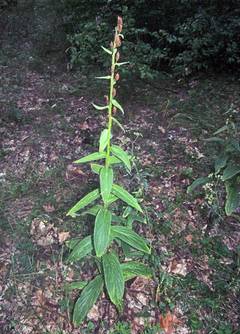
Medium green, large, hairy, ovateGrowing Conditions
Sun Requirements
Requires 4-8 hours of direct sunlight daily
• Full Sun: 6+ hours of direct sunlight
• Partial Shade: 3-6 hours of direct sunlight
• Full Shade: Less than 3 hours of direct sunlight
Care & Maintenance
Care Guide
Plant in partial shade to full sun with 4–8 hours of light. Moist, well-drained, humus-rich soil supports the strongest growth. As a biennial, sowing in successive years gives an annual display. Self-sowing replaces individual plants if some spikes are allowed to set seed. Tall spikes can be staked in windy sites. All parts contain cardiac glycosides and are toxic if ingested.Pruning
Some spikes can be left to set seed for self-sowing before removal. The entire plant can be removed after it dies following seed set.Pruning Schedule
Prune: July–August
summer