Digitalis, Genus, parviflora, Species,
- Genus & species
small-flowered foxglove
Northern Spain (Cantabrian Mountains, Picos de Europa; rocky meadows)
Overview
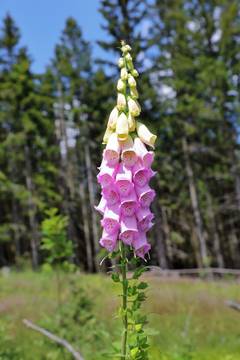
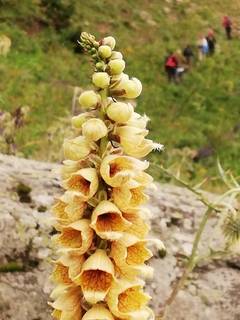
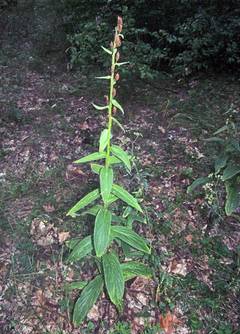
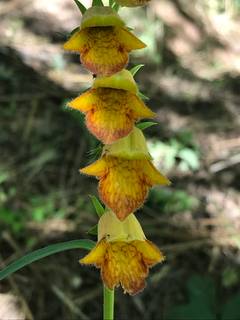
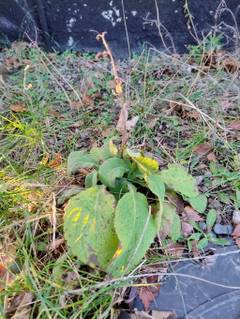
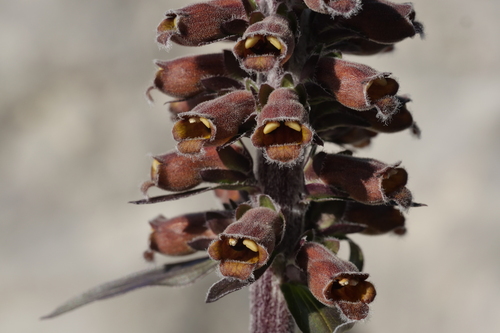
Digitalis parviflora is an upright, clumping, herbaceous perennial reaching 24–36 inches (60–90 cm) tall with a spread of 12–15 inches (30–38 cm). The northern Spanish species carries the most densely packed spikes of any foxglove in commercial cultivation—narrow, columnar spikes 8–16 inches (20–40 cm) long tightly filled with very small, tubular flowers 0.3–0.5 inch (8–12 mm) long in dark chocolate-brown to rusty-brown. The spike has a dense, bottlebrush-like appearance not seen in other species in the genus. The basal rosette carries glossy, dark green, lance-shaped leaves 4–8 inches (10–20 cm) long with a polished, leathery surface that persists through mild winters in zones 7–8 and reappears from the rosette base in colder zones. A true perennial rather than a biennial, the species returns for 3–5 years and self-seeds lightly in well-drained soils. Growth rate is moderate. All parts contain the cardiac glycosides digitoxin and digoxin and are toxic to humans and animals if ingested. The dark brown densely-packed spikes serve as an architectural vertical element in contemporary and prairie-style plantings where warm earth tones coordinate with bronze sedges and amber-flowered perennials.
Native Range
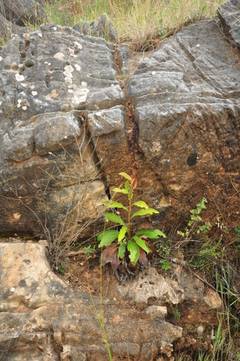
Digitalis parviflora is native to northern Spain, specifically the Cantabrian Mountains and Picos de Europa, growing in rocky mountain meadows and open scrublands on limestone substrates at elevations of 3,000–7,000 feet (900–2,100 m). The species is endemic to this small area of northwestern Spain and does not occur naturally outside the Iberian Peninsula.Suggested Uses
Planted in mixed borders, gravel gardens, and contemporary plantings at 12–15 inch (30–38 cm) spacing. The dark chocolate-brown color and bottlebrush spike form add an architectural, modern quality to plantings that otherwise rely on pastel flower colors. Functions as a vertical accent in naturalistic and prairie-style plantings where earth-toned flowers coordinate with grasses. Paired with Stipa tenuissima, bronze-leaved Carex buchananii and C. comans, and warm-toned perennials such as Achillea 'Terracotta' and Helenium cultivars, the dark spikes contrast with silver-leaved Stachys byzantina or pale-flowered Digitalis lutea companions. Toxicity is a consideration for gardens with young children or grazing pets—siting in beds away from play areas and pet runs addresses the risk without removing the species from the palette. Waterlogged soils are a poor fit because the limestone-meadow origin matches sharp winter drainage.How to Identify
Appearance
Size & Dimensions
Height2' - 3'
Width/Spread1' - 1'3"
Bloom Information
Narrow, columnar spikes 8–16 inches (20–40 cm) long of very small, dark chocolate-brown to rusty-brown tubular flowers open in June–July. Bloom duration is 3–4 weeks. Bees visit the flowers.
Detailed Descriptions
Flower Description
Dark chocolate-brown to rusty-brown, very small, densely packedFoliage Description
Glossy dark green, lance-shaped, leathery, basal rosetteGrowing Conditions
Sun Requirements
Requires 4-10 hours of direct sunlight daily
• Full Sun: 6+ hours of direct sunlight
• Partial Shade: 3-6 hours of direct sunlight
• Full Shade: Less than 3 hours of direct sunlight
Care & Maintenance
Care Guide
Plant in full sun to partial shade in well-drained soil. The species tolerates drier conditions than D. purpurea and handles the summer-dry/winter-wet pattern of Mediterranean and continental climates reliably. A true perennial, returning for 3–5 years from a single planting. Hardy to zone 5 (−20°F / −29°C). Some seed setting supports self-sowing and carries the colony forward since individual plants are short-lived. All parts are toxic; handling during pruning is done with gloves as a practical precaution because skin contact with sap can cause irritation in sensitive individuals. No serious pest or disease problems.Pruning
Spent flower spikes are removed after bloom to tidy the plant. Leaving a portion of the spikes intact allows seed to ripen and supports self-sowing for colony continuity. The basal rosette persists through winter and resumes growth in early spring.Pruning Schedule
Prune: August
summer
Container Growing
Suitable for container growing
Minimum container size: 3 gallons