Digitalis, Genus, laevigata, Species,
- Genus & species
Grecian foxglove
Southeastern Europe (Balkans: Greece, Albania, former Yugoslav states; rocky woodland margins and open slopes on calcareous substrates)
Overview
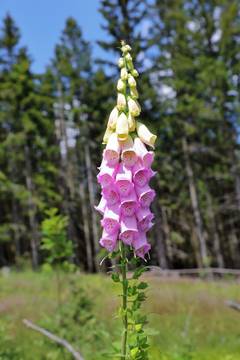
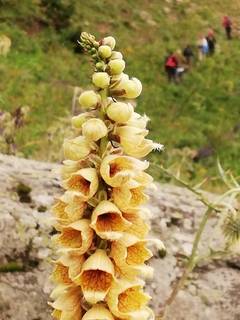
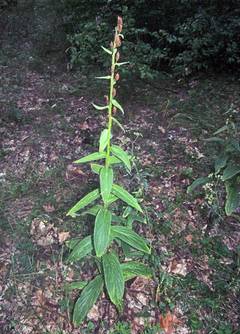
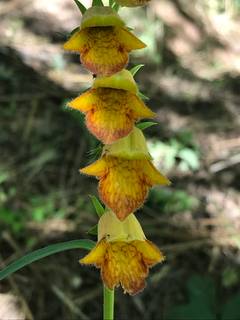
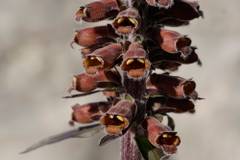
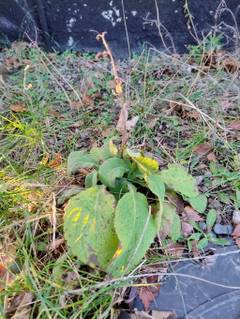
Digitalis laevigata is an upright clumping herbaceous perennial in the plantain family (Plantaginaceae) reaching 24–36 inches (60–90 cm) tall with a spread of 12–15 inches (30–38 cm). This Balkan species is a true perennial foxglove with glossy smooth hairless leaves — the specific epithet 'laevigata' translates as 'smooth' and references the hairless leaf surface that separates this species from most other Digitalis taxa. Flowers are tubular 1–1.5 inches (2.5–4 cm) long, golden-yellow to pale yellow-brown with prominent brown to reddish-brown veining inside the throat and a pale protruding lower lip. Flowers are carried in one-sided racemes in June–July. The basal rosette of glossy dark green hairless lance-shaped leaves 4–8 inches (10–20 cm) long is a year-round feature — more polished-looking than the hairy-leaved foxglove species. Growth rate is moderate. True perennial, returning for 3–5 years in favorable soil. Self-seeds lightly where calcareous soils suit germination. Hardy to zone 5. All parts contain cardiac glycosides that produce serious cardiac and gastrointestinal symptoms if plant tissue is chewed or swallowed.
Native Range
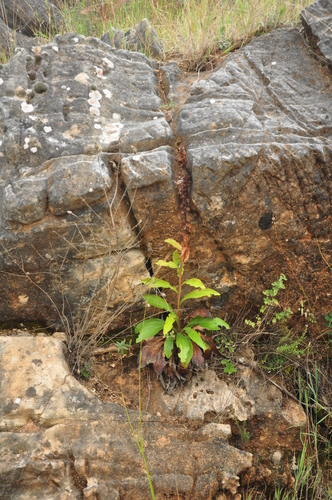
Digitalis laevigata is native to southeastern Europe, primarily the Balkans (Greece, Albania, and the former Yugoslav states), where it occurs along rocky woodland margins and on open slopes over calcareous substrates.Suggested Uses
Grown in woodland borders, rock gardens, and mixed borders at 12–15 inch (30–38 cm) spacing. The glossy smooth foliage carries a polished quality uncommon among foxgloves; this reads well in tidy mixed-border contexts where hairy-leaved Digitalis species would look coarser. Drier calcareous soils where D. purpurea would struggle match this species native-habitat preference, which extends the foxglove planting palette into lean-soil garden contexts. The golden-yellow flowers with brown throat veining complement purple, blue, and bronze companion plants. Rock-garden installations suit the compact 24–36 inch stature and the alkaline-soil tolerance. The cardiac-glycoside content in all plant parts means children-accessible garden areas merit siting consideration; positions behind other plantings or within fenced beds reduce contact and ingestion risk. Waterlogged soils and highly acidic planting sites are not suitable given the alkaline-soil preference and the well-drained substrate requirement.How to Identify
Appearance
Size & Dimensions
Height2' - 3'
Width/Spread1' - 1'3"
Bloom Information
One-sided racemes of tubular golden-yellow to pale yellow-brown flowers 1–1.5 inches (2.5–4 cm) long with prominent brown veining inside the throat open in June–July. Bloom duration is 3–4 weeks. The contrasting brown veining against the golden-yellow base color produces close-range visual interest that reads differently from single-color foxglove flowers.
Detailed Descriptions
Flower Description
Golden-yellow to pale yellow-brown with prominent brown veining inside the throat; tubular 1-1.5 inches longFoliage Description
Glossy dark green, smooth hairless lance-shaped 4-8 inches long in basal rosetteGrowing Conditions
Sun Requirements
Requires 4-8 hours of direct sunlight daily
• Full Sun: 6+ hours of direct sunlight
• Partial Shade: 3-6 hours of direct sunlight
• Full Shade: Less than 3 hours of direct sunlight
Care & Maintenance
Care Guide
Grows in partial shade to full sun in well-drained neutral-to-alkaline soil at pH 6.0–8.0, tolerating loam, sand, and chalk. Hardy to zone 5. The species tolerates drier conditions than D. purpurea, which places it among the drier-tolerant foxgloves. True perennial pattern: returns reliably for 3–5 years in well-drained soil. Allowing some seed to set supports light self-sowing, though the species is less prolific at seeding than D. purpurea. The glossy hairless foliage sustains less slug damage than the hairy-leaved foxglove species, which reduces spring foliage losses in wet-spring gardens. All parts contain cardiac glycosides that produce serious cardiac and gastrointestinal symptoms if plant tissue is chewed or swallowed. No other serious pest or disease problems.Pruning
Spent flower spikes are removed after bloom to tidy the clump; some spikes are left in place when the gardener wants light self-seeding. The semi-evergreen basal rosette persists through winter and is not cut back until late-winter cleanup.Pruning Schedule
Prune: August
summer
Container Growing
Suitable for container growing
Minimum container size: 3 gallons