Image 1 of 4
1 / 4
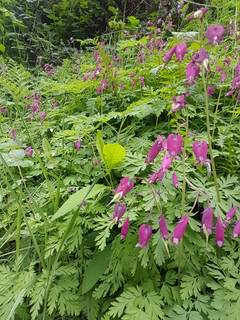
© Photo by Ramin Nakisa The original uploader was Ramin Nakisa at English Wikipedia., some rights reserved (CC-BY-SA) · Wikimedia Commons
Dicentra, Genus, formosa, Species, 'Bacchanal', Cultivar,
- Genus & species
- Cultivar
bacchanal bleeding heart
Western North America (British Columbia to central California)
Overview
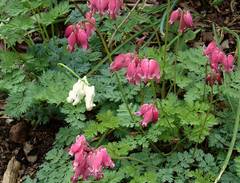
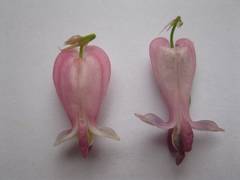
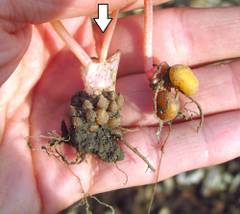
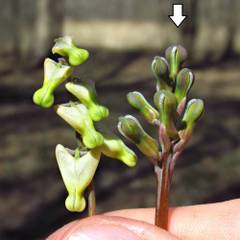
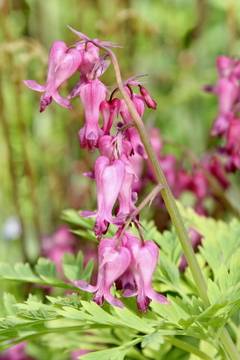
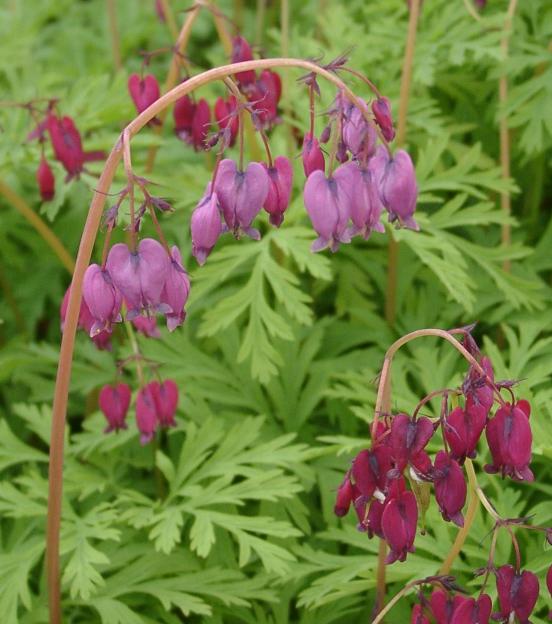
Dicentra formosa 'Bacchanal' is a spreading, rhizomatous, herbaceous perennial reaching 12–15 inches (30–38 cm) tall with a spread of 18–24 inches (45–60 cm). The cultivar is a selection of the Pacific bleeding heart and carries pendant, heart-shaped flowers 0.75–1 inch (2–2.5 cm) long in deep crimson-red—the darkest red of the commercial bleeding hearts in the Dicentra formosa group. The flowers hang in arching racemes of 5–12 above the foliage from April through September, with the heaviest bloom in April–May and lighter repeat flushes through summer. The finely divided, fern-like, blue-green to gray-green foliage is a secondary ornamental feature, remaining fresh through the growing season if soil moisture is adequate—a trait that separates D. formosa cultivars from Lamprocapnos spectabilis (formerly Dicentra spectabilis), which goes dormant by midsummer and leaves a bare gap in the border. Growth rate is moderate. The rhizomatous roots spread steadily to form expanding colonies over 3–5 years. The cultivar goes dormant in late fall and regrows from the rhizomes in early spring. In moist, rich soils the spread can be aggressive—the rhizomes move 6–12 inches (15–30 cm) per year under optimal conditions. All parts contain isoquinoline alkaloids and are toxic to humans and pets if ingested; skin contact with sap can cause irritation in sensitive individuals.
Native Range
The species Dicentra formosa is native to western North America, from southwestern British Columbia south through the Pacific Northwest and coastal ranges to central California, growing in moist, shaded coniferous and mixed forests and along shaded streambanks. 'Bacchanal' was selected in cultivation for deep red flower color.Suggested Uses
Planted in shade gardens, woodland borders, and under deciduous trees at 18–24 inch (45–60 cm) spacing. The April–September bloom season and persistent foliage fill shade-garden gaps where Lamprocapnos spectabilis and other spring-only bleeding hearts leave bare ground by midsummer. The deep crimson-red flowers add saturated color to shade plantings that often default to pastels and greens. Functions as a groundcover in moist woodland conditions where the spreading habit covers space quickly. Paired with hostas, ferns (Athyrium filix-femina), and astilbes, the fern-like foliage combines well with bolder shade companions. Full-sun sites, dry soils, and small contained beds where the spreading rhizomes cannot be managed are poor fits for the cultivar.How to Identify
Appearance
Size & Dimensions
Height1' - 1'3"
Width/Spread1'6" - 2'
Bloom Information
Pendant, heart-shaped flowers 0.75–1 inch (2–2.5 cm) long in deep crimson-red hang in arching racemes of 5–12 from April through September. Heaviest bloom in April–May with lighter repeat flushes through summer. Bloom duration is 16–20 weeks with active deadheading. Hummingbirds visit the flowers.
Detailed Descriptions
Flower Description
Deep crimson-red, pendant heart-shapedFoliage Description
Blue-green to gray-green, finely divided, fern-likeGrowing Conditions
Sun Requirements
Requires 3-6 hours of direct sunlight daily
• Full Sun: 6+ hours of direct sunlight
• Partial Shade: 3-6 hours of direct sunlight
• Full Shade: Less than 3 hours of direct sunlight
Care & Maintenance
Care Guide
Plant in partial shade in moist, well-drained, humus-rich soil. Consistent moisture is essential—the foliage goes dormant prematurely in dry conditions, shortening the bloom season and leaving a gap in the planting. Morning sun with afternoon shade produces robust growth and heavy bloom; full afternoon sun scorches the finely divided foliage even in cool climates. The rhizomes spread steadily in rich, moist soils and can become aggressive; siting with adequate space or containing with a buried root barrier at 10–12 inches (25–30 cm) deep manages the spread. Hardy to zone 4. Slugs and snails damage the emerging foliage in spring and can be reduced through iron phosphate baits around the crown. All parts contain isoquinoline alkaloids and are toxic; skin contact with sap causes irritation in sensitive individuals, so handling during division or cutback is done with gloves as a practical precaution.Pruning
Spent flower stems are removed to encourage repeat bloom. All foliage is cut back after it yellows in late fall. Spreading colonies are divided every 3–4 years if they exceed the desired area; divisions are replanted or discarded because all parts are toxic to pets if left accessible.Pruning Schedule
Prune: November
fall
Container Growing
Suitable for container growing
Minimum container size: 3 gallons