Dicentra, Genus, eximia, Species,
- Genus & species
Fringed bleeding heart
Appalachian Mountains of eastern North America
Overview
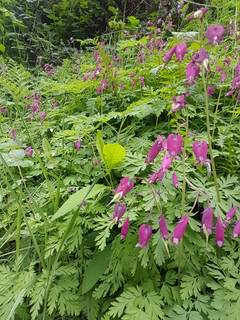
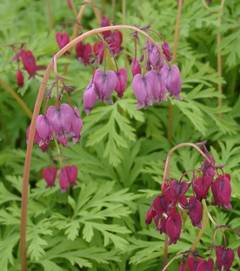
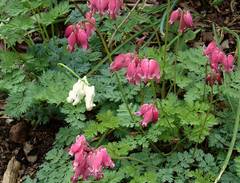
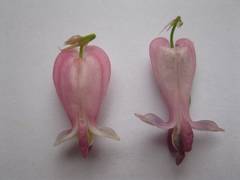
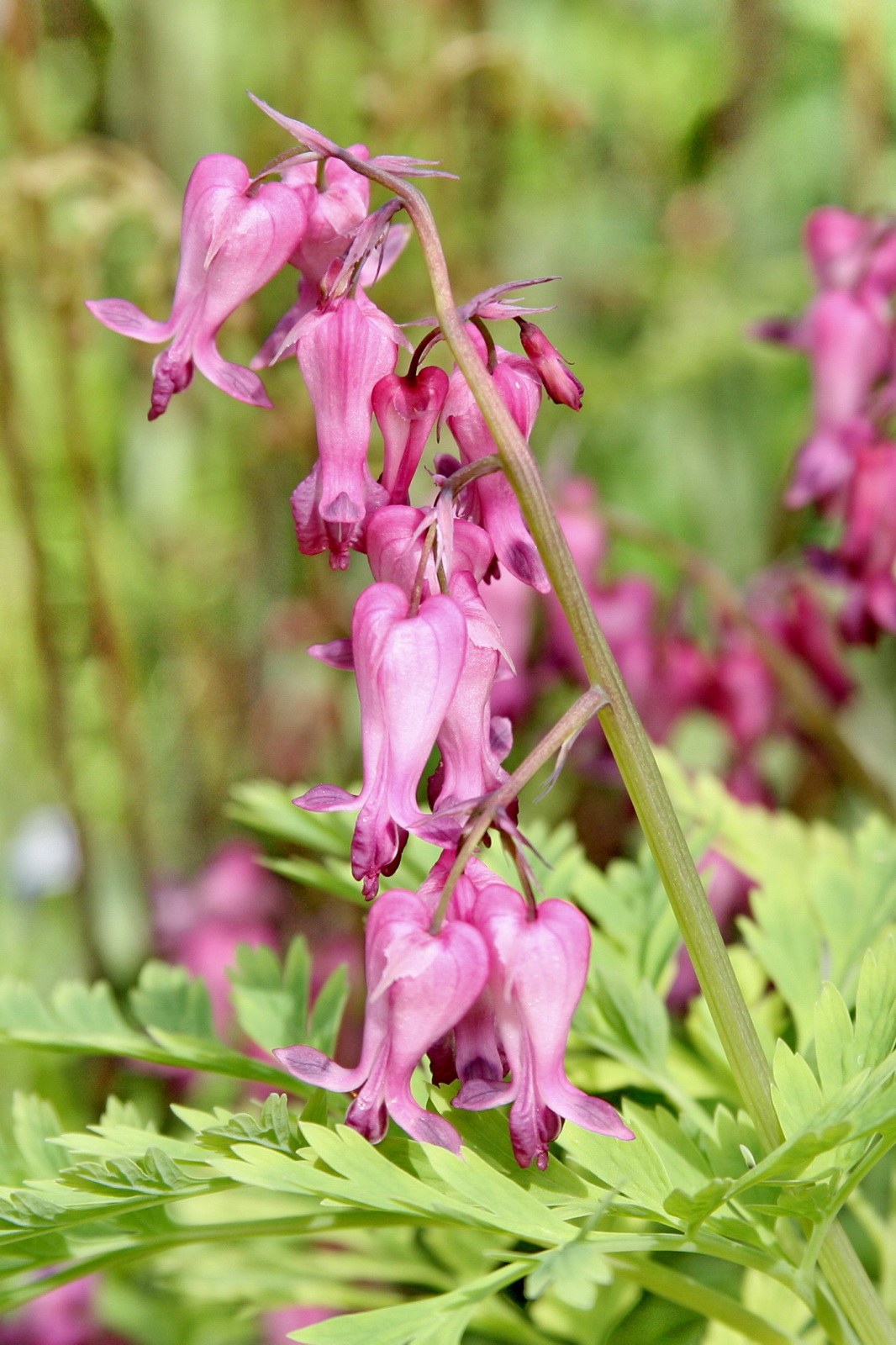
Dicentra eximia is a clump-forming herbaceous perennial reaching 12-18 inches (30-45 cm) tall and 12-24 inches (30-60 cm) wide. Basal leaves are finely dissected into narrow segments, blue-green to grey-green with a waxy bloom, and form a mound that holds from spring until frost. Nodding flowers hang in branched racemes on leafless stems carried just above the leaves; each flower is 0.75-1 inch (2-2.5 cm) long, rose-pink to purplish-pink, with two outer petals pouched at the base and reflexed at the tip. Flowering begins in April or May and continues in scattered flushes into September where soil stays moist and summer nights stay cool. Unlike Lamprocapnos spectabilis, this species does not go dormant after flowering, so the leaf mound remains through the growing season. Plants self-sow, and ants carry the seeds away from the parent clump. Foliage scorches and thins in hot dry summers above roughly 90 F (32 C), particularly where afternoon sun reaches the crown, and plants in soil that stays saturated through winter are subject to crown rot. All parts contain isoquinoline alkaloids. Hardy in USDA zones 3-9.
Native Range
Dicentra eximia is native to the Appalachian Mountains of eastern North America, from western New York and Pennsylvania south through West Virginia, Virginia, and Tennessee to northern Georgia. It grows on shaded rock ledges, talus slopes, and rocky woodland banks, rooting in humus that collects in crevices. Populations recorded outside this range are garden escapes.Suggested Uses
Used in shaded borders, woodland gardens, and north-facing foundation beds, spaced 15-18 inches (38-45 cm) apart. The mounded habit suits the front edge of a shade planting and the margins of shaded paths, and raised beds or low walls lift the nodding flowers to eye level. Container culture works in pots of 2 gallons (7.5 L) or larger using a bark-based mix held out of afternoon sun.How to Identify
Appearance
Size & Dimensions
Height1' - 1'6"
Width/Spread1' - 2'
Colors
Bloom Information
Flowering begins in mid-April at the southern end of the range and in mid-May farther north, with the heaviest flush lasting four to six weeks. Scattered stems keep opening through July and August and into September wherever soil moisture holds and night temperatures stay below about 70 F (21 C). Flowering slows or stops during hot dry spells and resumes after rain. Long-tongued bumblebees are the main visitors, and ruby-throated hummingbirds work the flowers where the ranges overlap.
Detailed Descriptions
Flower Description
Rose-pink to purplish-pinkFoliage Description
Blue-green to grey-green, finely dissected, with a paler waxy undersideGrowing Conditions
Sun Requirements
Requires 2-5 hours of direct sunlight daily
• Full Sun: 6+ hours of direct sunlight
• Partial Shade: 3-6 hours of direct sunlight
• Full Shade: Less than 3 hours of direct sunlight
Care & Maintenance
Care Guide
Growth is strongest in part shade to full shade, with two to five hours of morning sun tolerated in cool climates and less at the southern end of the range. The species roots in humus-rich soil that holds moisture but drains freely, at a pH of 5.5-7.0; heavy clay that stays wet through winter leads to crown rot. Even moisture of roughly 1 inch (2.5 cm) per week sustains the leaf mound through summer, and without it the foliage yellows and collapses by August. A 2-inch (5 cm) layer of leaf mould or shredded bark holds the shallow roots cool, while mulch heaped against the crown encourages rot. Fertility needs are low, and a single spring topdressing of compost carries the plant through the season. Clumps are lifted and divided in early spring every three to four years once the centre thins.Pruning
Spent flower stems are cut at the base through the flowering season, which removes developing seed capsules and prompts further bud production. Leaves that yellow or scorch in midsummer are cut to the ground, and a fresh flush follows within three to four weeks if the crown stays moist. The whole clump is cut back to 1 inch (2.5 cm) above the crown after frost blackens the foliage, or left standing until early spring where self-sowing is wanted.Pruning Schedule
Prune: May–August & November
late springsummerfall
Container Growing
Suitable for container growing
Minimum container size: 2 gallons