Image 1 of 2
1 / 2
Plant Reference
Cotoneaster, Genus, salicifolius, Species, 'Repens', Cultivar,
- Genus & species
- Cultivar
creeping willowleaf cotoneaster
Southwestern China (species); cultivar of garden origin
Overview
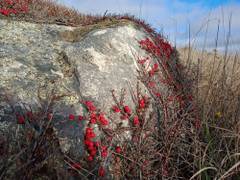
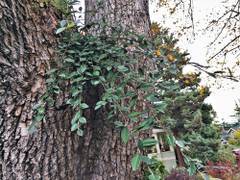
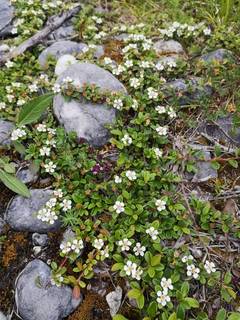
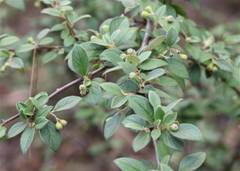
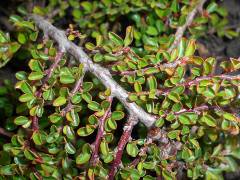
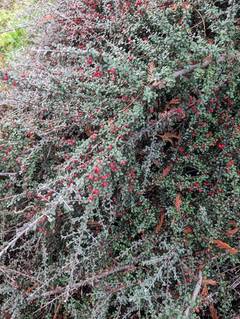
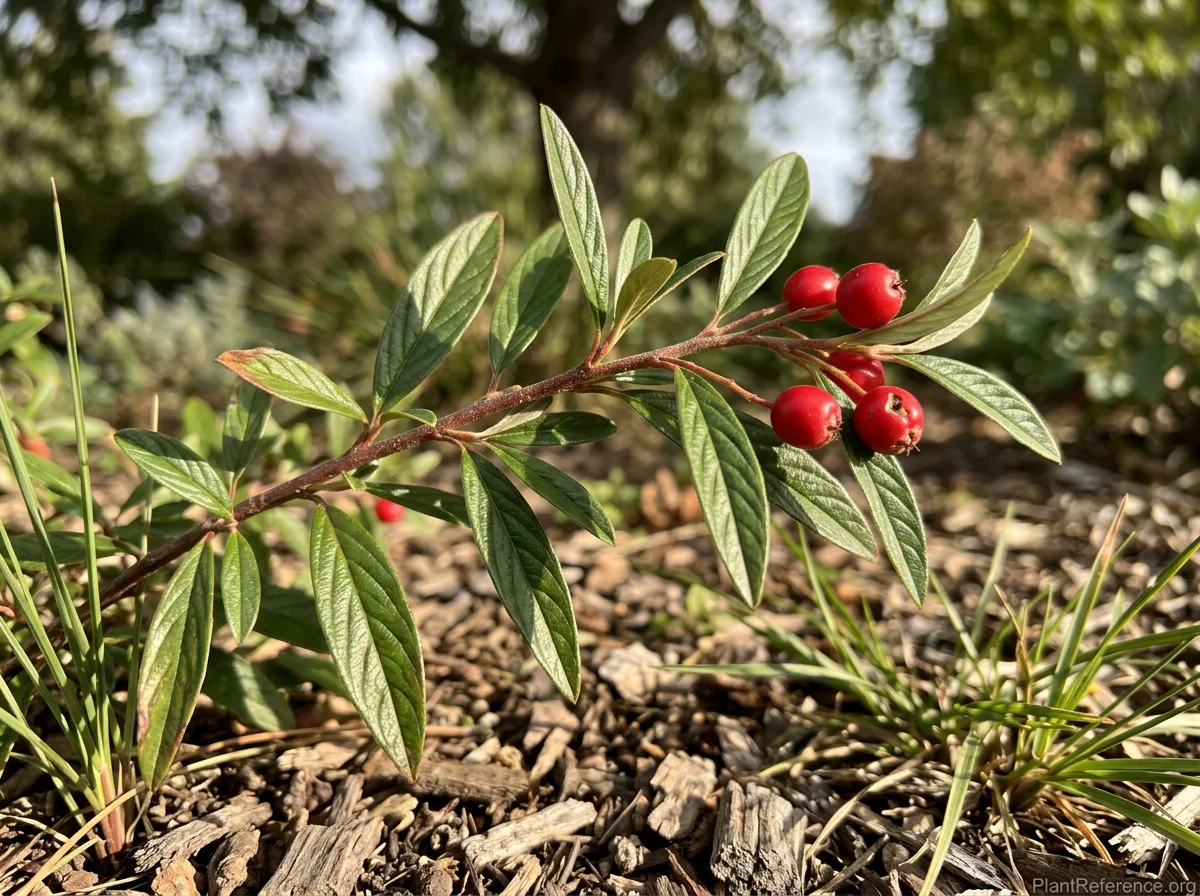
Cotoneaster salicifolius 'Repens' is a low, ground-hugging evergreen cultivar growing 12-18 inches (30-45 cm) tall and spreading 4-6 feet (1.2-1.8 m) wide, far flatter than the upright 10-15 foot (3-4.5 m) species. The narrow willow-like leaves are 1.5-3 inches (4-7 cm) long, glossy dark green with sunken parallel veins above and paler, slightly felted beneath. Small white flowers about 0.25 inch (6 mm) across open in late spring in flat clusters, followed by round red pomes near 0.25 inch (6 mm) in diameter that ripen in autumn and last into winter. The arching stems root where they touch soil, so the plant forms a dense weed-suppressing mat. It grows in full sun to light shade on most well-drained soils and tolerates drought once established, though it is prone to fireblight in warm humid weather. All parts contain cyanogenic compounds toxic to humans and pets if eaten. Hardy in USDA zones 6-9, this cultivar is grown as a groundcover on banks and over walls.
Native Range
The species Cotoneaster salicifolius is native to southwestern China, including Yunnan, Sichuan, and Guizhou, where it grows in mountain scrub and open woodland. The cultivar 'Repens' is a low garden selection and does not occur in the wild.Suggested Uses
Grown as an evergreen groundcover on banks and slopes, over retaining walls, and in large rock gardens, spaced 3-4 feet (0.9-1.2 m) apart. The trailing stems are also used to cascade from raised beds and containers.How to Identify
Appearance
Size & Dimensions
Height1' - 1'6"
Width/Spread4' - 6'
Bloom Information
Flowers open in late spring, generally May into June, in small white clusters that attract bees. Round red pomes follow and ripen in autumn, persisting on the trailing stems into winter as food for birds.
Detailed Descriptions
Foliage Description
Glossy dark green with impressed parallel veins above, paler and slightly felted beneathGrowing Conditions
Sun Requirements
Requires 6-10 hours of direct sunlight daily
• Full Sun: 6+ hours of direct sunlight
• Partial Shade: 3-6 hours of direct sunlight
• Full Shade: Less than 3 hours of direct sunlight
Care & Maintenance
Care Guide
Grow in full sun to light shade in any well-drained soil, including poor and rocky ground. Water through the first season to establish; mature plants tolerate drought and wind. The cultivar accepts a soil pH of 6.0-7.5 and needs no routine feeding. Stems root as they spread, so the mat thickens each year and can be trimmed at its edges to stay in bounds. Fireblight can blacken shoots in warm humid weather, and affected wood should be cut out below the damage. Hardy in USDA zones 6-9.Pruning
Prune after flowering or in early spring to remove wayward or dead stems and keep the mat even. It tolerates cutting back into older wood, though regrowth is slow. Trim edges where the planting spreads beyond its space.Pruning Schedule
Prune: June
summer
Container Growing
Suitable for container growing
Minimum container size: 5 gallons