Image 1 of 2
1 / 2
Plant Reference
Cotoneaster, Genus, buxifolius, Species,
- Genus & species
boxwood cotoneaster
Himalayan region: northern India, Nepal, southwest China
Overview
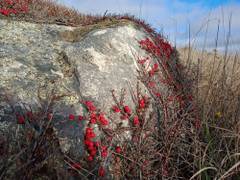
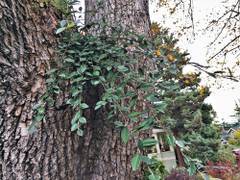
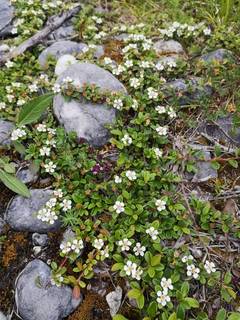
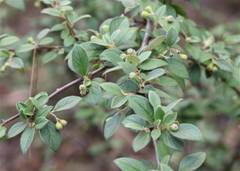
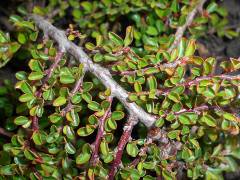
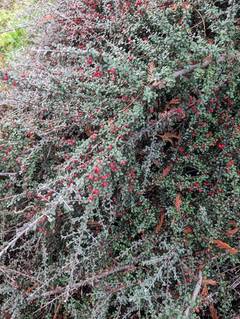
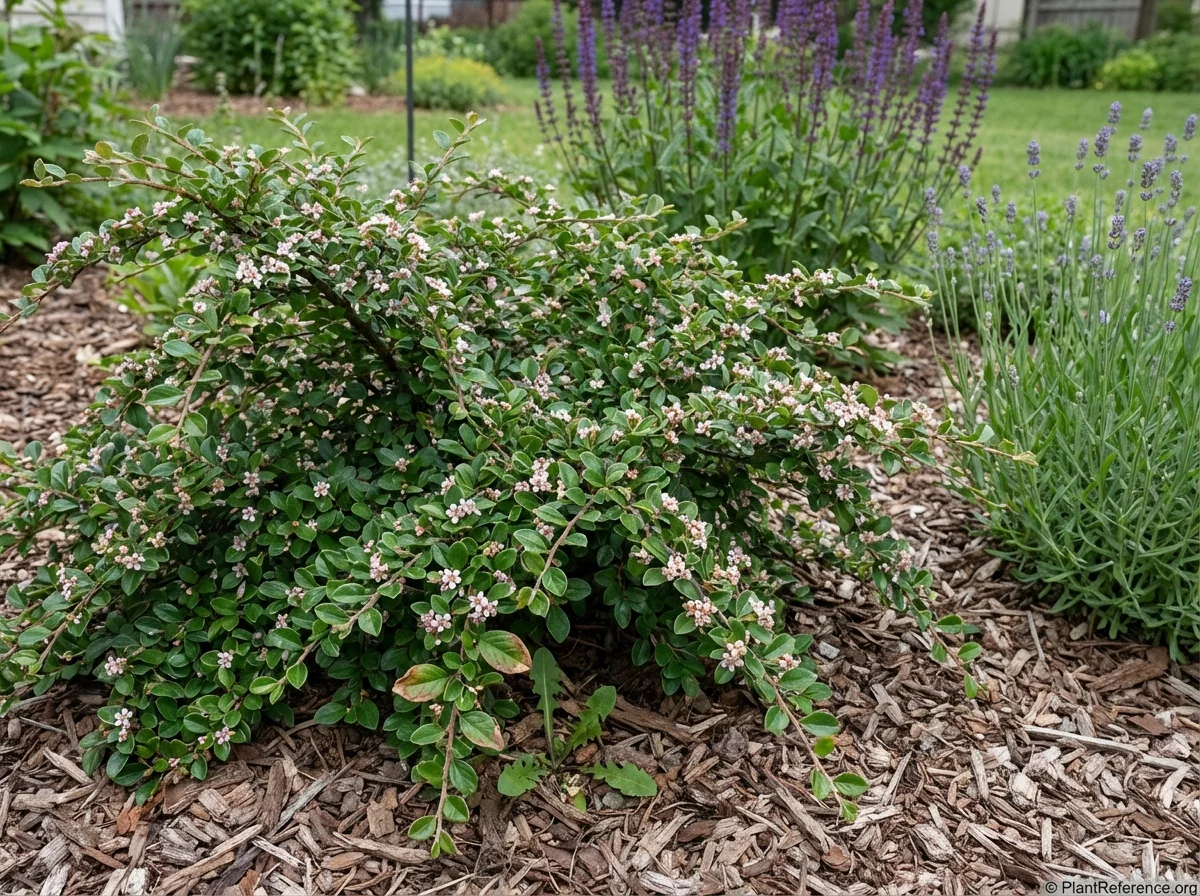
Cotoneaster buxifolius is a low evergreen shrub reaching 2-3 feet (60-90 cm) tall and spreading 3-5 feet (90-150 cm) wide, forming a dense mound of arching branches. The small obovate leaves measure 0.2-0.5 inch (5-12 mm) long, glossy dark green above and pale with a finely hairy underside. In late spring it carries pinkish-white flowers about 0.3 inch (8 mm) across, borne singly or in clusters of two to three along the stems. These are followed by spherical red pomes roughly 0.25 inch (6 mm) in diameter that persist into winter. The plant tolerates drought once established and grows on poor, rocky soils, though it is susceptible to fireblight, a bacterial disease that kills shoots and branches. All parts contain cyanogenic compounds that are toxic to humans and pets if eaten. C. buxifolius is hardy in USDA zones 6-9 and is grown as a groundcover on banks, in rock gardens, and as a low informal hedge. Cotoneaster species self-seed through bird-dispersed fruit and are regulated as invasive in several regions, including parts of the western United States and the United Kingdom.
Native Range
Cotoneaster buxifolius is native to the Himalayan region, including northern India, Nepal, and southwestern China, where it grows on open rocky slopes and in scrub at moderate to high elevations.Suggested Uses
Used as a groundcover on slopes and banks, in rock gardens, and as a low informal hedge spaced 3-4 feet (90-120 cm) apart. Its dense low habit also suits planting at the front of shrub borders and over retaining walls where branches can cascade.How to Identify
Appearance
Size & Dimensions
Height2' - 3'
Width/Spread3' - 5'
Bloom Information
Flowers open in late spring, usually May into June. The pinkish-white blooms are small and borne singly or in clusters of two to three. Bees and other insects visit the flowers, which are followed by red fruit that ripens in autumn and persists into winter.
Detailed Descriptions
Foliage Description
Glossy dark green above, paler and finely hairy beneathGrowing Conditions
Sun Requirements
Requires 6-10 hours of direct sunlight daily
• Full Sun: 6+ hours of direct sunlight
• Partial Shade: 3-6 hours of direct sunlight
• Full Shade: Less than 3 hours of direct sunlight
Care & Maintenance
Care Guide
Grow in full sun in well-drained soil of almost any type, including poor and rocky ground. Water regularly during the first season to establish roots; after that the shrub tolerates extended dry periods. It grows across a soil pH range of 5.5-7.5 and needs no routine feeding. Fireblight can blacken and kill shoots in warm humid weather, and affected wood should be cut out well below the damage. Hardy in USDA zones 6-9, it withstands wind and coastal exposure.Pruning
Prune after flowering or in early spring to shape the plant and remove crossing or dead stems. As an informal hedge it can be sheared lightly, though hard pruning into old wood produces slow regrowth. Cut out any fireblight-damaged wood, cleaning tools between cuts.Pruning Schedule
Prune: June
summer
Container Growing
Suitable for container growing
Minimum container size: 5 gallons