Cotoneaster, Genus, hodjingensis, Species,
- Genus & species
Hjelmqvist cotoneaster
Western China (Yunnan and Sichuan provinces; mountain forests and scrublands)
Overview
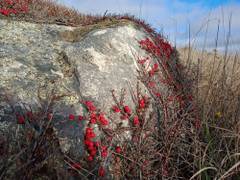
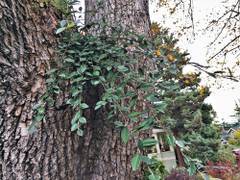
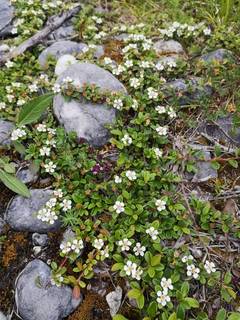
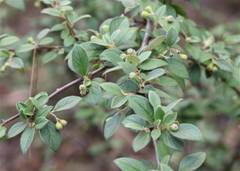
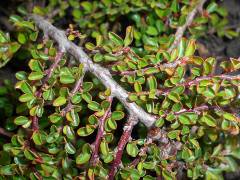
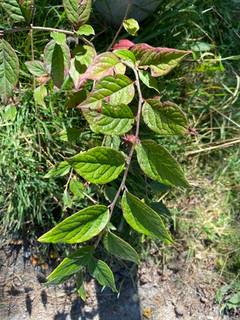
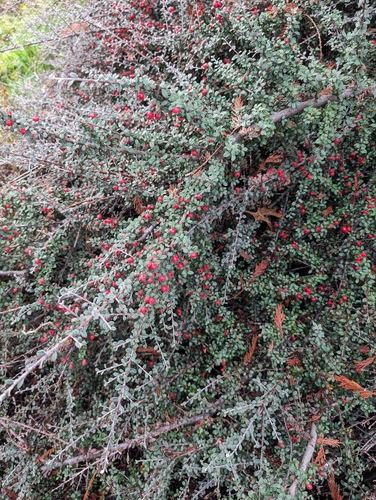
Cotoneaster hodjingensis is a large upright to arching semi-evergreen to evergreen shrub or small tree in the rose family (Rosaceae) reaching 10–15 feet (3–4.5 m) tall with a spread of 8–12 feet (2.4–3.6 m). This uncommon species carries clusters of small white flowers in June, followed by heavy crops of bright red berries (pomes) 0.4–0.5 inch (10–12 mm) in diameter that persist from fall into winter. The individual berries are among the largest produced by the Cotoneaster genus — larger than the pomes of commonly-grown species such as C. lacteus and C. frigidus, which produces a visually weightier fruit cluster effect on this species. Leaves are elliptic to oblong 2–4 inches (5–10 cm) long, dark glossy green above with gray-white tomentum beneath, and are substantially larger than most Cotoneaster species where leaves typically stay under 2 inches. Foliage is semi-evergreen to evergreen in mild climates (zones 8–9) and deciduous in colder zones (zone 6–7). Growth rate is moderate to fast. Hardy to zone 6. Arching branches create a fountain-like habit as the plant matures. Fire blight (Erwinia amylovora) is a disease concern. This species is uncommon in cultivation and sometimes appears under the synonym C. hissaricus or is confused with C. frigidus in horticultural commerce.
Native Range
Cotoneaster hodjingensis is native to western China, where it occurs in mountain forests and scrublands of Yunnan and Sichuan provinces.Suggested Uses
Grown as a specimen, screen, or informal hedge at 6–8 foot (1.8–2.4 m) spacing. Heavy berry crops persisting into winter feed birds, including cedar waxwings and robins. Mixed borders and large-background shrub positions match the mature scale. The arching habit cascades over walls and slopes where the plant is installed above a vertical feature. Multi-stemmed tree training produces a small specimen tree with berry display at eye level. Semi-evergreen foliage carries winter screening value in mild climates where the leaves persist through the dormant season. Formal clipped hedging and small residential gardens are not suitable given the mature scale and the arching natural habit.How to Identify
Appearance
Size & Dimensions
Height10' - 15'
Width/Spread8' - 12'
Bloom Information
Clusters of small white flowers open in June on the previous season's wood. Heavy crops of large bright red berries (pomes) 0.4–0.5 inch (10–12 mm) in diameter ripen in fall and persist into winter. Bloom duration is 2–3 weeks. The berries carry the primary ornamental interest, with individual pomes among the largest in the genus.
Detailed Descriptions
Flower Description
White, in clustersFoliage Description
Dark glossy green above with gray-white tomentum beneath; elliptic to oblong 2-4 inches longGrowing Conditions
Sun Requirements
Requires 4-10 hours of direct sunlight daily
• Full Sun: 6+ hours of direct sunlight
• Partial Shade: 3-6 hours of direct sunlight
• Full Shade: Less than 3 hours of direct sunlight
Care & Maintenance
Care Guide
Grows in full sun to partial shade in average well-drained soil at pH 5.5–7.5, tolerating loam, clay, and sand. Hardy to zone 6. Soil type range is broad — clay and alkaline conditions are tolerated along with average loam. Established plants tolerate drought. Foliage evergreen status depends on winter temperatures: fully evergreen in zones 8–9, semi-evergreen in zone 7, mostly deciduous in zone 6. Fire blight (Erwinia amylovora) is the main disease concern; affected branches are removed promptly with sterilized pruning tools to slow spread through the plant. Adequate space supports the mature arching form without crowding.Pruning
Minimal pruning is required. Dead, crossing, or fire-blight-affected branches are removed after flowering (July) with sterilized tools. The natural arching fountain habit develops without structural intervention. Tree-form training is possible by removing lower branches progressively over 3–5 years to expose a single or multi-stemmed trunk structure.Pruning Schedule
Prune: July
summer