Image 1 of 21
1 / 21
Plant Reference
Cotoneaster, Genus, franchetii, Species,
- Genus & species
Franchet cotoneaster
Southwestern China: Yunnan and Sichuan
Overview
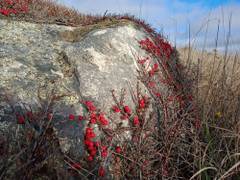
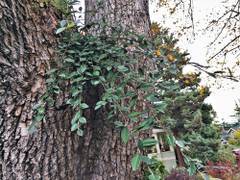
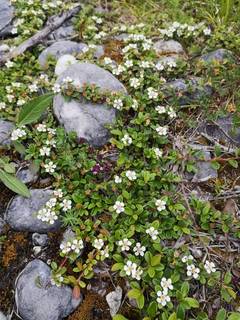
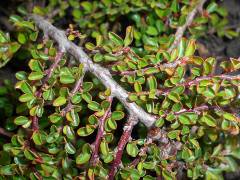
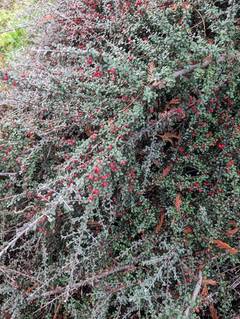
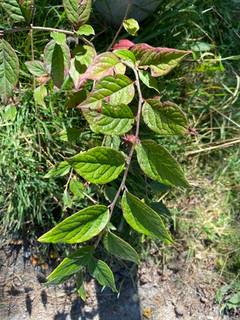
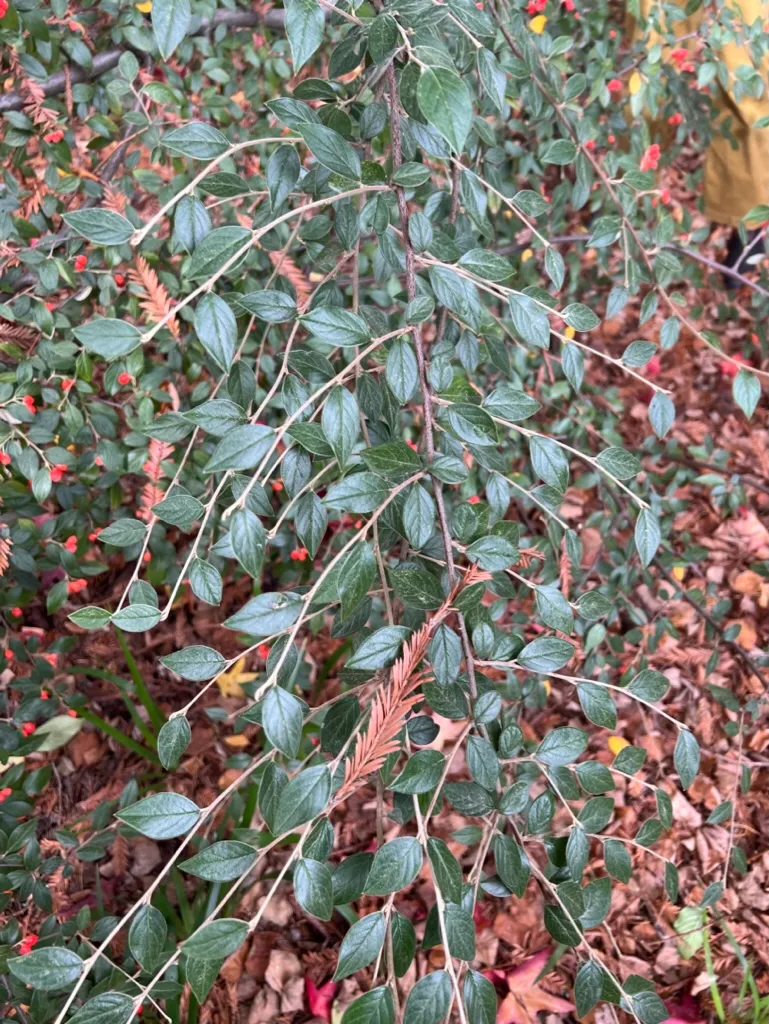
Cotoneaster franchetii is a semi-evergreen shrub reaching 5-7 feet (1.5-2.1 m) tall and 5-8 feet (1.5-2.4 m) wide, with long arching branches that give an open, spreading outline. The oval leaves are 0.75-1.25 inches (2-3 cm) long, dull grayish-green above and densely white-tomentose beneath. Pinkish-white flowers about 0.3 inch (8 mm) across open in late spring in small clusters of 5-15. They are followed by oval orange-red pomes roughly 0.3 inch (8 mm) long that ripen in autumn and persist into winter. The shrub grows in full sun on most well-drained soils and tolerates drought and wind once established, but in warm humid climates it can be damaged by fireblight. All parts contain cyanogenic compounds that are toxic to humans and pets if eaten. C. franchetii self-sows freely from bird-carried seed and has naturalized widely: it is listed as invasive in California, Oregon, Washington, Australia, and New Zealand, and its sale is banned in the United Kingdom under Schedule 9 of the Wildlife and Countryside Act. Hardy in USDA zones 6-9, it is grown as an informal hedge and screen where permitted.
Native Range
Cotoneaster franchetii is native to southwestern China, particularly Yunnan and Sichuan, where it grows in scrub and open forest on dry mountain slopes. It is also recorded as naturalized across parts of Europe, North America, and Australasia.Suggested Uses
Grown as an informal hedge, screen, and bank cover spaced 4-6 feet (1.2-1.8 m) apart in regions where it is not restricted. Where it is regulated as invasive, non-seeding alternatives are used in its place.How to Identify
Appearance
Size & Dimensions
Height5' - 7'
Width/Spread5' - 8'
Colors
Bloom Information
Flowers open in late spring, usually May into June, in small pinkish-white clusters that attract bees. Orange-red oval fruit follows and ripens in autumn, lasting on the branches through much of winter as food for birds.
Detailed Descriptions
Foliage Description
Dull grayish-green above, densely white-tomentose beneathGrowing Conditions
Sun Requirements
Requires 6-10 hours of direct sunlight daily
• Full Sun: 6+ hours of direct sunlight
• Partial Shade: 3-6 hours of direct sunlight
• Full Shade: Less than 3 hours of direct sunlight
Care & Maintenance
Care Guide
Grow in full sun in any well-drained soil, including dry and rocky ground. Water during the first season to establish; mature plants tolerate drought, wind, and exposed sites. The shrub grows across a pH range of 6.0-7.5 and needs no feeding. Fireblight can blacken shoots in warm humid weather, and affected wood should be cut out below the damage. Because it seeds into wild areas, spent fruit is sometimes removed before birds disperse it.Pruning
Prune after flowering or in early spring to limit spread and remove wayward stems. It tolerates hard pruning into old wood and can be kept as a low informal hedge. Removing fruit-laden stems before seeds ripen reduces self-seeding into surrounding land.Pruning Schedule
Prune: June
summer