Cotoneaster, Genus, horizontalis, Species,
- Genus & species
rock cotoneaster
Western and central China; rocky slopes and cliffs
Overview
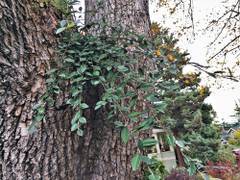
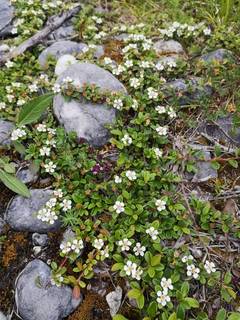
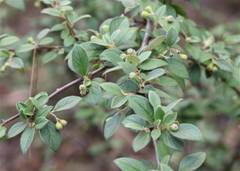
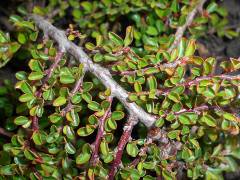
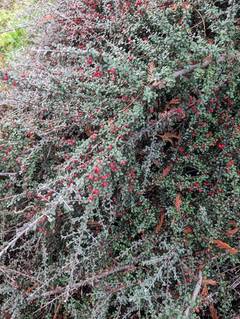
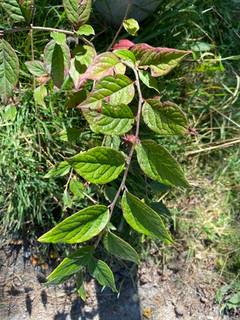
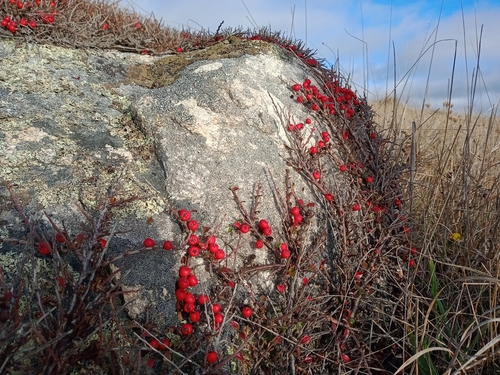
Cotoneaster horizontalis is a low spreading semi-evergreen shrub reaching 2–3 feet (60–90 cm) tall and 5–8 feet (1.5–2.4 m) wide. The branches are arranged in a flat herringbone (fishbone) pattern, with secondary branchlets opposite each other along the main stems and held in a single horizontal plane. Leaves are rounded, 0.25–0.5 inch (6–13 mm) long, glossy dark green, turning orange-red in fall. Tiny pinkish-white single flowers 0.2 inch (5 mm) across line the upper side of the branches in May and June and are pollinated mainly by bees. Bright red pome fruits 0.25 inch (6 mm) across develop along the upper side of the branches by September and persist into winter after leaf drop. The species is semi-evergreen in USDA zones 7–9, holding much of the foliage through mild winters, and fully deciduous in colder zones. C. horizontalis is classified as invasive in the Pacific Northwest of the United States, in the United Kingdom, and in parts of Australia and New Zealand, and is restricted from sale in some of those jurisdictions; bird-dispersed seeds escape garden plantings into woodlands, hedgerows, and rocky natural areas. Limitation: bird-dispersed seeds are the primary spread mechanism, and fire blight (Erwinia amylovora) can cause sudden branch dieback in humid summers; sites near native plant communities and natural areas are unsuitable.
Native Range
Native to western and central China, growing on rocky slopes, cliffs, and open mountain terrain. Listed as invasive in the Pacific Northwest of the United States, the United Kingdom, and parts of Australia and New Zealand from garden escapes.Suggested Uses
Used as a groundcover, wall-trained shrub, bank cover, and rock garden plant at 5–8 foot (1.5–2.4 m) spacing. The flat herringbone branching, fall berries, and orange-red autumn foliage supply year-round structural and color interest in low or trained plantings. C. horizontalis is restricted under state or national invasive-species regulations in the Pacific Northwest, the United Kingdom, and parts of Australia and New Zealand, and sites near native woodlands, hedgerows, or rocky natural areas are unsuitable.How to Identify
Appearance
Size & Dimensions
Height2' - 3'
Width/Spread5' - 8'
Bloom Information
Pinkish-white tiny flowers 0.2 inch (5 mm) across line the upper side of the herringbone-patterned branches in May and June, lasting about 3 weeks. Bright red pome fruits 0.25 inch (6 mm) across develop along the upper side of the branches by September and persist into winter on the bare branches after leaf drop.
Detailed Descriptions
Flower Description
pinkish-white; tiny, 0.2 inch (5 mm), single, lining the upper side of the herringbone-patterned branchesFoliage Description
glossy dark green; rounded, 0.25-0.5 inch (6-13 mm) long; turns orange-red in fall; semi-evergreen with foliage persisting through mild winters in USDA zones 7-9Growing Conditions
Sun Requirements
Requires 1-8 hours of direct sunlight daily
• Full Sun: 6+ hours of direct sunlight
• Partial Shade: 3-6 hours of direct sunlight
• Full Shade: Less than 3 hours of direct sunlight
Care & Maintenance
Care Guide
Site in full sun to full shade with 1–8 hours of direct sun per day in well-drained soil with a pH of 6.0–7.5. The species tolerates chalky, clay, sandy, and rocky soils and is drought-tolerant once established. Hardy in USDA zones 4–9. C. horizontalis is restricted from sale in parts of the Pacific Northwest, the United Kingdom, and several Australian and New Zealand jurisdictions under invasive-species regulations. Fire blight can cause sudden branch dieback in humid summers; affected branches can be cut back 12 inches (30 cm) below the visible infection point. The fruit contains cyanogenic glycosides and is toxic to dogs and cats if ingested in quantity.Pruning
Pruning is done in early spring (March and April) to shape, removing only stray or wayward branches because the natural herringbone form is the main structural feature. Fire-blight-affected branches can be cut 12 inches (30 cm) below the visible infection point and the cut tools disinfected between cuts. The flat branch habit conforms to walls and fences and the species takes well to wall-training along masonry surfaces.Pruning Schedule
Prune: March–April
early spring