Cotoneaster, Genus, bullatus, Species,
- Genus & species
hollyberry cotoneaster
Western China (Sichuan, Hubei, and Yunnan provinces); mountain scrub and forest margins at elevations of 3,000-10,000 feet (900-3,000 m). Introduced to Western horticulture in 1898 by plant collector Ernest Wilson.
Overview
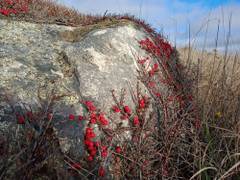
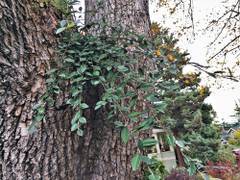
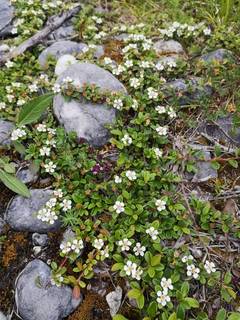
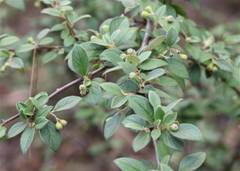
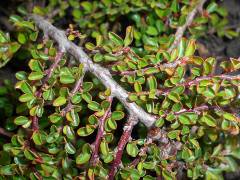
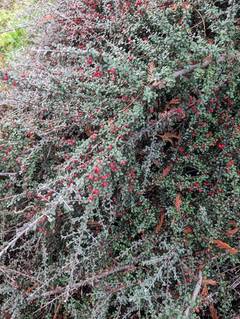
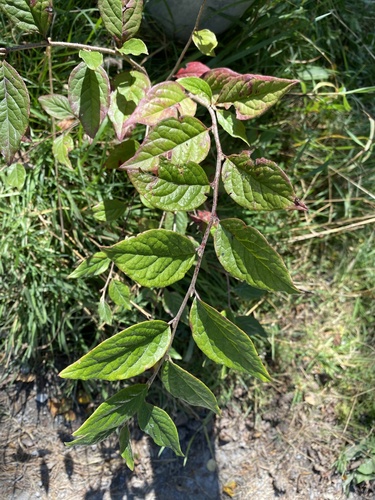
Cotoneaster bullatus is a large arching deciduous shrub in the rose family (Rosaceae) reaching 8-12 feet (2.4-3.6 m) tall and wide with a spreading vase-shaped habit. Branches are long, arching gracefully outward and downward, with the arch becoming pendulous under the weight of autumn fruit on mature plants. Leaves are ovate-elliptic, 2-4 inches (5-10 cm) long and 1-2 inches (2.5-5 cm) wide, among the largest in the Cotoneaster genus, with a bullate (puckered, blistered) surface caused by lateral veins that are sunken on the upper side and raised on the underside; the bullation gives the leaf a quilted texture that identifies the species at distance. Leaves are dark green above and paler with sparse hairs below, turning orange-red to deep scarlet in autumn for a two-color leaf-and-fruit display through October. Small clusters of 12-30 pinkish-white flowers, each 0.3 inch (8 mm) across, open along the branches in June. Fruit is a pome 0.3 inch (8 mm) in diameter, bright red, borne in dense clusters of 12-20, ripening in September and persisting into December unless consumed by birds. Berry production is heavy, and branches are often weighted into a pendulous arc by the fruit load on mature shrubs. The species was introduced to Western horticulture in 1898 by plant collector Ernest Wilson on a collecting expedition for the British nursery James Veitch and Sons. Birds disperse the fruit widely, and self-sown seedlings appear in hedgerows, woodland margins, and disturbed ground beyond the planted location, which has produced a naturalized populations and an invasive classification in parts of the British Isles, New Zealand, and the Pacific Northwest. Fire blight (Erwinia amylovora) is the principal disease pressure, causing dieback of flowering shoots in warm wet springs.
Native Range
Cotoneaster bullatus is native to western China, in the provinces of Sichuan, Hubei, and Yunnan, where it grows in mountain scrub and forest margins at elevations of 3,000-10,000 feet (900-3,000 m). The species was introduced to Western cultivation in 1898 by plant collector Ernest Wilson during his collecting expeditions for the British nursery James Veitch and Sons, and has been a recurring entry in British and North American shrub plantings since the early twentieth century.Suggested Uses
Used as a specimen shrub or informal hedge at 8-10 foot (2.4-3 m) spacing, where the arching branch habit and heavy autumn berry production combine for a two-season visual display. Wildlife garden applications use the berries to support overwintering bird populations across the November-through-December bird-feeding window. The invasive potential from bird-dispersed seed limits the species to garden settings well away from natural areas, parks, and wild lands; in formal settings, a single specimen is easier to manage than mass plantings because volunteer seedlings can be detected and removed promptly. Native shrub alternatives like Vaccinium parvifolium and Symphoricarpos albus replace this species in habitat-conscious Pacific Northwest plantings.How to Identify
Appearance
Size & Dimensions
Height8' - 12'
Width/Spread8' - 12'
Bloom Information
Pinkish-white flowers 0.3 inch (8 mm) across open in clusters of 12-30 along the arching branches in June, with a bloom span of approximately 2-3 weeks. Pollination is by bees and other insects working the small flowers in sequence. Red fruit develops from July onward, coloring fully by September and persisting on branches through November and December until gradually consumed by blackbirds, thrushes, waxwings, and other fruit-eating birds across the autumn-to-winter window.
Detailed Descriptions
Flower Description
Pinkish-white; small flowers 0.3 inch (8 mm) across in clusters of 12-30 along the arching branches in JuneFoliage Description
Dark green above and paler hairy below; ovate-elliptic leaves 2-4 inches (5-10 cm) long with a strongly bullate (puckered, blistered) surface from veins that are sunken on the upper side and raised on the underside, turning orange-red to deep scarlet in autumnGrowing Conditions
Sun Requirements
Requires 4-10 hours of direct sunlight daily
• Full Sun: 6+ hours of direct sunlight
• Partial Shade: 3-6 hours of direct sunlight
• Full Shade: Less than 3 hours of direct sunlight
Care & Maintenance
Care Guide
Plant in full sun to partial shade in any well-drained soil at pH 5.5-7.5, with tolerance for chalk, clay, and sandy soils. Spacing is 8-10 feet (2.4-3 m) apart for screen or specimen use. Watering through the first growing season establishes the root system, and supplemental irrigation is rarely needed once mature except during extended drought. Fertilization is unnecessary in average garden soil. Fire blight (Erwinia amylovora) is the principal disease pressure, and infected shoots are pruned out 12 inches (30 cm) below the visible margin into healthy wood using sterilized tools to prevent further spread. In the Pacific Northwest, the species naturalizes from bird-dispersed seed into hedgerows, woodland margins, and disturbed ground, and self-sown seedlings in adjacent garden beds and natural areas are pulled when small to limit population spread; the species is on regional invasive species watch lists in Washington and Oregon, and planting in close proximity to natural areas is discouraged in favor of native shrub alternatives like Vaccinium parvifolium (red huckleberry) or Symphoricarpos albus (snowberry) which carry similar wildlife-fruit value without the invasive concerns.Pruning
Pruning runs in late winter (February through March) to remove dead, crossing, or damaged branches and to maintain the natural arching shape. The species' arching habit develops fully when allowed to grow naturally without heavy pruning, and the pendulous form develops most completely on a lightly-pruned shrub. Renovation pruning, when needed, removes one-third of the oldest stems to the base annually over three years, preserving the species' graceful arching presence while gradually rejuvenating the branch structure. Fire blight infections are removed immediately upon detection, cutting 12 inches (30 cm) below the visible margin into healthy wood.Pruning Schedule
Prune: February–March
late spring