Cornus, Genus, controversa, Species,
- Genus & species
Wedding cake tree
Eastern Himalayas, China, Korea, and Japan
Overview
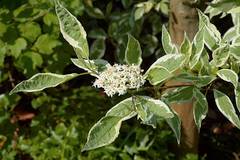
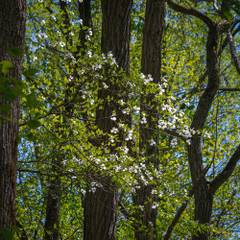
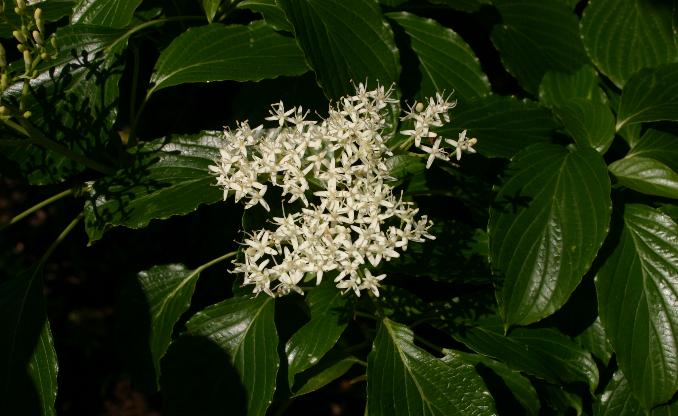
Cornus controversa is a deciduous tree reaching 25–40 feet (7.5–12 m) tall with a spread of 20–30 feet (6–9 m) in cultivation, and up to 50 feet (15 m) in native forest. Branches are arranged in horizontal tiers extending outward from a central leader. Leaves are alternate, unlike the opposite leaves of most Cornus species, ovate, 3–6 inches (7.5–15 cm) long, dark green above and glaucous beneath, and clustered toward shoot tips. Fall color is reddish purple. Creamy white flowers, 0.25 inch (6 mm) across, open in flat-topped clusters 3–6 inches (7.5–15 cm) wide from late May to June. Blue-black fruits 0.25 inch (6 mm) in diameter, on red stalks, ripen in July–September and are eaten by birds. Young stems are purple-red to green and turn gray-brown with age. Growth rate is moderate, at 12–24 inches (30–60 cm) per year when young. New growth is susceptible to late spring frost, leaves scorch in extended drought, and stem canker occurs in stressed trees. Hardy in USDA zones 5–8.
Native Range
Native to the eastern Himalayas, China, Korea, and Japan. Grows in deciduous and mixed forests and on forest margins in mountain regions.Suggested Uses
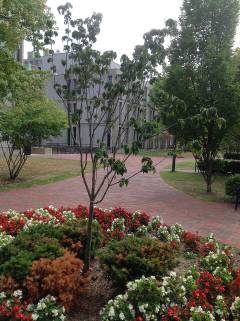
Grown as a specimen tree in large gardens and parks, spaced 20–25 feet (6–7.5 m) from other trees. Planted at woodland edges and in lawns where the horizontal branch tiers extend without obstruction. Fruits supply food for birds in late summer.How to Identify
Appearance
Size & Dimensions
Height25' - 40'
Width/Spread20' - 30'
Bloom Information
Detailed Descriptions
Foliage Description
Dark green above, glaucous beneath, reddish purple in fallGrowing Conditions
Sun Requirements
Requires 4-8 hours of direct sunlight daily
• Full Sun: 6+ hours of direct sunlight
• Partial Shade: 3-6 hours of direct sunlight
• Full Shade: Less than 3 hours of direct sunlight
Care & Maintenance
Care Guide
Grows in moist, well-drained, acidic to neutral soil in full sun to part shade; afternoon shade reduces leaf scorch in zones 7–8. Newly planted trees need 1–2 inches (2.5–5 cm) of water weekly during the first 2–3 growing seasons. A 2–3 inch (5–8 cm) layer of mulch keeps roots cooler and moister. Established trees tolerate short dry spells but scorch in extended drought. Stem canker and twig dieback affect stressed trees, and dogwood borers attack wounded trunks.Pruning
Needs little pruning, because the tiered branching develops naturally. Dead, damaged, and crossing branches are removed in late winter or early spring before bud break, and lower branches are removed to raise the canopy. Cuts larger than 2 inches (5 cm) in diameter heal slowly.Pruning Schedule
Prune: February–March
winterearly spring