Chara, Genus, spp., Multiple species,
- Genus
- Multiple species
muskgrass
Cosmopolitan in fresh water (all continents except Antarctica)
Overview
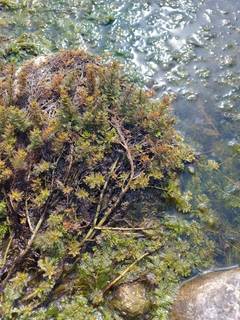
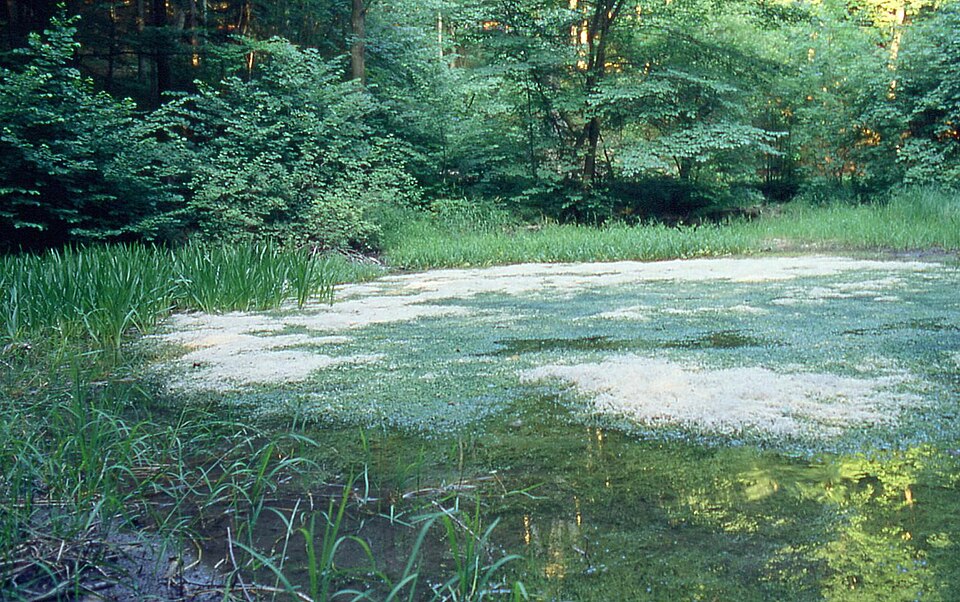
Chara is a genus of about 50 or more submerged freshwater green algae in the family Characeae, often called muskgrass or stonewort, found in ponds, lakes, slow streams, and ditches worldwide. Although it resembles a rooted aquatic plant, Chara is a macroalga: it has no true roots, stems, leaves, or flowers, anchoring instead by colourless filaments called rhizoids. The upright main axis, 4–24 in (10–60 cm) long, bears whorls of slender branchlets at regular nodes, giving a bristly, candelabra-like form. Many species take up calcium carbonate from hard water and become encrusted, leaving the surface gritty and brittle to the touch and pale grey-green in colour. Crushed material gives off a musky or garlic-like odour, the source of the muskgrass name. Chara reproduces by spores formed in tiny orange and clear structures along the branchlets rather than by seed. It grows rooted in soft sediment in clear, still to slow-moving, often alkaline water, and dense beds can stabilise sediment and steady water clarity, though heavy growth can crowd small ponds and tangle in fishing and boating gear.
Native Range
Chara occurs on every continent except Antarctica, in freshwater and occasionally brackish habitats across temperate and tropical regions. The genus favours clear, hard, mineral-rich water over soft sediment, growing in ponds, lake shallows, springs, marl pits, and slow streams, and it often pioneers newly flooded or disturbed water bodies.Suggested Uses
Chara is used in pond and lake management for stabilising sediment, competing with nuisance algae, and steadying water clarity. The beds shelter aquatic insects, small fish, and invertebrates and provide food for waterfowl. In aquaria and natural ponds it is grown as a submerged oxygenating plant, though its lime crust and odour limit decorative use.How to Identify
Appearance
Size & Dimensions
Height4" - 2'
Colors
Foliage Colors
Bloom Information
As a green alga, Chara produces no flowers and has no flowering season. Reproduction occurs through spores formed in small structures along the branchlets — orange-red male antheridia and pale female oogonia. These appear chiefly through the warmer months.
Detailed Descriptions
Foliage Description
grey-green to greenGrowing Conditions
Sun Requirements
Requires 6-12 hours of direct sunlight daily
• Full Sun: 6+ hours of direct sunlight
• Partial Shade: 3-6 hours of direct sunlight
• Full Shade: Less than 3 hours of direct sunlight
Water & Climate
Water Needs
Care & Maintenance
Care Guide
Chara establishes on its own in clear, still to slow-moving freshwater over soft sediment, and is most often managed in ponds and water gardens rather than deliberately cultivated. It favours hard, alkaline, mineral-rich water and ample light reaching the bottom, and it declines in turbid, heavily shaded, or strongly polluted water. Established beds compete with rooted weeds and suspended algae and can hold sediment in place and steady water clarity. Excess nutrients and warm, still conditions can drive overgrowth that fills shallow ponds. Reduction is achieved by limiting nutrient runoff, increasing depth or shade, or mechanical removal. Grass carp and some waterfowl graze it where present.Pruning
No pruning applies to Chara, which has no woody or persistent above-water structure. In ponds, growth is thinned by raking or netting out excess material during the growing season. Removed material is left at the water edge briefly to let aquatic life return to the pond before disposal.Container Growing
Suitable for container growing