Egeria, Genus, densa, Species,
- Genus & species
Brazilian egeria
Southeastern South America (Brazil, Argentina, Uruguay)
Overview
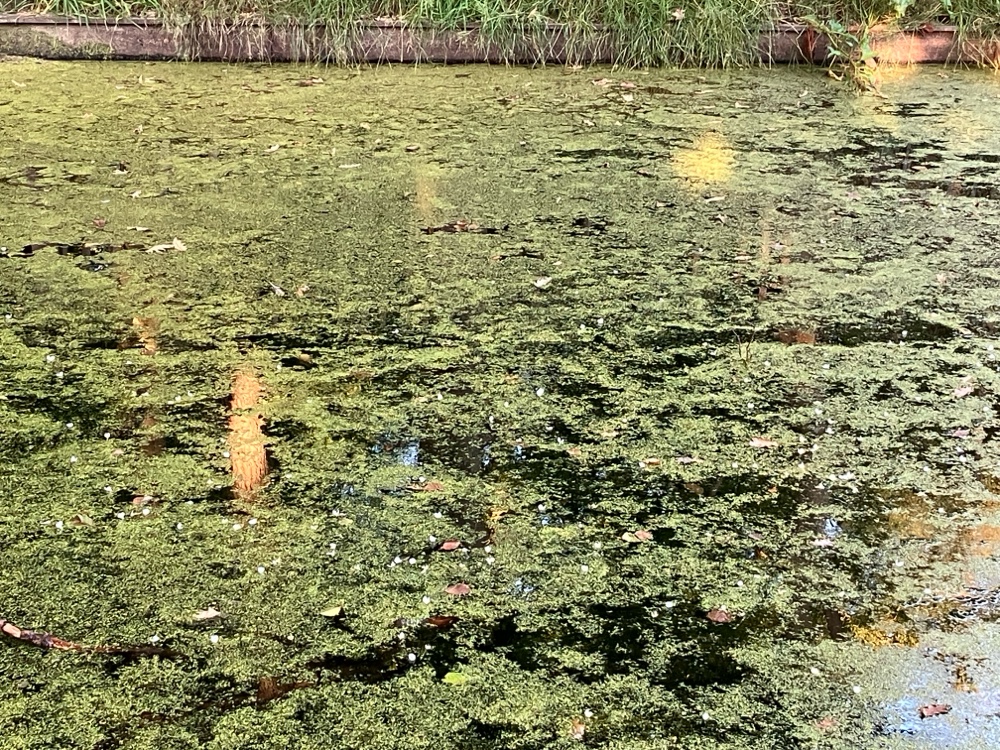
Egeria densa is a submerged aquatic perennial in the family Hydrocharitaceae, reaching stem lengths of 12–120 inches (30–300 cm) in water depths of 1–20 feet (0.3–6 m). Stems are long, branching, flexible, and rooted in the substrate at the base. Leaves are bright green, linear, 0.8–1.2 inches (20–30 mm) long and 0.1–0.2 inch (2–5 mm) wide, finely serrate, borne in dense whorls of 4–6 along the stem, with whorls spaced 0.4–0.6 inch (10–15 mm) apart. The dense whorled leaf arrangement distinguishes it from the native Elodea canadensis, which has whorls of 3. Flowers are small, three-petaled, white, 0.5–0.75 inch (12–18 mm) across, produced on slender stalks that emerge above the water surface. Only male plants are present in North America; reproduction is entirely vegetative via stem fragmentation. Stem fragments as short as 1 inch (2.5 cm) with a single node regenerate into new plants. Dense subsurface mats impede boat navigation, clog water intake screens, displace native aquatic vegetation, and alter dissolved oxygen dynamics. Listed as a prohibited or regulated invasive aquatic species in most U.S. states and Canadian provinces. Commonly sold as an aquarium plant under the name anacharis.
Native Range
Native to southeastern South America, including Brazil, Argentina, and Uruguay, occurring in freshwater lakes, rivers, and streams. Introduced to North America through the aquarium trade. Naturalized in lakes, ponds, slow-moving rivers, and irrigation canals in the Pacific Northwest, California, and the southeastern United States.Suggested Uses
Used in aquatic invasive species identification training for lake managers, fish and wildlife staff, and watercraft inspectors. Studied in aquatic plant ecology and invasive species management. Widely sold in the aquarium trade as anacharis or Brazilian waterweed; proper disposal education is included in aquatic invasive species prevention curricula.How to Identify
Appearance
Size & Dimensions
Height1' - 10'
Width/Spread1' - 3'
Bloom Information
Flowers from June through August when stems reach the water surface. Only male flowers are present in North America; three-petaled, white, 0.5–0.75 inch (12–18 mm) across, borne singly on slender stalks at the water surface. Flowering depends on water depth and light availability; plants in deeper or shaded water may not flower. No seed production in North America due to the absence of female plants.
Detailed Descriptions
Foliage Description
Bright green, linear, finely serrate, borne in dense whorls of 4-6 along the stemGrowing Conditions
Sun Requirements
Requires 4-10 hours of direct sunlight daily
• Full Sun: 6+ hours of direct sunlight
• Partial Shade: 3-6 hours of direct sunlight
• Full Shade: Less than 3 hours of direct sunlight