Alisma, Genus, plantago-aquatica, Species,
- Genus & species
Water-plantain
Circumboreal across Europe, Asia, and North America including the Pacific Northwest; shallow ponds, lake margins, slow-moving streams, ditches, and muddy shores
Overview
Alisma plantago-aquatica is an emergent aquatic perennial in the family Alismataceae native across the Northern Hemisphere including Europe, Asia, and North America with a Pacific Northwest range. Plants grow in standing or slow-moving fresh water 2-12 inches (5-30 cm) deep or in seasonally wet mud at pond margins. Foliage forms a basal rosette of long-petioled, broadly ovate to elliptic, strongly ribbed leaves 4-10 inches (10-25 cm) long with a cordate base, emerging upright above the water surface. The leaf shape resembles Plantago (broadleaf plantain), which is reflected in the epithet plantago-aquatica. Submerged populations may produce ribbon-like leaves instead of the broad emergent form. From June through September, branching whorled flowering stems 12-36 inches (30-90 cm) tall rise above the foliage and bear open panicles of three-petaled white to pale pink flowers 0.25 inch (6 mm) across in tiered whorls. Individual flowers open in the morning and close by midday. Fertilized flowers are followed by ring-shaped clusters of small ribbed achenes that ripen and persist through fall. The fresh plant contains acrid alisol compounds and is mildly toxic; livestock grazing on large quantities can show gastric irritation and the sap can irritate skin in sensitive individuals. Self-sows prolifically in suitable conditions.
Native Range
Alisma plantago-aquatica is native across the Northern Hemisphere — Europe, Asia, and North America including the Pacific Northwest. It grows in shallow ponds, lake margins, slow-moving streams, ditches, and muddy shores in 2-12 inches (5-30 cm) of standing or slow-moving fresh water or in saturated mud.Suggested Uses
Used in native pond gardens, rain gardens, constructed wetlands, and streamside restoration in shallow water or at the water's edge throughout the Pacific Northwest. Combined with Carex obnupta, Juncus effusus, Schoenoplectus acutus, and Sagittaria latifolia in mixed emergent plantings. Seeds feed waterfowl, and emergent stems shelter aquatic invertebrates.How to Identify
Appearance
Size & Dimensions
Height1' - 3'
Width/Spread1' - 2'
Bloom Information
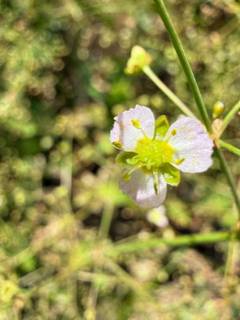
Branching whorled panicle stems rise 12-36 inches (30-90 cm) above the water from June through September, bearing tiered whorls of three-petaled white to pale pink flowers 0.25 inch (6 mm) across. Bloom duration averages 12 weeks. Individual flowers open in the morning and close by midday. Fertilized flowers ripen into ring-shaped clusters of small ribbed achenes that persist into fall and are eaten by mallards, teals, and other waterfowl.
Detailed Descriptions
Flower Description
white to pale pink; three-petaled flowers 0.25 inch (6 mm) across in open whorled tiers on tall branching panicle stems; individual flowers close by middayFoliage Description
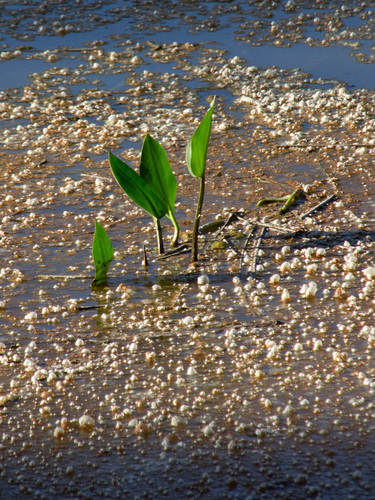
medium green; broadly ovate, strongly ribbed with cordate base on long petioles; emergent leaves resemble Plantago (broadleaf plantain)Growing Conditions
Sun Requirements
Requires 4-8 hours of direct sunlight daily
• Full Sun: 6+ hours of direct sunlight
• Partial Shade: 3-6 hours of direct sunlight
• Full Shade: Less than 3 hours of direct sunlight
Care & Maintenance
Care Guide
Plant in full sun in still or slow-moving fresh water 2-12 inches (5-30 cm) deep or in saturated muddy soil at pond margins; tolerated soil types include clay, loam, and silt. Tolerates a wide pH range of 5.5-8.0. Rhizomes or divisions are set into pond mud or in submerged aquatic containers in spring. Establishment takes 1-2 growing seasons. Self-sows prolifically; in managed plantings, excess seedlings are thinned in spring and seed heads can be removed before ripening to limit spread. The fresh sap can irritate skin in sensitive individuals.Pruning
Old flower stems and dead foliage are removed in late fall (October-November) to reduce self-seeding where spread is undesired. Congested clumps can be divided in spring with divisions replanted immediately. Seed heads can be cut before ripening to control self-sowing in managed plantings.Pruning Schedule
Prune: October–November
fall
Container Growing
Suitable for container growing
Minimum container size: 5 gallons