Chamaecyparis, Genus, obtusa, Species, 'Nana', Cultivar,
- Genus & species
- Cultivar
dwarf hinoki cypress
Species native to Japan and Taiwan; cultivar selected in cultivation in Japan
Overview
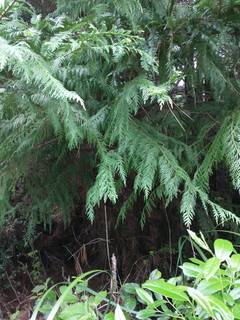
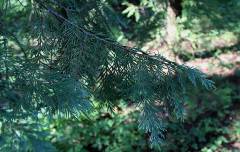
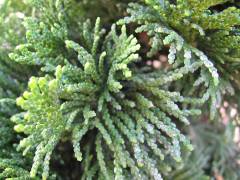
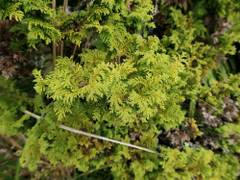
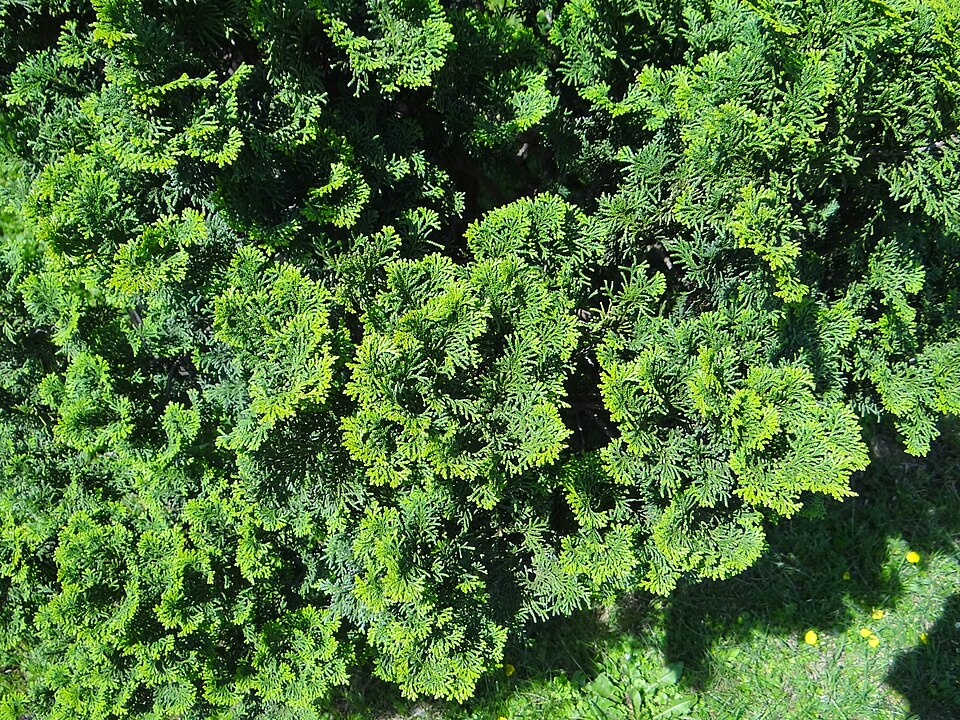
Chamaecyparis obtusa 'Nana' is a very slow-growing, dense, flat-topped to dome-shaped, evergreen coniferous shrub reaching 2–3 feet (60–90 cm) tall with a spread of 3–4 feet (0.9–1.2 m) after 10 years. This is a longstanding miniature hinoki cultivar in Japanese horticulture. The foliage is arranged in tightly cupped, overlapping, shell-like fans of dark green scale leaves, producing a complex, tiered surface. The fans are held horizontally to slightly cupped upward and are densely packed. The overall form is a low, flat-topped to gently domed mound—wider than tall. Growth rate is extremely slow at 1–2 inches (2.5–5 cm) per year. A 20-year-old specimen may reach only 3 feet (0.9 m) tall and 4 feet (1.2 m) wide. The foliage is the densest and most tightly cupped of the commercially available dwarf hinoki cultivars. Interior browning of shaded foliage is normal and can be cleaned out periodically. 'Nana' is sometimes confused with 'Nana Gracilis' in the trade; 'Nana Gracilis' is a larger, more upright form reaching 6–10 feet (1.8–3 m). Spider mites occur in hot, dry conditions.
Native Range
The species Chamaecyparis obtusa is native to Japan (Honshu, Shikoku, Kyushu) and Taiwan, occurring in moist mountain forests from 1,500 to 6,500 feet (450–2,000 m). 'Nana' was selected in cultivation in Japan and has been grown there for centuries, predating its introduction to Western horticulture in the 19th century.Suggested Uses
Planted as a specimen in rock gardens, trough gardens, alpine collections, and miniature landscapes at 2–3 foot (60–90 cm) spacing. The miniature scale and extremely slow growth suit the smallest garden spaces. Functions in containers of at least 2 gallons (8 L), including as a bonsai subject. Positioned at close viewing range—entries, tabletop containers, and courtyard gardens—the intricate cupped-fan surface reads at 1–3 feet (30–90 cm). Paired with miniature companion plants, mosses, and alpines, the cultivar anchors small-scale plantings with structural weight without overtopping companion species. Hedging, mass planting, and locations needing fast coverage are unsuitable.How to Identify
Appearance
Size & Dimensions
Height2' - 3'
Width/Spread3' - 4'
Bloom Information
Small, round, reddish-brown cones 0.3–0.4 inch (8–10 mm) across rarely develop on this miniature cultivar; most plants in cultivation never produce cones. Pollen release may occur in spring on the oldest mature specimens.
Detailed Descriptions
Foliage Description
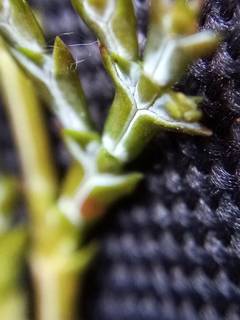
Dark green, tightly cupped shell-like fansGrowing Conditions
Sun Requirements
Requires 4-8 hours of direct sunlight daily
• Full Sun: 6+ hours of direct sunlight
• Partial Shade: 3-6 hours of direct sunlight
• Full Shade: Less than 3 hours of direct sunlight
Care & Maintenance
Care Guide
Plant in full sun to partial shade in moist, well-drained, acidic to neutral soil. Consistent moisture is the single most limiting cultural requirement; drought stress causes foliage browning that does not recover. Hot, drying winds cause the same browning. Accumulated dead foliage in the interior benefits from annual cleanout to maintain air circulation and reduce fungal risk. The extremely slow growth means decades of patience for a mature specimen. Spider mites occur in hot, dry conditions. Locations where neighboring plants will overgrow the small size are unsuitable; the cultivar is slow enough to be smothered by faster-growing companions within 2–3 seasons.Pruning
Minimal pruning required. Dead interior foliage is cleaned out annually to maintain air circulation. Shearing damages the natural cupped-fan texture and the foliage does not regenerate from bare wood. The extremely compact, self-maintaining form rarely needs shaping.Pruning Schedule
Prune: May
late spring
Container Growing
Suitable for container growing
Minimum container size: 2 gallons