Image 1 of 10
© No machine-readable author provided. Gondahara assumed (based on copyright claims)., some rights reserved (CC-BY-SA) · Wikimedia Commons
1 / 10
Cercis, Genus, chinensis, Species,
- Genus & species
Chinese redbud
Overview
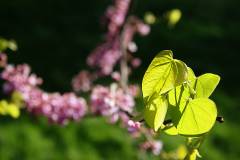
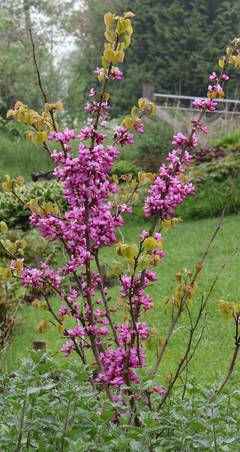
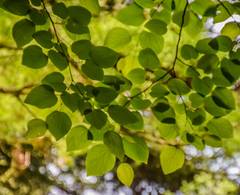
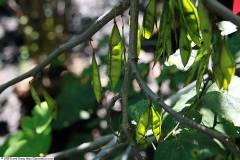
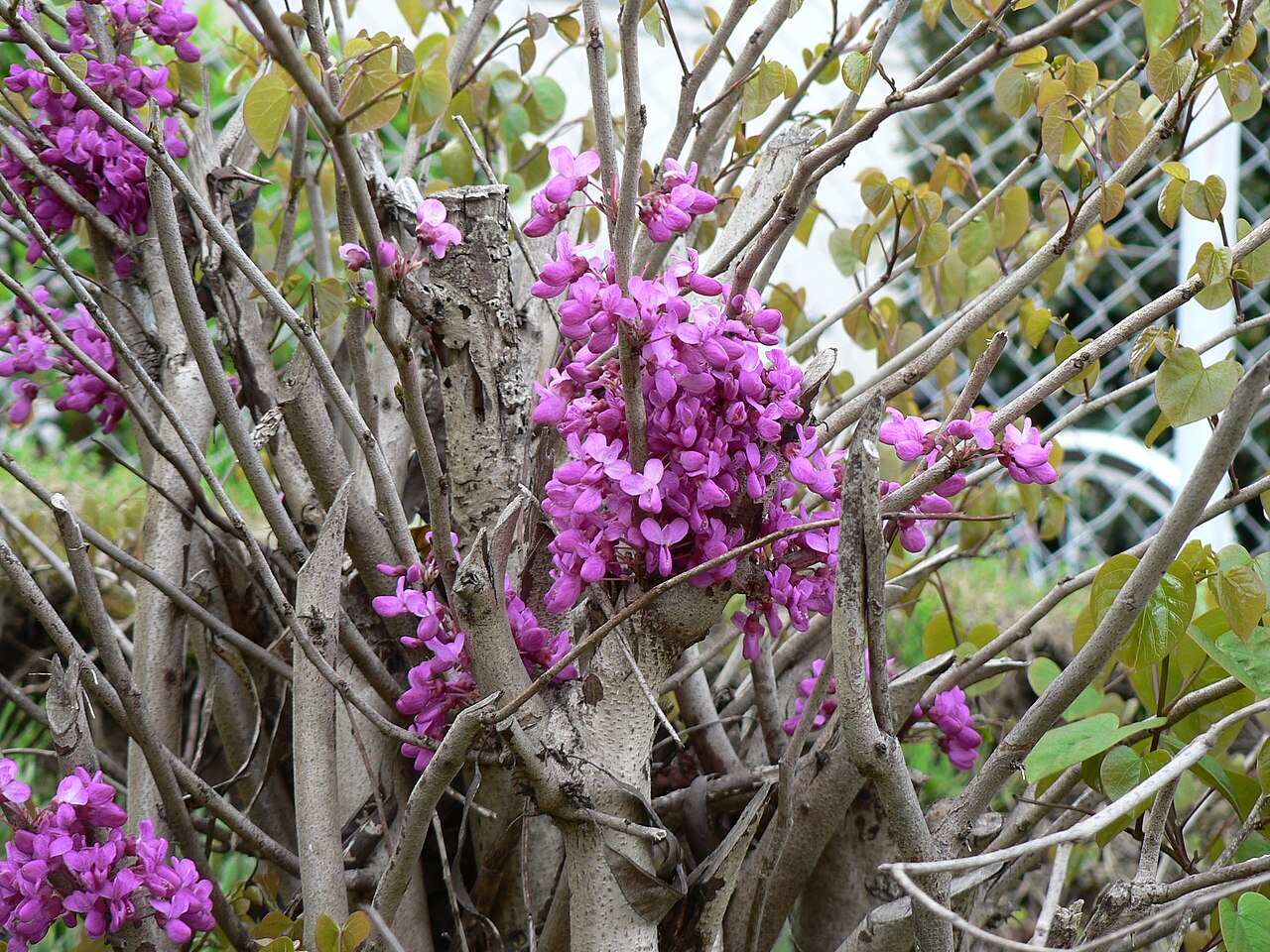
Cercis chinensis is a deciduous multi-stemmed shrub or small tree reaching 8-15 feet (2.4-4.5 m) tall and 8-12 feet (2.4-3.7 m) wide in cultivation, and 25-50 feet (8-15 m) on wild sites in central China. Flowers open before the leaves in March and April, in clusters of 5-8 held directly on one-year and older wood and on the main stems, each pea-shaped and about 0.5 inch (1.3 cm) long in rosy purple to magenta. Bloom covers the length of the stems rather than the shoot tips, a pattern shared with C. canadensis, though the clusters of C. chinensis are tighter and the flowers about a quarter larger. Leaves are alternate, heart-shaped, 3-5 inches (8-13 cm) across, thicker and glossier than those of C. canadensis, with an abruptly pointed tip, and they turn yellow in October and November. Seed pods are flat brown legumes 3-5 inches (8-13 cm) long that hang on into winter. Growth runs 12-18 inches (30-45 cm) per year through the first decade. A taproot forms early, so plants taller than 5 feet (1.5 m) re-establish slowly after transplanting, and stems are subject to canker caused by Botryosphaeria species on sites that stay dry through summer.
Native Range
Cercis chinensis is native to central and southern China, from Hubei and Sichuan east to Zhejiang and south to Guangdong, growing on limestone slopes, in scrub, and along forest margins between 2,000 and 5,900 feet (600-1,800 m). It has been cultivated in Chinese and Japanese gardens for centuries and reached Western horticulture in 1850. No naturalized populations are recorded outside its native range.Suggested Uses
Planted as a specimen at 10-12 foot (3-3.7 m) spacing, in shrub borders, and against walls where the flowering stems are seen from close range. The mature size fits courtyards and small gardens that cannot hold a 40 foot (12 m) canopy tree. Flowers are worked by honeybees and early bumblebee queens in March and April, when few other nectar sources are open.How to Identify
Appearance
Size & Dimensions
Height8' - 15'
Width/Spread8' - 12'
Bloom Information
Flowering runs 2-3 weeks in March and April, opening 7-10 days ahead of C. canadensis in the same garden and finishing as the first leaves expand. Buds form on wood at least one year old, so flower numbers rise each year as the stem framework ages. Frost below 28F (-2C) during bud swell browns the open flowers and removes that season's bloom. Plants start flowering 3-4 years after planting.
Detailed Descriptions
Flower Description
Rosy purple to magentaFoliage Description
Glossy dark green turning yellow in autumnGrowing Conditions
Sun Requirements
Requires 4-10 hours of direct sunlight daily
• Full Sun: 6+ hours of direct sunlight
• Partial Shade: 3-6 hours of direct sunlight
• Full Shade: Less than 3 hours of direct sunlight
Care & Maintenance
Care Guide
Full sun through light shade supports growth, with flower counts highest at 6 or more hours of direct sun. Soils from sand to clay at pH 6.0-8.0 are tolerated, and free drainage matters more than fertility. Water at 1 inch (25 mm) per week for the first two seasons; established plants hold through 3-4 weeks of dry weather, though summer drought raises the risk of stem canker. Fertilizer is generally unnecessary in garden soil, and high nitrogen extends soft shoots that die back over winter. Canker caused by Botryosphaeria species kills individual stems from the tip down and is handled by cutting affected wood back to healthy tissue; verticillium wilt also occurs on the genus. Nursery stock is moved in spring while dormant, since the taproot makes autumn transplanting less reliable.Pruning
Pruning is carried out within 3-4 weeks of flowering, since the buds for the next season form on wood that matures over the following summer. Dead, crossing, and canker-affected stems are cut back to healthy wood or to the base. Taking out one or two of the oldest stems each year renews a multi-stemmed plant without loss of flowering wood. Cuts wider than 2 inches (5 cm) close slowly on this genus and open entry points for canker.Pruning Schedule
Prune: April–May
late spring