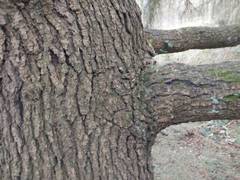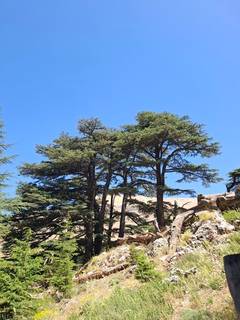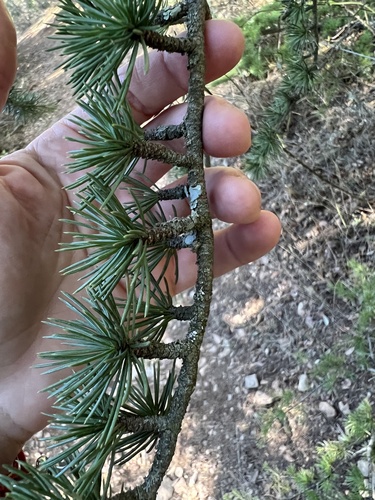
Cedrus, Genus, atlantica, Species,
- Genus & species
atlas cedar
Atlas Mountains of Algeria and Morocco; 4,000-7,200 feet (1,200-2,200 m) elevation
Overview
Cedrus atlantica is a large coniferous evergreen tree growing 40-60 feet (12-18 m) tall and 30-40 feet (9-12 m) wide. Blue-green to green stiff needles, 0.75-1.5 inches (2-4 cm), are borne in dense spur-shoot clusters of 20-45 on short spurs — this spur-shoot arrangement is the key identifying character of Cedrus. The species name atlantica refers to the Atlas Mountains. Young trees are pyramidal; mature trees develop a flat-topped crown with tiered horizontal branches. Upright barrel-shaped cones, 2-3 inches (5-7 cm), greenish aging to brown, disintegrate on the tree; cones take 3 years to mature. Pollen is shed in October-November, in contrast to most conifers which shed pollen in spring. Cedrus atlantica is one of four recognized Cedrus species. It is separated from C. deodara by a non-nodding leader, stiffer needles, and shorter needle length. Native to the Atlas Mountains of Algeria and Morocco at 4,000-7,200 feet (1,200-2,200 m). Drought-tolerant once established and tolerates chalk and rocky soils. The mature size of 40-60 feet (12-18 m) tall and 30-40 feet (9-12 m) wide requires a large site — this is the primary spatial limitation. Non-toxic. Deer-resistant.
Native Range
Native to the Atlas Mountains of Algeria and Morocco at 4,000-7,200 feet (1,200-2,200 m) elevation.Suggested Uses
Grown as a large coniferous specimen on large sites, spaced 30-40 feet (9-12 m) apart. The flat-topped tiered crown at maturity and the blue-green spur-shoot foliage characterize the species in landscape settings. Drought-tolerant. Non-toxic. Hardy in zones 6-9.How to Identify
Appearance
Size & Dimensions
Height40' - 60'
Width/Spread30' - 40'
Bloom Information
Not applicable — conifer. Wind-pollinated. Pollen is shed in October-November, in contrast to most conifers which shed pollen in spring. Upright barrel-shaped cones, 2-3 inches (5-7 cm), disintegrate on the tree after a 3-year maturation period.
Detailed Descriptions
Foliage Description
blue-green to green (blue forms selected as 'Glauca'); stiff needles 0.75-1.5 inches (2-4 cm) in dense spur-shoot clusters of 20-45Growing Conditions
Sun Requirements
Requires 6-12 hours of direct sunlight daily
• Full Sun: 6+ hours of direct sunlight
• Partial Shade: 3-6 hours of direct sunlight
• Full Shade: Less than 3 hours of direct sunlight
Care & Maintenance
Care Guide
Site in full sun (6-12 hours) in well-drained soil with a pH of 5.5-7.5; tolerates chalk and rocky soils. Drought-tolerant once established. The mature size of 40-60 feet (12-18 m) tall and 30-40 feet (9-12 m) wide requires a large site. No routine pruning. Non-toxic. Deer-resistant. Hardy in zones 6-9.Pruning
No routine pruning is needed. Remove dead or damaged branches in late spring (April). The central leader should not be removed on young trees — the flat-topped crown form develops naturally with age.Pruning Schedule
Prune: April
late spring