Caryopteris, Genus, spp., Multiple species,
- Genus
- Multiple species
bluebeard
Overview
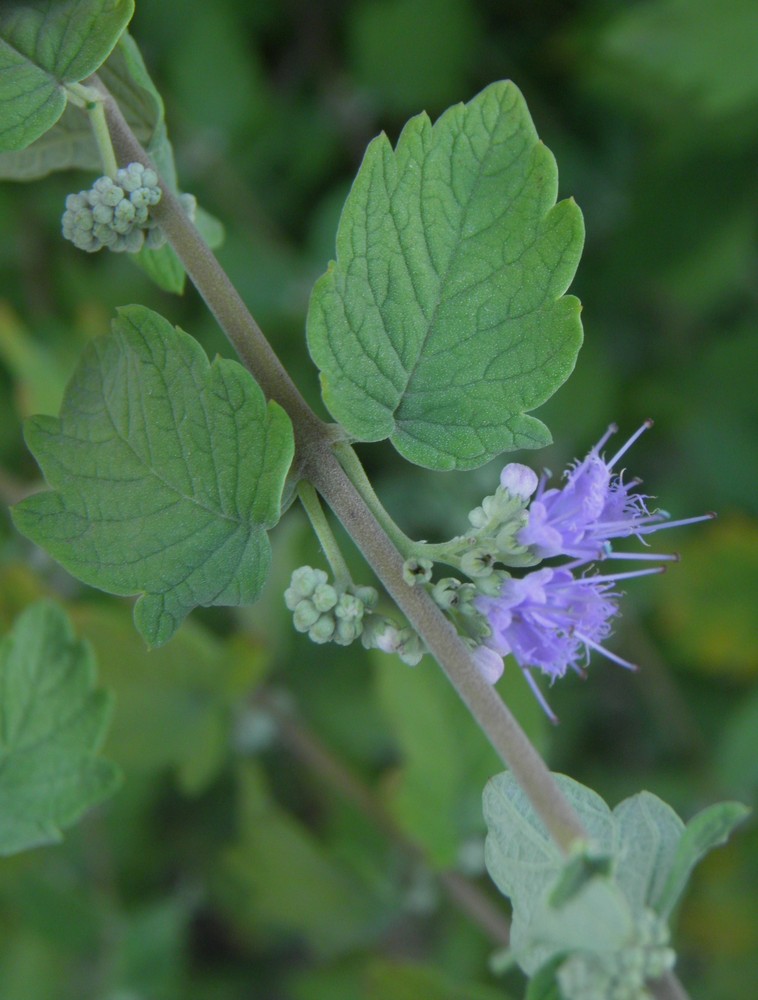
Caryopteris is a genus of about six species of deciduous subshrubs and shrubs in the mint family, native to eastern and central Asia. Garden plants form rounded mounds 2-4 feet (0.6-1.2 m) tall and wide, with slender stems and gray-green, aromatic leaves that release a sage-like scent when bruised. From late summer into autumn, clusters of small blue to violet-blue flowers crowd the upper leaf joints, drawing bees and other insects late in the season. The hybrid C. × clandonensis and its selections are the ones usually grown in gardens, alongside species such as C. incana. Flower color ranges from pale sky blue to deep purple-blue, with a few selections in pink. The genus grows in full sun on light, well-drained soil and tolerates drought and lean ground once established. Plants are hardy in USDA zones 5-9 but die back partly or fully in cold winters, regrowing from the base. Wet winter soils and shade cause weak growth and sparse flowering. Stems flower on new wood, so plants bloom even after hard winter cutback. Most reach full size in two to three years.
Native Range
Native to eastern and central Asia, including China, Japan, Korea, and Mongolia, in scrub and on dry, rocky slopes.Suggested Uses
Planted in sunny borders, gravel gardens, and mixed shrub plantings for late-season blue flowers and pollinator traffic. Combined with ornamental grasses and autumn perennials. Plants are not reliable in wet, heavy, or shaded sites.How to Identify
Appearance
Size & Dimensions
Height2' - 4'
Width/Spread2' - 4'
Colors
Bloom Information
Detailed Descriptions
Flower Description
blue to violet-blueFoliage Description
gray-greenGrowing Conditions
Sun Requirements
Requires 6-12 hours of direct sunlight daily
• Full Sun: 6+ hours of direct sunlight
• Partial Shade: 3-6 hours of direct sunlight
• Full Shade: Less than 3 hours of direct sunlight
Care & Maintenance
Care Guide
Plants grow in full sun on light, well-drained soil of low to moderate fertility. They establish from container plants set out in spring and tolerate drought once rooted. Sharp winter drainage matters more than summer water, as cold, wet soils rot the crown. In colder zones the top growth dies back and is cut to a low framework in spring, after which new shoots flower the same year. Overfed or shaded plants grow leggy and bloom sparsely. Light, gritty soils give the strongest flowering.Pruning
Stems are cut back hard in early spring to a low framework 6-12 inches (15-30 cm) above the ground, since flowers form on new growth. This annual cutback keeps plants compact and free-flowering. Old, unpruned plants grow open and woody at the base.Pruning Schedule
Prune: March–April
early spring
Container Growing
Suitable for container growing
Minimum container size: 5 gallons