Image 1 of 14
1 / 14
Plant Reference
Callicarpa, Genus, bodinieri, Species,
- Genus & species
beautyberry
Central and western China; Hubei, Sichuan, Yunnan, and adjacent provinces; forest margins and thickets
Overview
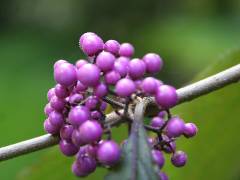
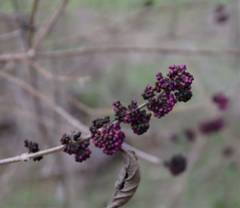
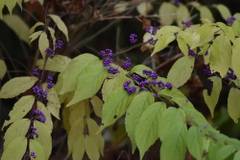
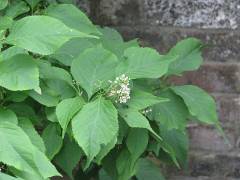
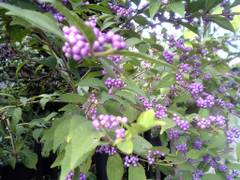
Callicarpa bodinieri is a deciduous shrub in the family Lamiaceae (the genus was reclassified from Verbenaceae to Lamiaceae in APG III), reaching 4–6 feet (120–180 cm) tall and 4–6 feet (120–180 cm) wide with arching to upright stems. Leaves are opposite, elliptic to ovate, 3–5 inches (7–13 cm) long, medium green with serrated margins, turning yellow to lilac-pink in fall before leaf drop. Tiny lilac-pink flowers 0.1 inch (3 mm) across are carried in dense axillary cymes along the stems in July. The flowers develop into densely packed violet-purple drupes 0.25 inch (6 mm) across, ripening in September and October and persisting on the bare stems after leaf drop into December. The cultivar 'Profusion' is widely sold and produces heavier and more reliable fruit set than the species type. The species is monoecious but partially self-incompatible, so cross-pollination from a second compatible plant within 15 feet (4.5 m) increases fruit set. In USDA zones 5–6 stems can die back partially or to the ground in winter; the shrub regrows and fruits on current-season wood. Limitation: berry display lasts approximately 6–8 weeks before the drupes shrivel by mid to late December, and the species is not drought-tolerant, so dry summers cause leaf scorch and reduce fruit production.
Native Range
Native to central and western China, including Hubei, Sichuan, Yunnan, and adjacent provinces, growing on forest margins and in thickets at low to middle elevations.Suggested Uses
Used in shrub borders, woodland edges, and groupings of 2–3 plants spaced 4–6 feet (120–180 cm) apart for cross-pollination at sites where the bare-stemmed berry display will be visible from windows or paths from October through December. Drought-prone sites and isolated single-plant placements that limit cross-pollination are unsuitable.How to Identify
Appearance
Size & Dimensions
Height4' - 6'
Width/Spread4' - 6'
Bloom Information
Tiny lilac-pink flowers 0.1 inch (3 mm) across appear in dense axillary cymes along the stems in July, lasting 2–3 weeks. Densely packed violet-purple drupes 0.25 inch (6 mm) across develop from September through October and persist on the bare stems after leaf drop into December.
Detailed Descriptions
Flower Description
lilac-pink, tiny (0.1 inch / 3 mm), in dense axillary cymes along the stemsFoliage Description
medium green; elliptic to ovate, 3-5 inches (7-13 cm) long, with serrated margins; turns yellow to lilac-pink in fall before leaf dropGrowing Conditions
Sun Requirements
Requires 3-8 hours of direct sunlight daily
• Full Sun: 6+ hours of direct sunlight
• Partial Shade: 3-6 hours of direct sunlight
• Full Shade: Less than 3 hours of direct sunlight
Care & Maintenance
Care Guide
Site in part sun to full sun with 3–8 hours of direct sun per day in well-drained soil with a pH of 5.5–7.0. The species is not drought-tolerant, and consistent moisture during the growing season holds foliage quality and fruit production. Cross-pollination from a second compatible plant within 15 feet (4.5 m) increases berry set; isolated single plants produce reduced fruit. The shrub blooms and fruits on current-season wood, so hard renovation pruning in early spring does not reduce fruit production. In USDA zones 5–6 stems may die back to the ground in winter and regrow from the base. Hardy in USDA zones 5–9. Routine fertilization is not required.Pruning
Cut stems back to 6–12 inches (15–30 cm) above ground in early spring (February and March) before new growth emerges; the shrub blooms and fruits on current-season wood. Hard renovation pruning holds the berry clusters at eye level on a compact 4–5 foot (120–150 cm) framework rather than on a leggy older frame, and concentrates the fruit display.Pruning Schedule
Prune: February–March
early spring