Carex, Genus, umbrosa, Species,
- Genus & species
shade sedge
Europe to the Urals (calcareous to neutral deciduous woodland)
Overview
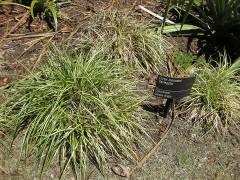
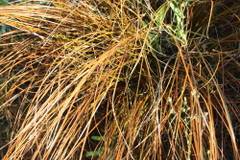
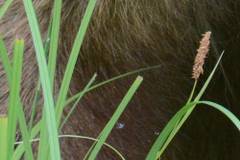
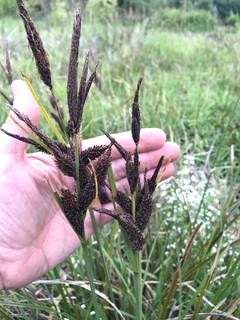
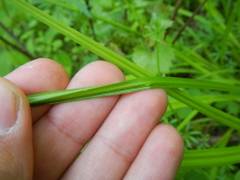
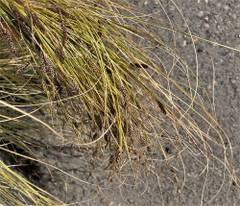
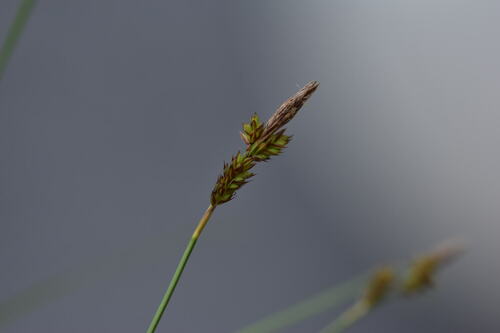
Carex umbrosa is a loosely tufted deciduous perennial sedge in the family Cyperaceae growing 8-16 inches (20-40 cm) tall in small clumps 6-10 inches (15-25 cm) wide with short creeping rhizomes. Stems are triangular, slender, smooth to slightly rough near the apex. Leaves are flat, 2-3 mm wide, dark green, arching, often longer than the stems. Leaf sheaths are dark brown to purplish-brown at the base, a useful identification character. The inflorescence is compact, with a single terminal male spike 0.3-0.5 inch (8-12 mm) long and 1-3 short ovoid female spikes 0.3-0.5 inch (8-12 mm) long clustered near the stem apex, the lowest sometimes on a short peduncle. Utricles are 3-4 mm long, pubescent (hairy), with a short beak. The species occurs in deciduous woodland, woodland edges, and hedge banks on calcareous to neutral soils, characteristically in dappled shade rather than deep shade or open ground. In Europe, it is an indicator of ancient woodland and traditional management. Does not tolerate waterlogging or prolonged drought. A small-scale woodland sedge for naturalistic plantings, holding up well in dry shade under deciduous trees.
Native Range
Carex umbrosa is native across Europe, from the British Isles (rare and declining) and Scandinavia south to the mountains of the Mediterranean and east through Russia to the Urals. The species occurs in deciduous woodland, coppice, hedge banks, and woodland rides on calcareous to neutral soils from low elevations to approximately 5,000 feet (1,500 m).Suggested Uses
Planted in woodland gardens, shade borders, and beneath deciduous trees, spaced 8-10 inches (20-25 cm) apart. Used as a naturalistic groundcover in dry shade where few other plants persist. Combines with woodland wildflowers such as Anemone nemorosa, Primula vulgaris, and Galanthus nivalis. Used in ancient woodland restoration plantings on calcareous soils. Not suited to deep shade, waterlogged sites, or open exposure.How to Identify
Appearance
Size & Dimensions
Height8" - 1'4"
Width/Spread6" - 10"
Bloom Information
Flowering from April through May. The compact inflorescence sheds pollen by wind over 1-2 weeks. Utricles ripen by June through July. Seed dispersal is by gravity and by ants (myrmecochory; the utricle has a small elaiosome).
Detailed Descriptions
Flower Description
Brown; single terminal male spike and 1-3 short ovoid female spikes clustered near the stem apexFoliage Description
Dark green; flat 2-3 mm wide arching leaves often longer than stems; dark brown to purplish-brown basal sheaths; deciduousGrowing Conditions
Sun Requirements
Requires 2-5 hours of direct sunlight daily
• Full Sun: 6+ hours of direct sunlight
• Partial Shade: 3-6 hours of direct sunlight
• Full Shade: Less than 3 hours of direct sunlight
Care & Maintenance
Care Guide
Sited in partial shade in moist but well-drained humus-rich neutral to slightly alkaline soil at pH 6.0-7.5. Spaced 8-10 inches (20-25 cm) apart. Sited beneath deciduous trees where dappled shade and leaf litter give natural conditions. Watered during establishment and during extended dry spells. Mulched with leaf mould. No fertilization is needed in organically rich woodland soil.Pruning
Dead foliage is cut back in late winter before new growth. No other management is required.Pruning Schedule
Prune: February–March
early spring
Container Growing
Suitable for container growing
Minimum container size: 2 gallons