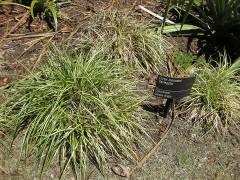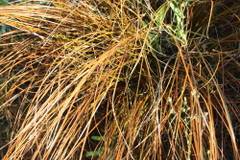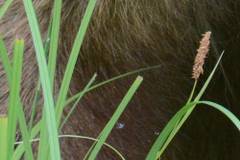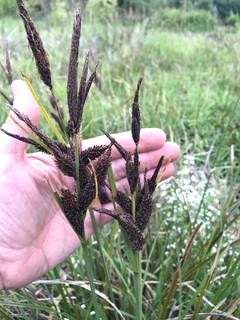
© Chris Hunkeler from Carlsbad, California, USA, some rights reserved (CC-BY-SA) · Wikimedia Commons
Carex, Genus, testacea, Species, 'Prairie Fire', Cultivar,
- Genus & species
- Cultivar
prairie fire sedge
Garden selection; species {Carex testacea} is native to New Zealand
Overview
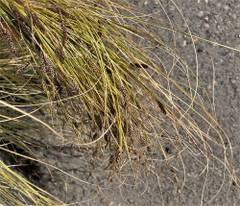
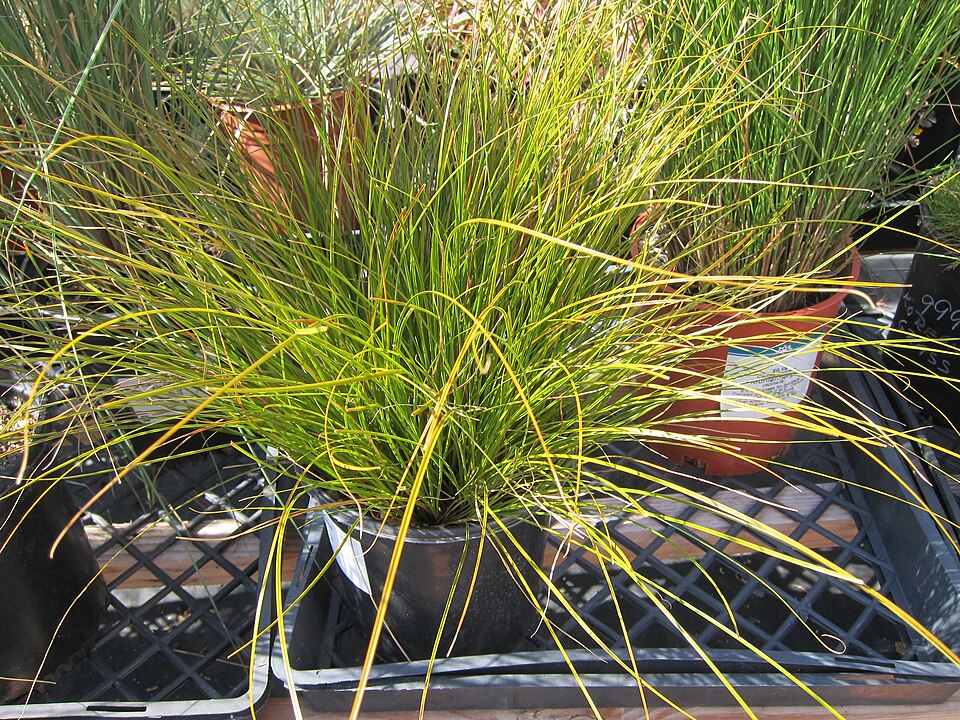
Carex testacea 'Prairie Fire' is an orange-foliaged evergreen sedge selected from the New Zealand species, growing 18–24 inches (45–60 cm) tall and equally wide as a tight arching clump. Each leaf is olive-green at the base and grades to bright copper-orange at the upper third and tip, giving the clump a fire-like color gradient that reads orange from a distance and olive-green close up. The species epithet 'testacea' translates as 'brick-colored'. Color saturation tracks temperature and light: orange tone is deepest in cool weather (40–55°F / 4–13°C) and high light, fading toward bronze-orange or pale tan in summer heat above 85°F (29°C), then returning to full color through autumn into winter where the plant stays evergreen. The orange tip color is pigment in living tissue and is not dead foliage. Cultural needs are restrictive: full sun (5+ hours direct) for orange saturation, well-drained soil for crown survival, and zone 6 minimum hardiness with the colony declining in winters below 0°F (−18°C) without snow cover. The plant is short-lived in zones colder than 7, with typical 3–5 year lifespan. Self-sows lightly in moist soil but the seedlings revert to olive-green, so volunteers do not match the parent. Deer rarely browse sedge foliage.
Native Range
The species Carex testacea is native to New Zealand, where it grows on coastal cliffs, dunes, and lowland to subalpine open ground on both islands. C. testacea 'Prairie Fire' is a garden selection chosen for stronger orange color than the typical species form.Suggested Uses
Used as an orange foliage accent in mixed perennial borders, in rock-garden pockets, alongside warm-toned summer-flowering perennials such as Helenium cultivars and Rudbeckia hirta, and in containers of 5 gallons (19 liters) or larger where the cool-season color carries the planting through autumn and winter. Pairs with bronze-red C. buchananii for a warm-toned grass duet.How to Identify
Appearance
Size & Dimensions
Height1'6" - 2'
Width/Spread1'6" - 2'
Bloom Information
Inconspicuous tan spikelets appear in May and June for approximately 2 weeks. Bloom is not the display feature; the orange-tipped foliage carries the year-round value, deepest in cool weather. Carries no fragrance.
Detailed Descriptions
Flower Description
Tan, inconspicuous spikeletsFoliage Description
Olive-green at the base grading to bright copper-orange at the upper third and tip; orange saturation deepens in cool weather and high lightGrowing Conditions
Sun Requirements
Requires 5-10 hours of direct sunlight daily
• Full Sun: 6+ hours of direct sunlight
• Partial Shade: 3-6 hours of direct sunlight
• Full Shade: Less than 3 hours of direct sunlight
Care & Maintenance
Care Guide
Plant in a site receiving 5 or more hours of direct sun daily; orange saturation drops sharply in shade. Soil should be well-drained and lean to medium fertility, neutral to slightly acidic (pH 5.5–7.5); rich or wet soils encourage crown rot. Water during the first season of establishment, then irrigate only during prolonged drought. The plant is hardy through USDA zone 6 with reliable snow cover and behaves as short-lived (3–5 years) in zone 6 without protection. Comb out browned outer leaves with gloved hands or a leaf rake in early March before new growth pushes; full shearing is unnecessary because the foliage stays evergreen. Light self-sown seedlings revert to olive-green and do not carry the orange selection.Pruning
Comb or rake out browned outer leaves in early March before new growth pushes. Skip full cutback; the foliage stays evergreen and full shearing removes the orange display. Lift and replant a healthy segment if the clump's center dies out after 4–5 years.Pruning Schedule
Prune: March
early spring
Container Growing
Suitable for container growing
Minimum container size: 5 gallons