Carex, Genus, stipata, Species,
- Genus & species
sawbeak sedge
Across North America from the Pacific Coast east to the Atlantic and from Alaska south to California and east to the Southeast; wet meadows, freshwater marshes, stream margins, pond edges, and moist disturbed ground
Overview
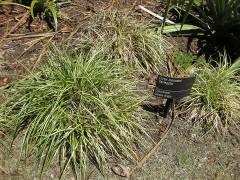
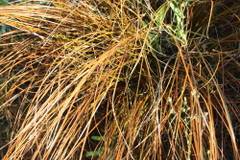
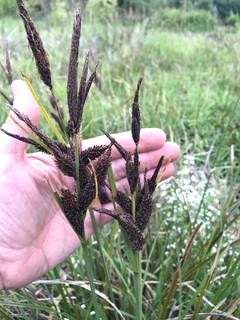
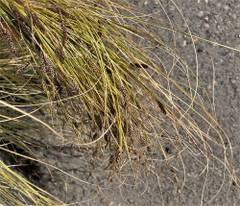
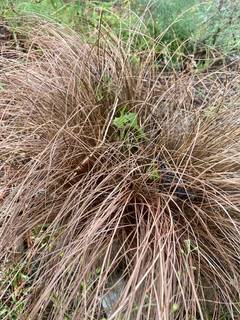
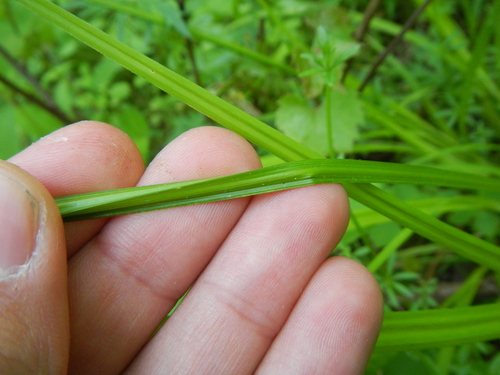
Carex stipata is a clump-forming sedge in the family Cyperaceae native to wet meadows, freshwater marshes, stream margins, pond edges, and moist disturbed ground across North America from the Pacific Coast east to the Atlantic and from Alaska south to California and east to the Southeast. The epithet stipata means packed or crowded and refers to the dense clustered inflorescence. Plants form clumps 2-3 feet (60-90 cm) tall of erect, sharply triangular, spongy stems that are softer and more cellular than those of most Carex species. Leaf blades are flat, 0.2-0.4 inch (5-10 mm) wide, light green to yellow-green, and slightly drooping at the tips. The inflorescence consists of 5-10 sessile spikes appearing confluent in a single clustered head 2-5 inches (5-12 cm) long at the stem tip. Each perigynium tapers to a long awl-like beak 0.1-0.15 inch (2.5-4 mm), giving the head a dense bristly texture and the common name sawbeak. Spikes are greenish-yellow when young and ripen to brownish-gold by late summer; remnants persist as tan-brown into fall. Forms stable clumps rather than spreading by rhizome. Foliage browns and dies back in winter, leaving a dry tan tussock until spring cutback.
Native Range
Carex stipata is native across North America from the Pacific Coast east to the Atlantic and from Alaska south to California and east to the Southeast. It grows in wet meadows, freshwater marshes, stream margins, pond edges, and moist disturbed ground in saturated to seasonally wet soils.Suggested Uses
Used in freshwater wetland restoration, rain gardens, bioswales, and wet meadow plantings at 18-24 inch (45-60 cm) spacing where a clump-forming wetland sedge is wanted in mixed plantings. The bristly inflorescences add textural contrast among broader-leaved wetland species in naturalistic plantings.How to Identify
Appearance
Size & Dimensions
Height2' - 3'
Width/Spread1'6" - 2'
Bloom Information
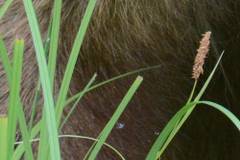
Clustered bristly-beaked inflorescences emerge May through July. Spikes are greenish-yellow when young and ripen to brownish-gold by late summer. Tan-brown spike remnants persist into fall on the dry stems and provide limited seed for songbirds and marsh sparrows. Bloom duration averages 8 weeks; wind-pollinated.
Detailed Descriptions
Flower Description
greenish-yellow ripening to brownish-gold; 5-10 sessile confluent spikes in a clustered head 2-5 inches (5-12 cm) long at the stem tip; perigynia taper to long awl-like beaks 0.1-0.15 inch (2.5-4 mm); May-JulyFoliage Description
light green to yellow-green; flat blades 0.2-0.4 inch (5-10 mm) wide, slightly drooping; sharply triangular spongy stemsGrowing Conditions
Sun Requirements
Requires 3-8 hours of direct sunlight daily
• Full Sun: 6+ hours of direct sunlight
• Partial Shade: 3-6 hours of direct sunlight
• Full Shade: Less than 3 hours of direct sunlight
Care & Maintenance
Care Guide
Plant in full sun to part shade in saturated to seasonally wet soil with a pH of 5.0-7.5; tolerated soil types include clay, silt, loam, and peat. Plugs are set at 18-24 inch (45-60 cm) spacing in wet mud or shallow water up to 4 inches (10 cm) deep. Establishment takes 1-2 growing seasons and no fertilization is needed in saturated ground. Forms stable clumps rather than spreading by rhizome, which limits use for ground coverage but reduces management in mixed plantings. Drought during establishment causes leaf-tip dieback and clump decline.Pruning
Cut all stems to 4-6 inches (10-15 cm) above ground in late winter (February-March) before new growth emerges. Clumps can be divided in early spring for propagation. Annual cutback removes accumulated dry stems and persistent spike remnants from the previous season.Pruning Schedule
Prune: February–March
late winter