Image 1 of 10
1 / 10
Plant Reference
Carex, Genus, morrowii, Species, 'Variegata', Cultivar,
- Genus & species
- Cultivar
Japanese sedge
Overview
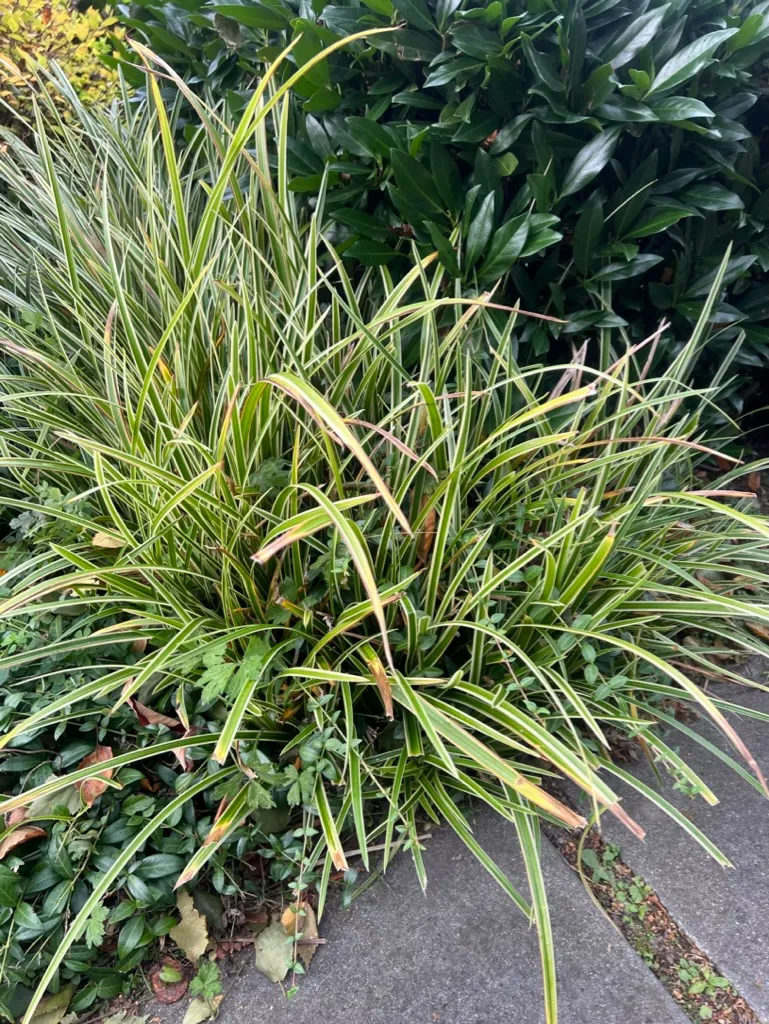
Carex morrowii 'Variegata' is the variegated Japanese sedge, growing 12–18 inches (30–45 cm) tall and wide in a neat mounding form. Stiff arching dark green leaves 0.25 inch (6 mm) wide with cream-white marginal stripes — the variegation is the cultivar feature and is visible year-round in the evergreen foliage. Brown inconspicuous spikelets in mid-spring. Carex is a sedge in the family Cyperaceae, not a true grass (Poaceae) — sedges have triangular stems ('sedges have edges'), while true grasses have round stems. Slow-spreading by short rhizomes — not aggressive. Native to Japan, growing in moist woodland understory. Consistent moisture required — the leaf tips brown in drought. Partial shade to full shade — full sun causes leaf scorch and fading of the variegation. The cream-white stripes brighten shaded positions where color is limited. 'Ice Dance' is a related wider-leaved cultivar of C. morrowii with broader white margins and more vigorous spreading. Do not shear to the ground in spring (unlike deciduous ornamental grasses) — comb out dead foliage with gloved fingers, leaving the live evergreen leaves intact. Non-toxic. Deer-resistant. Zones 5–9. Growth rate is slow to moderate.
Native Range
Native to Japan, growing in moist woodland understory.How to Identify
Appearance
Size & Dimensions
Height1' - 1'6"
Width/Spread1' - 1'6"
Bloom Information
Mid-spring (April–May) — inconspicuous brown spikelets. The cream-white-striped evergreen foliage — not the flowers — is the year-round feature.
Detailed Descriptions
Flower Description
Brown, inconspicuous spikelets in springFoliage Description
Dark green with cream-white marginal stripes; stiff, arching, 0.25 inch (6 mm) wideGrowing Conditions
Sun Requirements
Requires 2-5 hours of direct sunlight daily
• Full Sun: 6+ hours of direct sunlight
• Partial Shade: 3-6 hours of direct sunlight
• Full Shade: Less than 3 hours of direct sunlight
Care & Maintenance
Care Guide
Partial shade to full shade — full sun causes leaf scorch and variegation fading. Consistent moisture (leaf tips brown in drought). A sedge, not a grass. Evergreen — do not shear to the ground. Comb out dead foliage in spring. Non-toxic. Deer-resistant. Zones 5–9.Pruning
Comb out dead and brown foliage in early spring with gloved fingers or a hand rake. Do not shear or cut to the ground — the evergreen foliage is the year-round feature. Divide congested clumps every 3–4 years in spring.Pruning Schedule
Prune: March
early spring
Container Growing
Suitable for container growing
Minimum container size: 2 gallons