Carex, Genus, mertensii, Species,
- Genus & species
Merten's sedge
Western North America from Alaska to northern California, Idaho, Montana
Overview
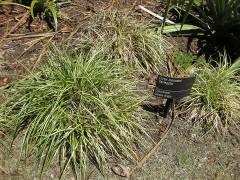
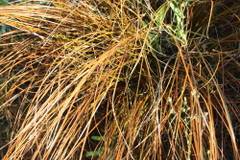
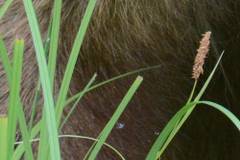
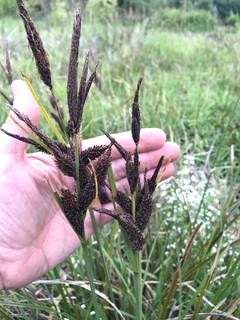
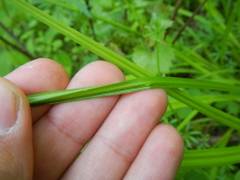
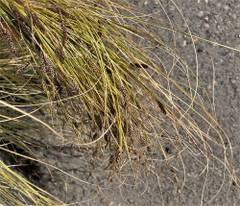
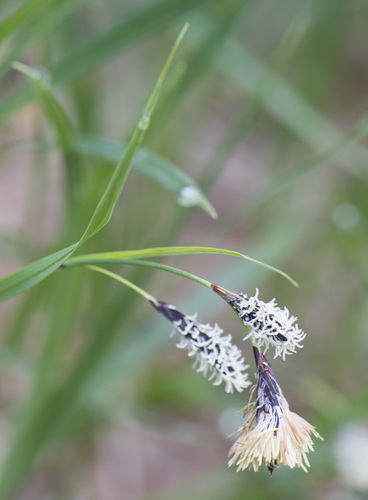
Carex mertensii is a deciduous clumping perennial sedge reaching 24-48 inches (60-120 cm) tall and 18-24 inches (45-60 cm) wide, forming open clumps of upright then arching stems. Leaves are flat, medium green, 0.15-0.25 inch (4-6 mm) wide and 12-30 inches (30-75 cm) long. Triangular flowering culms bear 4-7 dark brown to black pistillate spikes 0.6-1.5 inches (1.5-4 cm) long, drooping on slender stalks; perigynia are flat with dark margins, 0.1-0.15 inch (2.5-4 mm) long. Bloom occurs from June through August. Plants form discrete clumps that gradually expand without rhizomatous spread; mature clumps reach 18-24 inches (45-60 cm) wide within 4-5 years. Tolerates drier sites than many Pacific Northwest sedges; persists on well-drained slopes and forest openings with seasonal moisture. Foliage browns and collapses after first hard frost in zones 4-7 and persists yellow-tan through winter in zones 7-8. Heavy pistillate spikes weight the upper culm and create an arching outline different from upright wetland sedges of similar height.
Native Range
Native to western North America from southern Alaska through British Columbia, Washington, Oregon, northern California, Idaho, and western Montana. Grows in moist to mesic forest openings, montane meadows, streambanks, and clearings at elevations from sea level to 8,000 feet (2,400 m). Often associated with western hemlock, Douglas-fir, and Pacific silver fir forest types.Suggested Uses
Used in woodland gardens, native meadow restorations, montane plantings, and stream-edge plantings, spaced 18-24 inches (45-60 cm) apart. Plantings combine with Polystichum munitum, Aruncus dioicus, and Trillium ovatum in Pacific Northwest forest understories. Tolerates root competition under conifers and large shrubs.How to Identify
Appearance
Size & Dimensions
Height2' - 4'
Width/Spread1'6" - 2'
Bloom Information
Blooms June through August across the range, with peak in July at mid-elevations. Each clump produces flowering culms over a 3-4 week window. Spikes mature from green to dark brown over 4-6 weeks, then disperse perigynia from August through September.
Detailed Descriptions
Flower Description
dark brown to blackFoliage Description
medium greenGrowing Conditions
Sun Requirements
Requires 3-7 hours of direct sunlight daily
• Full Sun: 6+ hours of direct sunlight
• Partial Shade: 3-6 hours of direct sunlight
• Full Shade: Less than 3 hours of direct sunlight
Care & Maintenance
Care Guide
Water during the first growing season; established plants tolerate drought with periodic deep summer soaks in inland sites. Foliage holds darker green color in light shade; full sun produces shorter, stiffer foliage. Few pest or disease problems occur. Old foliage is cut to 3-4 inches (7.5-10 cm) above the crown in late winter. Self-seeding is moderate in open soil; volunteer seedlings establish over 2-3 years and can be transplanted while small. Fertilization is rarely required in native forest soils.Pruning
Old foliage is cut back in late February or early March before new growth begins. Spent flowering culms can be removed in early autumn for a tidier off-season clump, or left to mature for habitat value. Mid-season grooming is not required.Pruning Schedule
Prune: February–March
winterearly spring
Container Growing
Suitable for container growing
Minimum container size: 5 gallons