Carex, Genus, blanda, Species,
- Genus & species
eastern woodland sedge
Overview
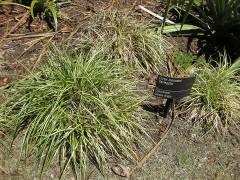
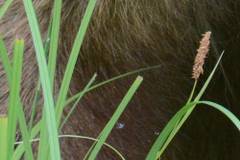
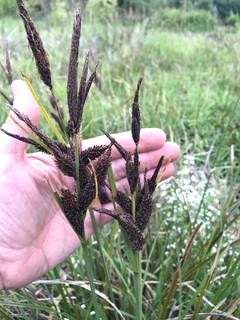
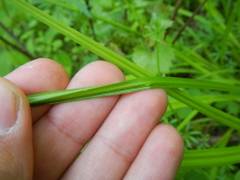
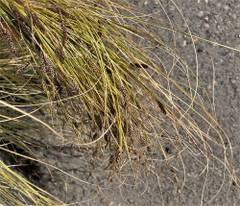
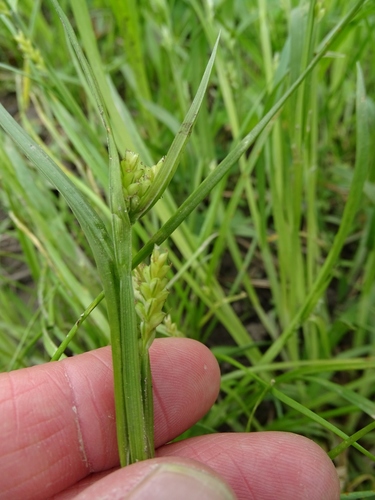
Carex blanda is a clump-forming perennial sedge in the sedge family, growing 6-18 inches (15-45 cm) tall in low, arching tufts of soft, bright green leaves. The flat blades are 0.2-0.4 inch (5-10 mm) wide and stay green through much of the year, turning semi-evergreen in mild climates. In mid to late spring, short flowering stems carry small greenish spikes: a narrow male spike at the tip and a few plump female spikes below, each holding rounded green seeds called perigynia that ripen and drop in early summer. The flowers are wind-pollinated and not showy. The sedge spreads slowly by short rhizomes and self-seeding to form open colonies rather than dense mats. It grows in moist to average soils in shaded woodlands, floodplains, lawns, and clearings across eastern and central North America, tolerating clay, foot traffic, and seasonal wetness. It adapts to deep shade and to part sun where soil stays moist. Because its flowers are inconspicuous and its foliage flops in deep shade, its place is as a green groundcover rather than a feature plant.
Native Range
Native to eastern and central North America, from southern Canada south through the eastern United States to Texas and Florida.Suggested Uses
Used as a native groundcover, lawn alternative, and filler in shaded woodland gardens, spaced 10-15 inches (25-38 cm) apart. It binds soil on shaded slopes and along paths where mowed turf grows poorly.How to Identify
Appearance
Size & Dimensions
Height6" - 1'6"
Width/Spread8" - 1'2"
Bloom Information
Greenish flower spikes appear from April through May. The plant is wind-pollinated and produces no showy bloom. Seeds ripen and drop in late spring and early summer.
Detailed Descriptions
Foliage Description
bright greenGrowing Conditions
Sun Requirements
Tolerates up to 6 hours of direct sunlight daily
• Full Sun: 6+ hours of direct sunlight
• Partial Shade: 3-6 hours of direct sunlight
• Full Shade: Less than 3 hours of direct sunlight
Care & Maintenance
Care Guide
Grows in part shade to full shade on moist to average loam, clay, or silt soils and tolerates short periods of wet ground. It keeps fuller color in moist soil and partial light, becoming lax and thin in dense, dry shade. Soil pH from 5.5 to 7.5 is suitable, and the sedge needs no fertilizer in average woodland soil. It is hardy in USDA zones 4-8 and the foliage persists through mild winters. Propagation is by division in spring or fall or from fresh seed. Once settled, plants self-seed and spread slowly with little care.Pruning
No routine pruning is needed. Tattered or winter-worn foliage can be cut back to the base in early spring before new growth emerges.Container Growing
Suitable for container growing
Minimum container size: 1 gallons