Carex, Genus, amplifolia, Species,
- Genus & species
bigleaf sedge
Pacific Northwest from southern British Columbia to northern California
Overview
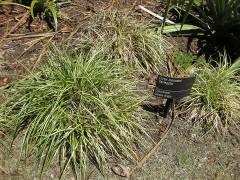
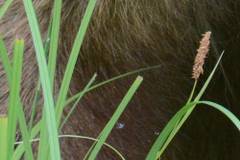
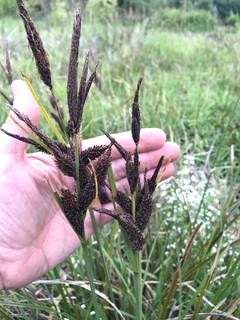
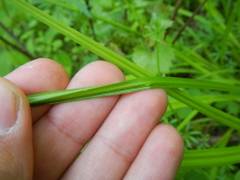
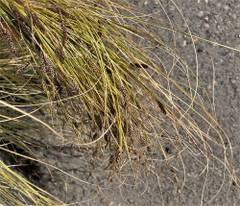
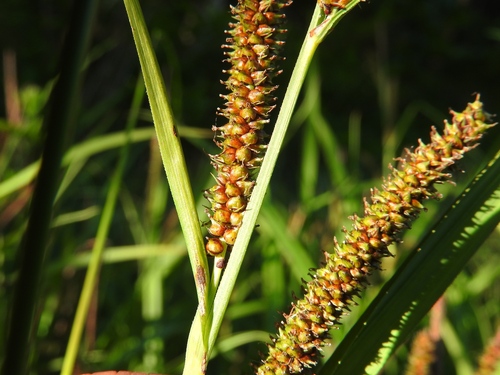
Carex amplifolia is a deciduous rhizomatous perennial sedge reaching 18-36 inches (45-90 cm) tall and spreading 24-36 inches (60-90 cm) wide via stout creeping rhizomes. Leaves are flat, bright to medium green, 0.4-0.6 inch (10-15 mm) wide and 12-30 inches (30-75 cm) long, broader than the leaves of other native Carex species in the Pacific Northwest. Flowering stems are triangular in cross-section, slightly arching at maturity, and bear 3-7 spikes per culm. The terminal spike is staminate with brown to purple-brown scales; lateral spikes are pistillate, 1-3 inches (2.5-7.5 cm) long, with brown perigynia. Bloom occurs from May through July. Foliage yellows and collapses in October-November after frost. Plantings expand 6-12 inches (15-30 cm) per year via rhizomes, forming a continuous low colony within 4-5 years. Spread can extend beyond intended bed boundaries in moist, fertile soils, the principal management consideration in formal garden settings.
Native Range
Native to western North America from southern British Columbia through Washington, Oregon, Idaho, and northern California. Grows in seasonally wet to wet sites: low-elevation streambanks, seep meadows, swamp forests, and floodplain margins at elevations from sea level to 5,000 feet (1,500 m). Often associated with western redcedar and red alder forest understories.Suggested Uses
Used in rain gardens, woodland streamside plantings, wet meadow restorations, and shaded bog gardens, spaced 18-24 inches (45-60 cm) apart for full coverage in 2-3 years. Plantings combine with Athyrium filix-femina, Tellima grandiflora, and Mimulus guttatus in seasonally wet shade. The rhizomatous spread typically excludes use in small mixed perennial borders and tight foundation plantings.How to Identify
Appearance
Size & Dimensions
Height1'6" - 3'
Width/Spread2' - 3'
Bloom Information
Inflorescences emerge May through July, with peak appearance in June at low elevations. Each colony produces flowering culms over a 4-6 week window. Pollen release occurs during morning hours over 1-2 weeks per stem; perigynia mature and disperse 6-8 weeks after pollination.
Detailed Descriptions
Foliage Description
bright to medium greenGrowing Conditions
Sun Requirements
Requires 2-6 hours of direct sunlight daily
• Full Sun: 6+ hours of direct sunlight
• Partial Shade: 3-6 hours of direct sunlight
• Full Shade: Less than 3 hours of direct sunlight
Care & Maintenance
Care Guide
Water at planting and during the first growing season; established plants in wet to seasonally moist soils require no supplemental irrigation. Drier sites accept the species but produce shorter foliage and reduced colony spread. Foliage remains denser in light to moderate shade; full-sun plantings require consistently moist soil to prevent leaf-tip burn. Few pest or disease problems occur in cultivation. Old foliage is cut back in late winter before new growth emerges; cutting removes overwintering insect refugia and reveals fresh spring growth.Pruning
Foliage is cut to 3-4 inches (7.5-10 cm) above the crown in February or early March before new growth begins. Mid-season grooming is not required; fresh leaves emerge through the previous year's stubble. Rhizomes that extend beyond intended planting areas are cut at the bed edge with a sharp spade in any season.Pruning Schedule
Prune: February–March
winterearly spring
Container Growing
Suitable for container growing
Minimum container size: 5 gallons