Buxus, Genus, spp., Multiple species,
- Genus
- Multiple species
boxes
Europe, Asia, Africa, Madagascar, the Caribbean, and Central America
Overview
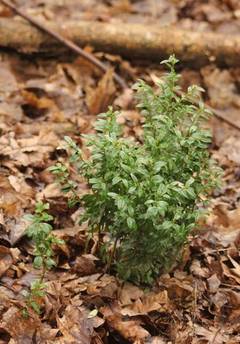
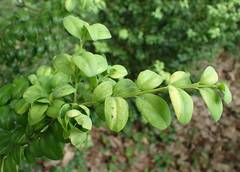
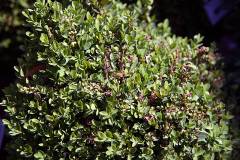
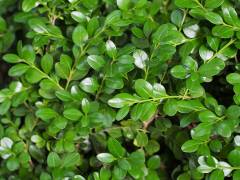
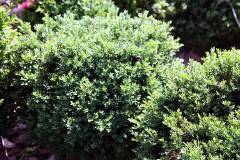
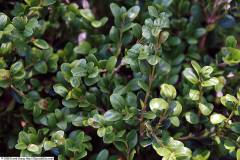
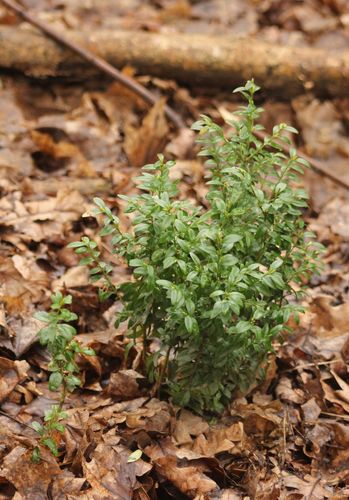
Buxus is a genus of about 70 species of slow-growing evergreen shrubs and small trees in the family Buxaceae, native to Europe, Asia, Africa, Madagascar, and the warmer parts of the Americas. Plants carry small, opposite, leathery leaves 0.4-1.2 in (1-3 cm) long, glossy dark green above and paler beneath, set densely on stiff, finely branched stems. Untrimmed plants range from dwarf forms under 3 ft (1 m), such as edging box B. sempervirens 'Suffruticosa', to tree-sized specimens of 15-30 ft (4.5-9 m). The dense, small-leaved habit and tolerance of repeated clipping have made box a long-standing plant for low hedges, topiary, and parterres. Tiny greenish flowers without petals open in clusters in spring, drawing bees with a scent some find unpleasant, and ripen into small three-horned capsules. All parts contain alkaloids that are toxic to people and animals if eaten, and the foliage carries a characteristic musty smell. Box grows in sun or shade on most well-drained soils, tolerates alkaline ground, and withstands hard clipping, but is slow to recover from cuts into old wood. Boxwood blight and box tree moth have become serious problems across much of its range.
Native Range
The genus is native across Europe, Asia, and Africa, with additional centres of species in Madagascar, the Caribbean, and Central America. Common box B. sempervirens ranges through southern and western Europe, northwest Africa, and western Asia.Suggested Uses
Box is grown as low edging, clipped hedging, topiary, and parterre framework, and as dense evergreen structure in formal gardens. Dwarf forms edge beds and paths, while larger forms are used as specimens and screens. Its tolerance of shade and clipping suits courtyards and containers.How to Identify
Appearance
Size & Dimensions
Height2' - 30'
Width/Spread2' - 15'
Colors
Bloom Information
Small greenish, petalless flowers open in clusters in early to mid spring, generally March to May, each cluster holding several male flowers around a single female. They make no visible display but release a strong scent and draw bees. Three-horned capsules follow and split to eject seed in late summer.
Detailed Descriptions
Foliage Description
glossy dark greenGrowing Conditions
Sun Requirements
Requires 3-8 hours of direct sunlight daily
• Full Sun: 6+ hours of direct sunlight
• Partial Shade: 3-6 hours of direct sunlight
• Full Shade: Less than 3 hours of direct sunlight
Care & Maintenance
Care Guide
Buxus grows in full sun to full shade on most fertile, well-drained soils, including alkaline and clay ground, at pH around 6.5-7.5. Even moisture suits it, and plants suffer in waterlogged or very dry soil. Shallow roots benefit from mulch and steady watering through drought, with shade reducing winter leaf scorch in cold, exposed sites. Box tolerates repeated clipping but recovers slowly from cuts into bare old wood. Boxwood blight, box tree moth, leaf miner, and root rot are the main threats, and blight in particular can defoliate whole plantings. Open airflow and avoidance of overhead watering reduce disease.Pruning
Clip Buxus once or twice in the growing season, from late spring after the first flush through summer, to keep hedges and topiary dense. Trimming in dry, overcast conditions reduces leaf scorch and blight spread. Old, overgrown plants can be cut back hard in late spring, though regrowth from bare wood is slow and uncertain.Pruning Schedule
Prune: May–July
late springsummer
Container Growing
Suitable for container growing
Minimum container size: 3 gallons