Buxus, Genus, sempervirens, Species, 'Suffruticosa', Cultivar,
- Genus & species
- Cultivar
dwarf English boxwood
Species native to southern Europe, northern Africa, and western Asia; cultivar of European garden origin (17th century)
Overview
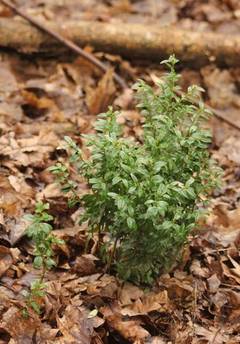
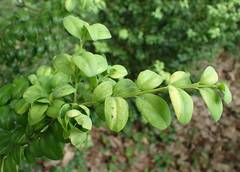
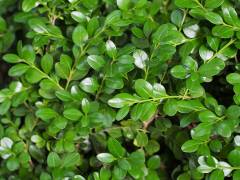
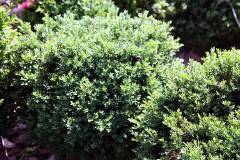
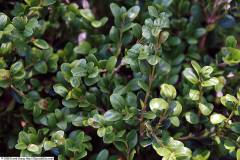
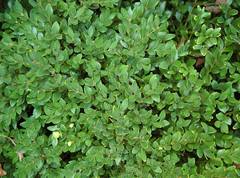
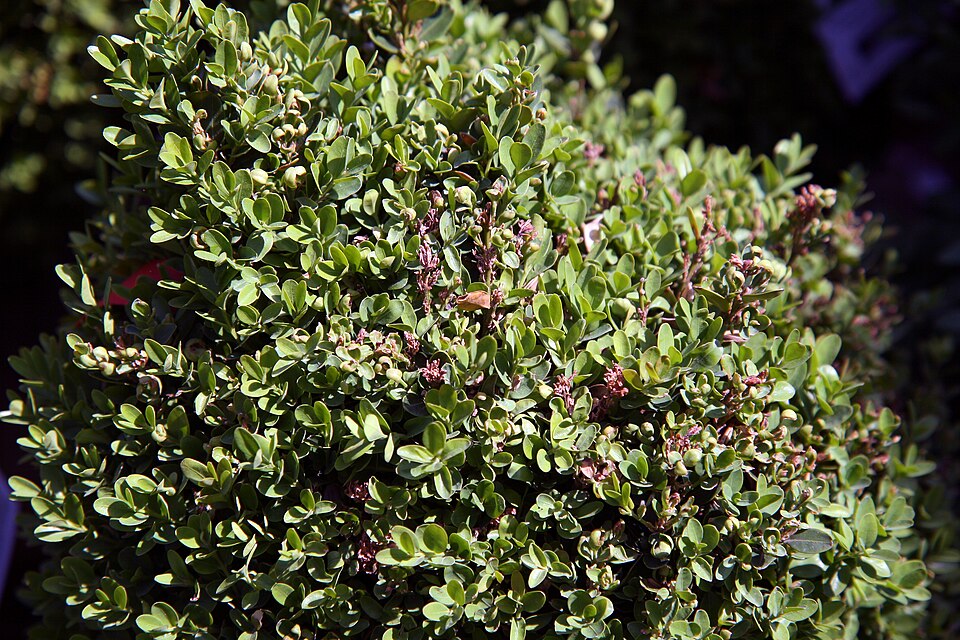
Buxus sempervirens 'Suffruticosa' is a very slow-growing dense evergreen shrub in the boxwood family (Buxaceae) reaching 2–3 feet (60–90 cm) tall with a spread of 2–3 feet (60–90 cm) when grown unclipped. Maintained hedges are typically kept at 6–18 inches (15–45 cm). The habit is compact and rounded, with extremely dense branching that produces a tight mound with minimal interior gaps. The cultivar has been grown in European gardens since at least the 17th century and is the traditional form of the parterre and knot gardens of England, France, and the Netherlands. Small ovate leaves 0.3–0.6 inch (8–15 mm) long are bright to medium green, leathery, and glossy; the leaves are noticeably smaller and rounder than the 0.5–1 inch (1.3–2.5 cm) leaves of the species type. Small pale greenish-yellow flowers 0.1–0.2 inch (3–5 mm) across appear in dense axillary clusters in April without petals and with a faint honey scent. The characteristic pungent boxwood scent is noticeable from the foliage in warm weather. Growth rate is very slow at 0.5–2 inches (1.3–5 cm) per year, roughly half the rate of the species type. Hardy to zone 5. All plant parts contain steroidal alkaloids (buxine and related compounds); ingestion causes vomiting, diarrhea, and in severe cases convulsions in humans, dogs, cats, and livestock. The cultivar is highly susceptible to boxwood blight (Calonectria pseudonaviculata), which has damaged or destroyed many historic plantings; the dense habit restricts air circulation and promotes fungal disease in humid conditions.
Native Range
The species Buxus sempervirens is native to southern Europe, northern Africa, and western Asia, where it grows in woodland understory, rocky slopes, and on limestone outcrops. 'Suffruticosa' is a long-cultivated clonal selection with no known wild origin; the cultivar has been propagated by cuttings in European gardens since at least the 17th century.Suggested Uses
Grown as formal low hedging, parterre edging, and knot garden elements at 6–12 inch (15–30 cm) spacing. The cultivar is the traditional edging boxwood of formal garden design, functioning as a clipped border around herb gardens, rose beds, and formal bedding. Container culture requires 2 gallon (8 L) or larger pots with well-drained mix. Blight-resistant alternatives such as Buxus 'Green Gem' or Ilex crenata 'Soft Touch' are substituted in areas where blight is established. Toxicity of all plant parts means the shrub is not sited where children or pets graze on foliage. Sites with poor air circulation, hot humid climates with high blight pressure, and deep shade produce poor results.How to Identify
Appearance
Size & Dimensions
Height2' - 3'
Width/Spread2' - 3'
Bloom Information
Small pale greenish-yellow flowers 0.1–0.2 inch (3–5 mm) across appear in dense axillary clusters in April, lacking petals. A faint honey-like scent is produced. Bloom duration is 2 weeks. Flowers are not an ornamental feature; foliage and form are the primary display. No ornamental fruit follows.
Detailed Descriptions
Flower Description
Pale greenish-yellow, small 0.1-0.2 inch in dense axillary clusters without petalsFoliage Description
Bright to medium green, leathery, glossy, small ovate 0.3-0.6 inchGrowing Conditions
Sun Requirements
Requires 3-8 hours of direct sunlight daily
• Full Sun: 6+ hours of direct sunlight
• Partial Shade: 3-6 hours of direct sunlight
• Full Shade: Less than 3 hours of direct sunlight
Care & Maintenance
Care Guide
Grows in partial shade to full sun in moist well-drained soil at pH 6.0–8.0, tolerating loam, clay, and chalk. Hardy to zone 5. Morning sun with afternoon shade produces dense compact foliage; full sun in hot humid climates can cause leaf bronzing and scorch. Consistent moisture promotes dense growth; drought stress causes leaf bronzing and dieback. Boxwood blight pressure is high: good air circulation, overhead-irrigation avoidance, and regular removal of fallen leaves from the base reduce disease incidence, and shearing tools are sterilized between plants to prevent spread. Boxwood leafminer causes blistered leaves in spring and requires monitoring. Winter protection from drying winds prevents foliage desiccation in zones 5–6. All plant parts contain buxine alkaloids; ingestion causes gastrointestinal and neurological symptoms in humans, pets, and livestock.Pruning
Shear 1–2 times per season from late spring through early summer (May–June). The very slow growth rate means less frequent shearing is required than for the species type. Avoid pruning after August in cold climates, as late-season growth does not harden off before frost. Thin interior branches every 2–3 years to improve air circulation and reduce blight pressure. Old congested plants may be renovated by removing one-third of the oldest stems annually over three years.Pruning Schedule
Prune: May–June
late springsummer
Container Growing
Suitable for container growing
Minimum container size: 2 gallons