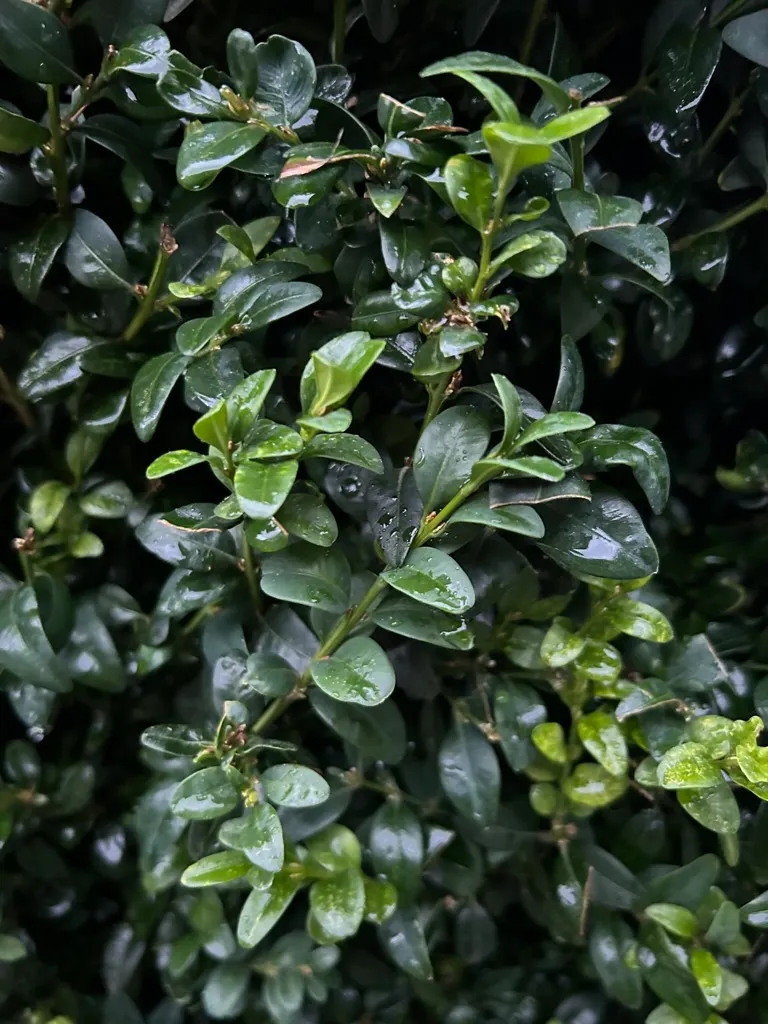
Image 1 of 15
1 / 15
Plant Reference
Buxus, Genus, sempervirens, Species,
- Genus & species
English boxwood
Europe (southern England south to the Mediterranean), North Africa, and western Asia; chalk and limestone hillsides and woodland understorey
Overview
Buxus sempervirens is a dense slow-growing broadleaf evergreen shrub or small tree in the boxwood family Buxaceae growing 60–180 inches (150–450 cm) tall and 60–180 inches (150–450 cm) wide when allowed to develop unclipped, but the species is typically maintained at 12–60 inches (30–150 cm) by repeated clipping for formal hedging, topiary, and parterre design. The species has been used in European gardens for over 2,000 years — Roman gardens of the 1st century used clipped boxwood for formal designs, and the species became central to the formal European garden tradition through the medieval, Renaissance, and Baroque periods, supplying the small-leaved dense surface that is the basis of all formal clipped garden geometry from parterres to topiary animals to knot gardens. Leaves are dark green and glossy on the upper surface, small, oval, opposite, 0.5–1 inch (12–25 mm) long, and the small leaf size combined with the dense branching habit and the tight response to clipping is the combination of characters that makes the species the standard plant for clipped formal hedging in temperate gardens. Yellowish-green tiny inconspicuous flowers open in axillary clusters at the leaf bases in April across a 1–2 week bloom period, and the flowers are not noticed in normal garden viewing because the species is grown for the foliage rather than for the bloom. The foliage carries a scent (variously described as bitter or cat-urine) that is detectable in warm weather and that some gardeners find unpleasant near windows and seating areas. Limitation: boxwood blight (Calonectria pseudonaviculata) is a serious fungal disease that has been confirmed across eastern North America and Europe since 2011 — the disease produces dark leaf spots, rapid defoliation, and black stem cankers, and infected plants cannot be cured and must be removed and destroyed to prevent spread to neighboring boxwood. Box tree moth (Cydalima perspectalis) is an invasive caterpillar pest from East Asia that defoliates boxwood through repeated larval feeding cycles and has established across Europe and is increasingly detected across North America. These two pest and disease pressures have shifted recommended planting strategies away from monoculture boxwood hedging toward mixed-genus hedging and toward more resistant alternatives. Cultivars include 'Suffruticosa' (the dwarf edging form, 12–36 inches / 30–90 cm), 'Graham Blandy' (narrow columnar form), and 'Vardar Valley' (low spreading mounding form). All parts of the plant contain buxine and cyclobuxine alkaloids — toxic to humans and animals if ingested, with gastrointestinal and neurological effects. Native to Europe (southern England south to the Mediterranean), North Africa, and western Asia, growing on chalk and limestone hillsides and in woodland understorey. Drought-tolerant once established. Deer-resistant because of the alkaloid content.
Native Range
Native to Europe from southern England south to the Mediterranean, North Africa, and western Asia, growing on chalk and limestone hillsides and in woodland understorey at low to middle elevations. The species has the wide European range that supplied the cultivated material used in classical Roman gardens and in the formal European garden tradition that followed.Suggested Uses
Used as formal clipped hedging, topiary, parterre edging, knot garden material, and container specimens in USDA zones 5 through 8 at 18–60 inch (45–150 cm) spacing depending on the designed hedge or topiary scale. The dense small-leaved evergreen foliage and the response to repeated clipping have made the species the standard plant for formal clipped garden geometry in temperate gardens for over 2,000 years, and the wide range of cultivars covers low edging ('Suffruticosa'), narrow columns ('Graham Blandy'), and low spreading mounds ('Vardar Valley'). Boxwood blight and box tree moth pressures have shifted recommended planting strategies, and blight-resistant alternatives such as B. microphylla var. koreana cultivars and Ilex crenata (Japanese holly) are increasingly chosen for new hedging installations in regions with active disease and pest pressure. All parts are toxic (buxine alkaloids), and gardens where pet or child access to the foliage is a concern should account for this toxicity.How to Identify
Appearance
Size & Dimensions
Height5' - 15'
Width/Spread5' - 15'
Bloom Information
Yellowish-green tiny inconspicuous flowers open in axillary clusters at the leaf bases in April across a 1–2 week bloom period. The flowers are not noticed in normal garden viewing because the species is grown for the dense evergreen foliage and the response to clipping rather than for the bloom.
Detailed Descriptions
Flower Description
yellowish-green tiny inconspicuous flowers in axillary clusters at the leaf bases in mid-spring; the flowers are not noticed in normal garden viewing because the species is grown for the evergreen foliage and the response to clipping rather than for the bloomFoliage Description
dark green and glossy on the upper surface; small oval opposite leaves 0.5-1 inch (12-25 mm) long held densely along the stems; the small-leaved dense canopy responds to repeated clipping by producing a tight surface of small leaves that is the basis of the species' use in formal hedging and topiary; evergreen year-roundGrowing Conditions
Sun Requirements
Requires 4-8 hours of direct sunlight daily
• Full Sun: 6+ hours of direct sunlight
• Partial Shade: 3-6 hours of direct sunlight
• Full Shade: Less than 3 hours of direct sunlight
Care & Maintenance
Care Guide
Site in part shade to full sun with 4–8 hours of direct sun per day in well-drained soil with a pH of 6.0–7.5. The species adapts to loam and clay soils and is drought-tolerant once the root system is established. Boxwood blight (Calonectria pseudonaviculata) is a serious fungal disease that has been confirmed across eastern North America and Europe since 2011 — the disease produces dark leaf spots, rapid defoliation, and black stem cankers; infected plants cannot be cured and must be removed and destroyed, and pruning tools should be sterilized between plants with 70% isopropyl alcohol or a 10% bleach solution to reduce blight transmission. Box tree moth (Cydalima perspectalis) is an invasive caterpillar pest that defoliates boxwood through larval feeding cycles and has established across Europe and is increasingly detected across North America. The foliage carries a scent (bitter or cat-urine) detectable in warm weather. All parts contain buxine and cyclobuxine alkaloids — toxic to humans and animals if ingested. Deer-resistant. Hardy in USDA zones 5–8.Pruning
Clip for formal shape in early to midsummer (June through August) — two clippings per season at 6–8 week intervals maintain a tight formal surface for hedging and topiary. Pruning tools should be sterilized between plants with 70% isopropyl alcohol or a 10% bleach solution to reduce the risk of boxwood blight transmission, because the fungal spores can be carried on cutting blades from infected plants to healthy plants. Hard renovation pruning back into bare wood is tolerated by the species but recovery is slow (2–3 growing seasons to redevelop a clipped surface). The cultivar 'Suffruticosa' is the suited form for low edging at 12–36 inches (30–90 cm).Pruning Schedule
Prune: June & August
summer
Container Growing
Suitable for container growing
Minimum container size: 5 gallons
Toxicity Warning
Toxic to pets and humansRelated Buxus species
 Golden variegated boxwoodBuxus sempervirens 'Aureovariegata'
 Dwarf English boxwoodBuxus sempervirens 'Suffruticosa'
 Green mountain boxwoodBuxus sempervirens 'Green Mountain'
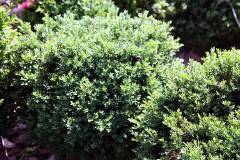 Green gem boxwoodBuxus microphylla 'Green Gem'
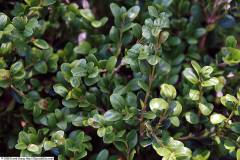 Winter gem boxwoodBuxus microphylla 'Winter Gem'
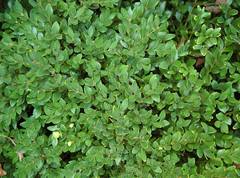 Green velvet boxwoodBuxus × 'Green Velvet'