Image 1 of 5
1 / 5
Plant Reference
Brassica, Genus, oleracea, Species, 'Diablo', Cultivar,
- Genus & species
- Cultivar
Diablo brussels sprouts
Coastal Europe (B. oleracea gemmifera; Brussels sprouts developed Belgium 1200s-1300s; Diablo hybrid; dark green 50-80 sprouts; frost improves flavor)
Overview
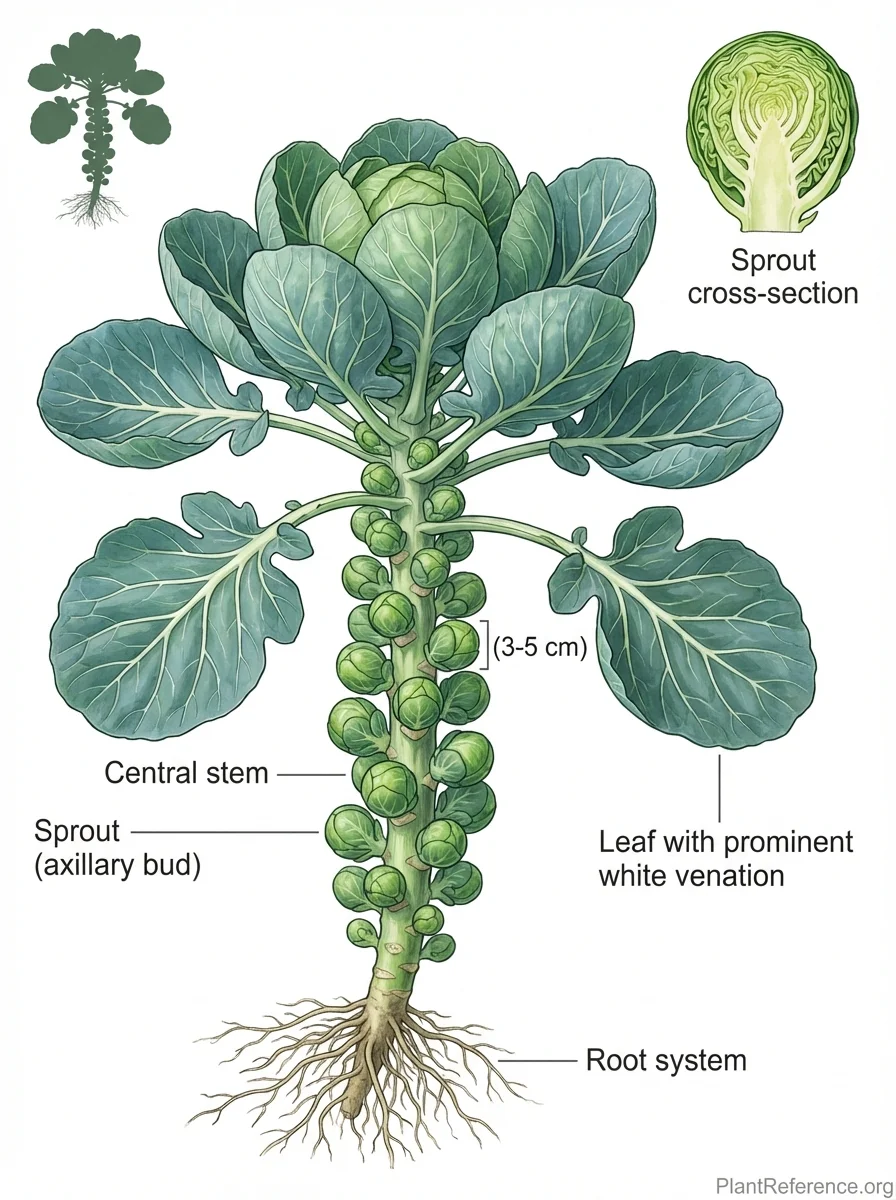
Brassica oleracea 'Diablo' is an annual vegetable reaching 24-36 inches (60-90 cm) tall with a spread of 18-24 inches (45-60 cm) and an upright, single-stemmed, columnar habit with sprouts forming along the stem from bottom to top. A hybrid Brussels sprout, it produces firm, round, dark green sprouts 1-1.5 inches (2.5-4 cm) in diameter tightly packed along a thick central stalk—typically 50-80 sprouts per plant. Large, blue-green, fan-shaped leaves emerge from the stem above the sprouts. Days to maturity 110-120 from transplant. Growth rate is slow to moderate. Long-season crop. Flavor improves markedly after frost—cold converts starches to sugars. Harvest from bottom up as sprouts reach 1-1.5 inches.
Native Range
Brassica oleracea (gemmifera group—Brussels sprouts) descended from wild cabbage native to coastal Europe. Brussels sprouts were developed near Brussels, Belgium, in the 1200s-1300s.Suggested Uses
Grown in vegetable gardens for culinary use—roasting, sautéing, steaming, shredding for salads. Dark green firm sprouts. 50-80 per plant. Flavor markedly improves after frost. Long season 110-120 days. Topping redirects energy. Cool-season. Not suitable for short-season climates without early start or warm-winter regions.How to Identify
Appearance
Size & Dimensions
Height2' - 3'
Width/Spread1'6" - 2'
Bloom Information
Four-petaled yellow flowers if overwintered or not harvested. Harvest sprouts before any bolting. Long-season crop—plant in spring for fall/winter harvest.
Detailed Descriptions
Flower Description
Yellow; four-petaled; bolting onlyFoliage Description
Blue-green; large fan-shaped; above dark green sprouts along thick stalkGrowing Conditions
Sun Requirements
Requires 6-8 hours of direct sunlight daily
• Full Sun: 6+ hours of direct sunlight
• Partial Shade: 3-6 hours of direct sunlight
• Full Shade: Less than 3 hours of direct sunlight
Care & Maintenance
Care Guide
Start seed indoors 12-14 weeks before first fall frost (plant in spring for fall harvest). Transplant into rich, moist, well-drained soil (pH 6.0-7.5). Consistent moisture and heavy feeding. Stake tall plants in windy sites. Days to maturity 110-120 from transplant. Top the plant (remove growing tip) 3-4 weeks before expected final harvest to redirect energy into sprouts. Harvest from bottom up when sprouts reach 1-1.5 inches.Pruning
Remove lower yellowing leaves as sprouts develop. Top the plant (cut growing tip) 3-4 weeks before final harvest to size up remaining sprouts. Harvest bottom-up.Toxicity
Non-toxicPlanting Guide
Botanical Flashcard