Image 1 of 10
1 / 10
© Krzysztof Ziarnek, Kenraiz, some rights reserved (CC-BY-SA) · Wikimedia Commons
Boronia, Genus, heterophylla, Species,
- Genus & species
Red boronia
Overview
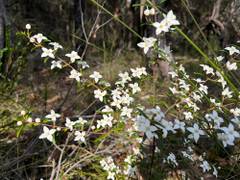
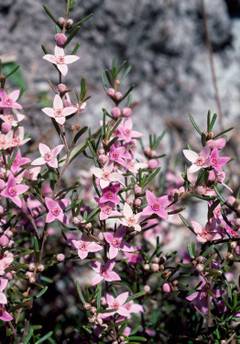
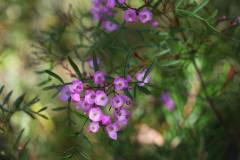
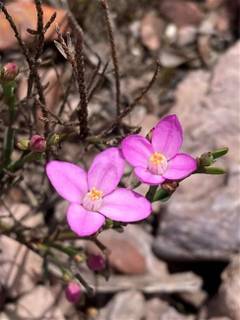
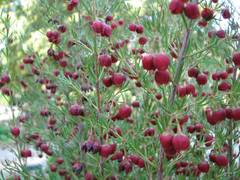
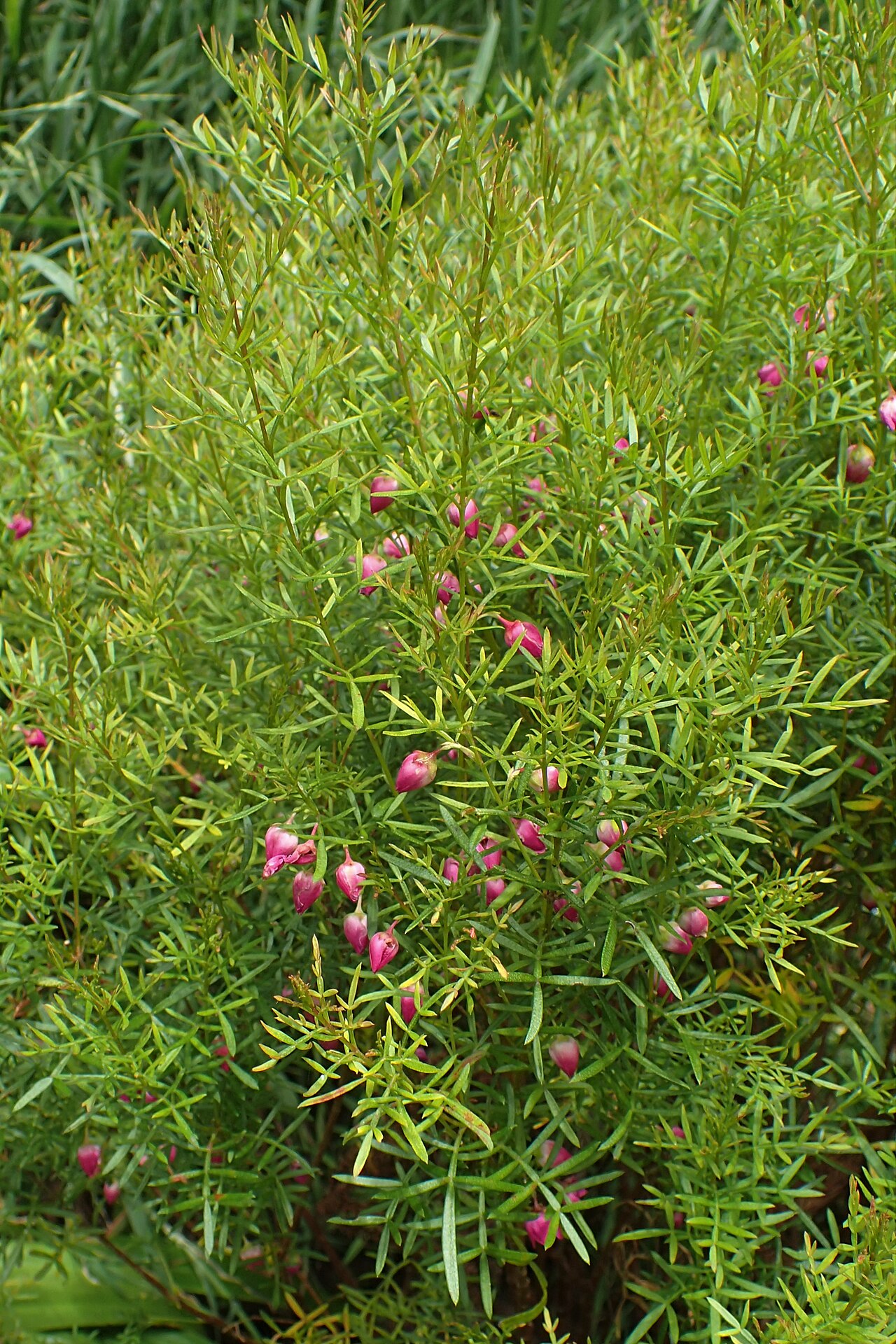
Boronia heterophylla is an evergreen shrub in the Rutaceae growing 3-6 feet (1-2 m) tall and 2-4 feet (0.6-1.2 m) wide, with slender upright stems forming a narrow, densely leafy outline. Leaves are opposite and aromatic when crushed, and both leaf forms occur on the same plant: simple linear leaves 0.4-1.2 inches (1-3 cm) long and pinnate leaves of 3-5 narrow leaflets. Flowers are deep magenta-pink to carmine, cup- to bell-shaped, 0.4-0.6 inches (10-15 mm) long, with four thick overlapping petals that stay closed over the stamens and hang downward from the leaf axils. Flowering runs August to November in southern Australia and carries a sweet scent detectable 3-6 feet (1-2 m) from the plant. Fruit are small four-lobed capsules that split to eject the seed. Growth runs 12-20 inches (30-50 cm) per year and plants flower in their second year from cuttings. Plants are short-lived, declining after 3-5 years, and collapse within days if the root zone dries out fully or stays waterlogged. Stems are cut commercially for the fresh and dried flower trade in Western Australia and Victoria.
Native Range
Boronia heterophylla is native to the south-west of Western Australia, growing along creek lines, swamp margins and damp sandy flats between Albany, Denmark and the Stirling Range. It occupies peaty sands and sandy loams that stay moist through winter and spring, in open scrub and heath below 1,000 feet (300 m). The wild distribution is narrow, though the species is grown across southern Australia and in cut-flower production overseas.Suggested Uses
Grown in mixed native borders and cottage-style plantings in cool coastal gardens, spaced 24-36 inches (60-90 cm) apart. Grown commercially in rows for cut stems harvested during the August to November flush and sold fresh or dried. Also grown in containers of 5 gallons (19 litres) or larger, where the root zone can be shaded from hot afternoon sun.How to Identify
Appearance
Size & Dimensions
Height3' - 6'
Width/Spread2' - 4'
Bloom Information
Flowering runs from August to November in southern Australia, peaking over 6-8 weeks through September and October. Buds form on the previous season growth from late autumn and hold closed through winter before opening. Individual flowers last 2-3 weeks, and the scent carries furthest on warm still mornings. Plants flower in their second year from cuttings and carry heavier crops in years three and four.
Detailed Descriptions
Flower Description
Deep magenta-pink to carmineFoliage Description
Mid to dark greenGrowing Conditions
Sun Requirements
Requires 4-8 hours of direct sunlight daily
• Full Sun: 6+ hours of direct sunlight
• Partial Shade: 3-6 hours of direct sunlight
• Full Shade: Less than 3 hours of direct sunlight
Care & Maintenance
Care Guide
Boronia heterophylla grows in full sun in cool coastal districts and in part shade where summer temperatures pass 86F (30C), taking 4-8 hours of direct exposure. It requires acidic, free-draining sandy loam or peaty sand at pH 5.0-6.5 with a root zone that stays cool and evenly moist; roots die back within days in soil that dries out fully or stays saturated. Watering of 1-2 gallons (4-8 litres) twice weekly through summer, combined with 3-4 inches (75-100 mm) of coarse organic mulch held clear of the stem base, holds soil moisture within the range the species tolerates. Low-phosphorus native fertiliser at 0.9 oz per square yard (25 g per square metre) applied after flowering carries the following season growth. Established plants tolerate 27F (-3C), while open flowers are damaged by frost during the spring flush. Root rot caused by Phytophthora cinnamomi is the usual cause of sudden collapse, particularly on heavy soils and through warm wet summers.Pruning
Pruning is carried out immediately after flowering ends in late spring, cutting stems back by about one third into leafy wood. Cuts into bare older wood seldom reshoot, so plants left unpruned for more than one season decline into open leggy growth. Annual hard tipping after flowering holds a dense outline and extends working life from about 3 years to 5 or 6. Stems harvested for the vase during flowering do the same work as a pruning cut.Pruning Schedule
Prune: November–December
late spring
Container Growing
Suitable for container growing
Minimum container size: 5 gallons