Boronia, Genus, rosmarinifolia, Species,
- Genus & species
pink boronia
Overview
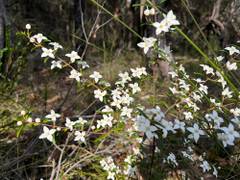
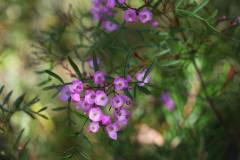
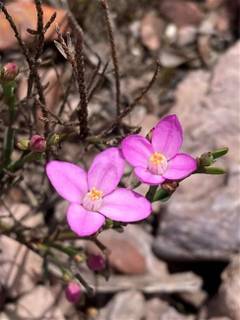
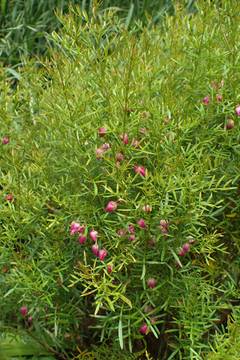
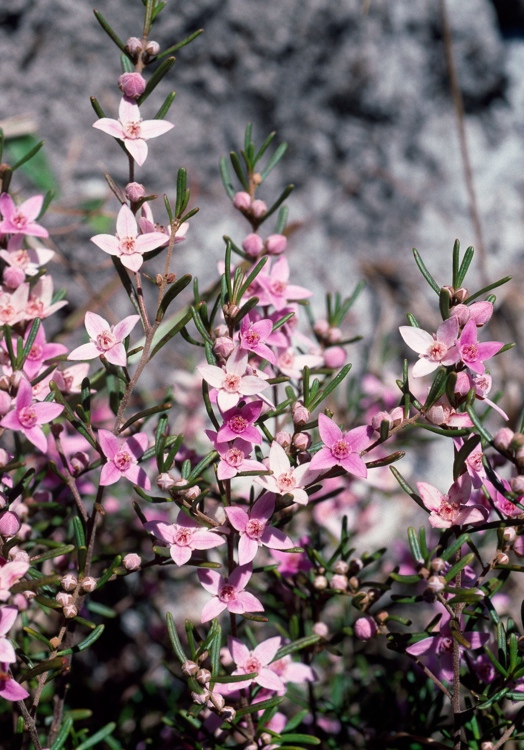
Boronia rosmarinifolia is an evergreen shrub reaching 0.3-1 m (1-3 ft) tall and 0.5-1 m (1.5-3 ft) wide, with slender, upright to spreading wiry branches. The leaves are simple or occasionally divided, narrow and linear, 5-20 mm (0.2-0.8 in) long, aromatic when crushed, and arranged along the stems in a manner resembling rosemary foliage. Four-petalled flowers 8-12 mm (0.3-0.5 in) across open in the leaf axils, pink to deep pink, often produced in numbers that line the stems. Flowering occurs mainly in late winter and spring. The fruit is a small four-lobed capsule that splits to release seed. Growth is moderate, with plants reaching full size in 2-3 years. The species is relatively short-lived, often declining after 5-8 years, and is sensitive to root disturbance and to soils that stay wet for extended periods. It grows naturally in heath and dry sclerophyll woodland on sandy and gravelly soils, where it regenerates from seed after fire.
Native Range
Native to eastern New South Wales, Australia, in heath, woodland, and dry sclerophyll forest on sandy and gravelly soils. It occurs from coastal districts to the tablelands at low to moderate elevations.Suggested Uses
Grown in native cottage gardens, rockeries, and mixed shrub borders, spaced 0.6-1 m (2-3 ft) apart. It grows in containers of at least 25-30 cm (10-12 in) with a free-draining mix. The aromatic foliage and flowers are cut for small posies.How to Identify
Appearance
Size & Dimensions
Height1' - 3'3"
Width/Spread1'6" - 3'3"
Bloom Information
Detailed Descriptions
Flower Description
pink to deep pinkFoliage Description
greenGrowing Conditions
Sun Requirements
Requires 4-8 hours of direct sunlight daily
• Full Sun: 6+ hours of direct sunlight
• Partial Shade: 3-6 hours of direct sunlight
• Full Shade: Less than 3 hours of direct sunlight
Care & Maintenance
Care Guide
Grow in full sun to light shade on free-draining sandy or gravelly acidic soil with a surface mulch. Keep the root zone moist but not waterlogged through the first one to two seasons; established plants tolerate short dry spells but not extended drought. Boronias are sensitive to high soil phosphorus, so a low-phosphorus fertiliser suits them. Root rot caused by Phytophthora develops in poorly drained soil. Light tip pruning after flowering maintains density. Plants commonly decline after 5-8 years and are then replaced.Pruning
Tip prune lightly immediately after flowering, removing up to one third of the current season growth to maintain a compact habit. Cutting into old bare wood regenerates slowly, so pruning stays within leafy growth. Regular light pruning extends the useful life of the plant.Pruning Schedule
Prune: November–December
late springsummer
Container Growing
Suitable for container growing
Minimum container size: 3 gallons