Boronia, Genus, spathulata, Species,
- Genus & species
spoon-leaved boronia
Overview
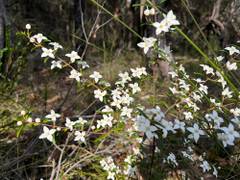
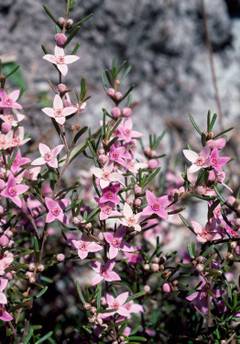
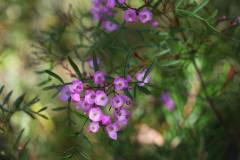
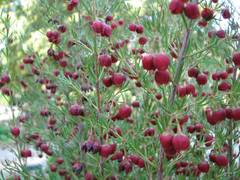
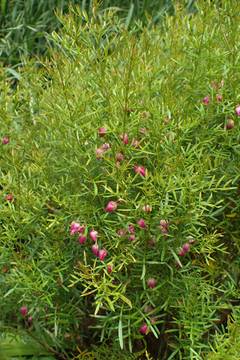
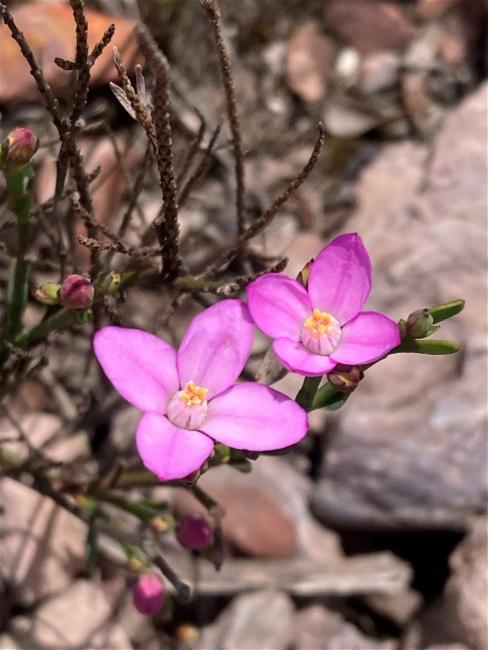
Boronia spathulata is a small evergreen shrub in the Rutaceae family, growing roughly 12-32 inches (30-80 cm) tall and 12-24 inches (30-60 cm) wide with a slender, upright to rounded form. It takes its name from the spoon-shaped (spathulate) leaves, which are small, 0.2-0.6 inch (5-15 mm) long, and dotted with oil glands that release an aromatic scent when crushed. Pink four-petalled star-shaped flowers about 0.4-0.6 inch (1-1.5 cm) across open along the stems in late winter and spring. It is native to the southwest of Western Australia, where it grows in sandy heath. Like many Boronia, it is comparatively short-lived in gardens, often persisting three to five years, and it needs cool, moist but sharply drained soil at the roots. It is frost tender and sensitive to drying out and to root disturbance. Plants reach flowering size within one to two years.
Native Range
Boronia spathulata is native to the southwest of Western Australia, where it grows in sandy heathland and open shrubland. Its range is confined to this region of the state.Suggested Uses
Grown in native and cottage-style gardens, rockeries, and containers, spaced 18-24 inches (45-60 cm) apart. The aromatic foliage and pink spring flowers suit positions near paths and seating where the scent is noticed. It is also grown as a short-term potted plant.How to Identify
Appearance
Size & Dimensions
Height1' - 2'8"
Width/Spread1' - 2'
Bloom Information
Detailed Descriptions
Foliage Description
GreenGrowing Conditions
Sun Requirements
Requires 3-6 hours of direct sunlight daily
• Full Sun: 6+ hours of direct sunlight
• Partial Shade: 3-6 hours of direct sunlight
• Full Shade: Less than 3 hours of direct sunlight
Care & Maintenance
Care Guide
Grows in light part shade to dappled sun in moist, well-drained sandy or gravelly acidic soil with a pH of 5.0-6.5. The root zone is kept cool and evenly moist, often with mulch, because the roots are intolerant of both drying out and waterlogging. Soil phosphorus is kept low, in line with its origin on nutrient-poor soils. It is frost tender and damaged by hard freezes. Containers with free-draining native potting mix suit gardeners outside its narrow soil and climate range.Pruning
Light pruning immediately after flowering, removing about one-quarter of the soft growth, keeps the shrub bushy and slows its tendency to become open and woody with age. Tip pruning of young plants encourages branching. Cutting into bare old wood is avoided because regrowth from it is unreliable.Pruning Schedule
Prune: November–December
late springsummer
Container Growing
Suitable for container growing
Minimum container size: 3 gallons